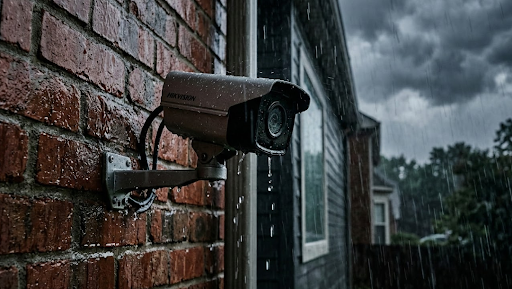

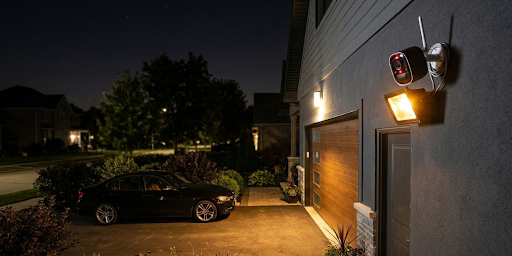
The best color night vision security camera captures clear, full-color footage after dark instead of the grainy black-and-white images traditional infrared cameras produce. Cameras like the KeldCo Solar Camera Pro 2.0 4G and Solar Camera Pro 3.0 WiFi deliver vibrant nighttime footage powered by built-in spotlights, giving you the detail you actually need to identify people, vehicles, and activity on your property when the sun goes down.
If you've ever pulled up a nighttime clip from a standard security camera and struggled to make out anything useful, color night vision is the upgrade that fixes that problem entirely. This guide walks through how the technology works, what separates a great color night vision camera from an average one, and which options are worth considering for your home or property.

Why Color Night Vision Is a Genuine Upgrade
Standard infrared night vision has been the default on security cameras for years, and it does the job well enough in many situations. But it has a fundamental limitation: everything appears in shades of grey. A person wearing a red jacket looks exactly the same as someone in a navy one. A silver car and a white car are indistinguishable. When that footage becomes relevant for an insurance claim or a police report, those missing details matter a lot.
Color night vision solves this by using either a built-in spotlight or a highly sensitive image sensor that captures color in low-light conditions without relying solely on infrared light. The result is footage that looks much closer to what your eye would see in a well-lit space, even when it's completely dark outside.
Beyond the evidentiary value, color night vision also acts as a stronger deterrent. When someone approaches your property and a bright spotlight activates, illuminating everything in full color, the message is much harder to ignore than a faint infrared glow. Many homeowners report that visible spotlight activation alone is enough to cause unwanted visitors to turn around before getting close to the property.
The practical day-to-day benefits stack up quickly too. Checking on a late-night delivery, monitoring a gate after dark, or reviewing footage of a noise you heard outside are all much more useful experiences when the video is in color. You see exactly what happened rather than trying to interpret shadows and silhouettes.
How Color Night Vision Actually Works
Understanding the technology helps you make a smarter buying decision, because not all color night vision cameras work the same way.
Spotlight-Based Color Night Vision
The most common approach uses a built-in white LED spotlight that activates when motion is detected or when ambient light drops below a certain threshold. The spotlight floods the scene with visible light, which allows the image sensor to capture full-color footage the same way it would during the day.
The trade-off is that the spotlight is visible and can draw attention to the camera itself. For most homeowners this is actually desirable since a visible spotlight signals to anyone nearby that they are being recorded. The footage quality from spotlight cameras tends to be excellent because the scene is properly illuminated rather than relying on sensor sensitivity alone.
High-Sensitivity Sensor Color Night Vision
Some cameras use a large image sensor with a wide aperture that captures color in very low light without needing to activate a spotlight. This approach produces natural-looking footage without the sudden burst of bright light, which is useful in situations where you want to observe activity without alerting anyone to the camera's presence.
The downside is that in very dark conditions, the footage can still look dim or slightly washed out compared to a spotlight-equipped camera. This type works best in areas with some ambient light, such as streets with lamp posts or properties with existing outdoor lighting.
Infrared with Color Filter
A small number of cameras switch between color infrared and black-and-white infrared depending on conditions. These are less common and generally considered a step below true color night vision in terms of image quality, but they can be a budget-friendly middle ground.
For most buyers, spotlight-based color night vision offers the clearest footage and the strongest deterrence effect, which is why it tends to dominate the recommendations in this category. It's also worth reading about types of security cameras to understand how color night vision fits into the broader landscape of what's available before you commit to a specific model.
| Night Vision Type | How It Works | Best For |
|---|---|---|
| Spotlight Color | White LED activates on motion | Maximum clarity, strong deterrence |
| High-Sensitivity Sensor | Large sensor captures ambient color | Subtle monitoring, ambient-lit areas |
| Infrared (Standard) | IR LEDs illuminate in black and white | Budget setups, basic visibility |
| Color IR Filter | Adds color layer to IR footage | Mid-range budget, partial color |
What to Look for in the Best Color Night Vision Security Camera
Resolution and Sensor Quality
Color night vision footage is only useful if the underlying video quality is sharp enough to capture meaningful detail. Look for at least 1080p Full HD, though 2K and above is noticeably better when you need to zoom in on a face or a license plate from recorded footage. A larger image sensor paired with a good lens makes a significant difference in how the camera handles low-light conditions before the spotlight even activates.
Spotlight Range and Brightness
Not all spotlights are created equal. A spotlight that illuminates 20 feet is adequate for a front doorstep but insufficient for a long driveway or large backyard. Check the stated illumination range and look for cameras that specify lumen output. Generally speaking, 400 lumens or more gives you solid coverage for most residential applications.
Some cameras let you adjust spotlight behavior through the app, allowing you to set it to always-on dusk-to-dawn mode, motion-triggered only, or off entirely if you prefer to rely on sensor sensitivity. That kind of flexibility is worth looking for.
Motion Detection and Alert Speed
Color night vision is most useful when it activates quickly. A camera that takes several seconds to detect motion and switch on its spotlight may miss the beginning of whatever triggered the alert. Look for cameras with PIR sensors or AI-based detection that respond within a second or two of detecting a person or vehicle entering the frame.
Accurate motion detection also means fewer false alerts. A camera that lights up every time a moth flies past the lens or a tree branch moves in the wind becomes something you stop paying attention to, which defeats the purpose entirely.
Power Source and Placement Flexibility
Wired cameras offer continuous power but require cable runs and often professional installation. Solar-powered cameras solve both problems, running on renewable energy without any wiring and giving you the flexibility to mount them wherever coverage is needed rather than wherever a cable can reach.
For locations beyond WiFi range, a 4G cellular camera removes the last remaining installation constraint. Before settling on placement, it's worth understanding how much sunlight a solar security camera needs to make sure your chosen spot gets enough daily sun to keep the camera charged reliably.
The KeldCo Solar Cameras Built for Nighttime Performance
For homeowners who want the best color night vision security camera without monthly fees or complicated installation, the KeldCo Solar Camera Pro 2.0 4G and Solar Camera Pro 3.0 WiFi are two of the strongest options on the market right now.
The Solar Camera Pro 2.0 4G connects via 4G LTE cellular, which makes it ideal for gates, outbuildings, rural properties, and any location where WiFi coverage is inconsistent or nonexistent. The built-in spotlight delivers full-color nighttime footage directly to your phone in real time, and the solar panel keeps the unit charged throughout the day. There are no subscription fees and no monthly charges attached to the device.
The Solar Camera Pro 3.0 WiFi is the cleaner choice for homes with solid wireless coverage. It connects to your home network, streams color night vision footage live to your phone, and stores recordings locally on a microSD card without requiring any cloud service. For front doors, driveways, and backyard coverage, this model hits the right balance of performance and simplicity.
Both cameras are genuinely suited to DIY installation, with no professional help required. If you're planning to build out a full property setup, pairing these with a high resolution security camera system gives you daytime and nighttime coverage at a quality level that matches purpose-built professional setups.

Comparing the Two Models for Night Use
| Solar Camera Pro 2.0 4G | Solar Camera Pro 3.0 WiFi | |
|---|---|---|
| Connectivity | 4G LTE Cellular | WiFi (2.4GHz) |
| Color Night Vision | Yes, spotlight-equipped | Yes, spotlight-equipped |
| Best Night Use Case | Remote gates, rural properties | Home driveways, front doors |
| Monthly Fee | None | None |
| Power Source | Solar panel | Solar panel |
| Local Storage | MicroSD supported | MicroSD supported |
For properties that need complete nighttime coverage across multiple zones, building out a 4 camera security system using color night vision models gives you full visibility without any dark spots or blind areas across your property.
Practical Tips for Getting the Best Nighttime Footage
Camera selection matters, but placement and configuration make an equally big difference in the quality of nighttime footage you end up with. A good camera in a poor position still produces footage that's hard to use.
Mount color night vision cameras at 8 to 10 feet off the ground for entry points and driveways. This height gives the spotlight enough spread to illuminate a useful area while keeping the camera out of easy reach. For wide open areas like backyards, slightly higher mounting gives the spotlight more coverage range.
Point the camera toward areas where activity typically originates rather than toward a fixed spot. A driveway camera aimed at the street entrance captures approaching vehicles from the moment they arrive rather than only after they've already pulled in. That extra few seconds of coverage can be the difference between usable footage and a partial clip.
Avoid pointing cameras directly at strong light sources like street lamps or porch lights. These can cause the sensor to compensate for the bright spot and underexpose the surrounding area, which ironically makes nighttime footage worse even with a good camera. Position the camera so existing light sources are to the side or behind the camera rather than in the frame.
Check your app settings to confirm motion alerts are enabled and that spotlight sensitivity is calibrated for your environment. If you're getting too many false activations from passing headlights or animals, adjusting the detection zone to exclude the street or treeline can clean up your alert feed significantly. For a broader look at building an effective setup from scratch, our guide on how to install security cameras walks through the full process step by step.
If you're also managing a business property that needs reliable nighttime coverage, a dedicated business CCTV setup with color night vision cameras gives you documentation-grade footage quality for commercial environments.
Wrapping Up: Why Color Night Vision Is Worth the Investment
Most security incidents happen after dark, which makes nighttime camera performance the most important factor in your overall setup rather than a secondary consideration. The best color night vision security camera gives you footage you can actually use, with enough detail to identify people, vehicles, and events clearly regardless of how dark the conditions are.
KeldCo's Solar Camera Pro lineup delivers on that promise without requiring monthly fees, complex wiring, or professional installation. Whether the 4G cellular model fits your property better or the WiFi version suits your home setup, both provide reliable color night vision powered by solar energy and accessible from your phone at any time.
For buyers who want to explore the full range of subscription-free outdoor options before making a final decision, our guide to the best outdoor security cameras without a subscription covers a wide range of models and configurations worth comparing.
Frequently Asked Questions
Which security camera has the best night vision?
KeldCo Solar Camera Pro cameras rank among the best for night vision performance, combining spotlight-activated full-color footage with solar power and zero subscription fees.
Spotlight-equipped cameras consistently outperform infrared-only models for nighttime clarity because they illuminate the scene with visible white light rather than invisible IR. The KeldCo Solar Camera Pro 2.0 4G and 3.0 WiFi both use this approach, delivering vivid color footage after dark that is significantly more useful for identification and documentation purposes than traditional black-and-white IR footage.
What color light is best for a night vision camera?
White light is best for color night vision cameras because it illuminates the scene in the full spectrum, allowing the sensor to capture accurate colors just as it would during the day.
White LED spotlights are the standard choice for color night vision cameras because they reproduce colors accurately and provide strong illumination over a useful range. Some cameras use warm amber light, which is less harsh on the eyes but can slightly affect color accuracy. Infrared light, which appears as a faint red glow, only produces black-and-white footage and cannot capture color regardless of how sensitive the sensor is.
Is color night vision worth it?
Yes, color night vision is worth it for most homeowners because it captures details that black-and-white infrared footage misses entirely, making the footage far more useful for identification and evidence.
The upgrade from standard IR to color night vision makes a noticeable practical difference. Clothing color, vehicle color, hair color, and other identifying details that are invisible in infrared footage become clear and usable. For anyone who has ever pulled up nighttime security footage and struggled to identify anything useful, color night vision addresses that frustration directly.
What color should security cameras be?
Most security cameras come in white or black housing. White blends with light-colored exteriors and is more visible as a deterrent, while black suits darker surfaces and looks more discreet.
The housing color does not affect how the camera performs or the quality of its footage, but it does affect visibility and aesthetic fit. A visible white camera on a front wall signals clearly that the property is monitored, which many homeowners prefer as a deterrent. A darker camera on a fence or gate blends in more naturally and may be less obvious to passersby, depending on your preference.
What are the best colors for cameras?
White and black are the two most practical housing colors for outdoor security cameras. White suits most residential exteriors and maximizes visibility, while black works better on darker surfaces and in low-profile installations.
Beyond personal preference, the more important color consideration for security cameras is the light they emit at night. White spotlight cameras produce the best color footage after dark. If you want both strong nighttime performance and a clean installation appearance, choosing a camera color that complements your exterior finish while prioritizing a white LED spotlight for nighttime use gives you the best of both priorities.