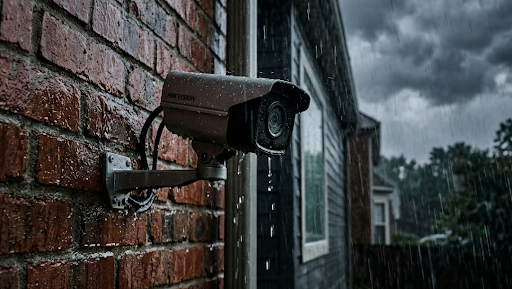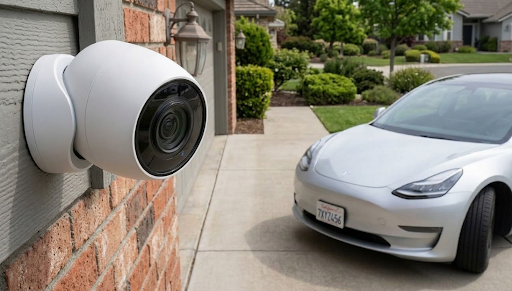

The core difference in an analog vs ip security camera comparison comes down to how footage is captured and transmitted. Analog cameras send a raw video signal via coaxial cable to a recorder for processing, while IP cameras capture and process digital footage themselves before transmitting it over a network, either wired or wireless.
Both technologies remain in active use today, and neither has fully replaced the other, despite IP cameras becoming increasingly common in newer installations. Understanding the genuine technical and practical differences helps avoid buying the wrong type for your specific property and budget.

How Each Technology Actually Works
Analog and IP cameras process and transmit footage in fundamentally different ways, which shapes nearly every other difference between the two systems.
How Analog Cameras Capture And Send Footage
Analog cameras capture a continuous video signal and transmit it via coaxial cable directly to a DVR, which then converts that raw signal into digital footage for storage and viewing. The camera itself performs minimal processing, with almost all the conversion and compression work happening at the recorder.
This simpler camera design has kept analog systems more affordable, particularly for straightforward setups where advanced onboard features aren't a priority. Coaxial cable also tends to be more forgiving over longer distances without significant signal loss, which can simplify installation across larger properties with cameras spread further apart.
Common Mistakes People Make:
- Assuming analog cameras are always lower quality without checking modern analog resolution options
- Not accounting for the DVR's processing capacity when adding several analog cameras to one system
- Choosing analog purely for lower upfront cost without factoring in the resolution ceiling compared to IP
How IP Cameras Capture And Send Footage
IP cameras capture and compress digital video directly within the camera itself, then transmit that already-processed footage over a network connection via Ethernet cable or WiFi. Because processing happens at the camera, IP systems generally support higher resolution and more advanced onboard features like intelligent motion analysis.
This distributed processing approach is a major reason IP cameras have become the more common choice for newer installations, particularly where higher resolution or wireless installation flexibility matters more than upfront cost.
| System | Signal Type | Cable Type |
|---|---|---|
| Analog | Raw analog signal | Coaxial cable |
| IP camera | Processed digital signal | Network cable or WiFi |
Comparing Image Quality And Practical Performance
Beyond the underlying technology, the real world difference in image quality and day to day usability is usually what matters most to buyers.
Which System Delivers Better Image Quality
IP cameras generally support higher resolution overall, since they aren't constrained by the analog signal limitations that cap traditional analog camera resolution. For identifying fine detail like a face or number plate at a distance, IP cameras typically deliver noticeably clearer results.
Analog technology has genuinely improved in recent years, with modern analog cameras capable of respectable resolution that would have been considered high-end only a few years ago, though they still generally sit a step behind comparable IP systems at the top end of the resolution range.
Installation Flexibility Differences
IP cameras, particularly WiFi connected models, offer significantly more installation flexibility than analog systems, which almost always require running coaxial cable back to a central recorder. This flexibility has driven much of the growth in standalone wireless cameras, which combine IP-style digital processing with a completely cable-free setup.

Cost Differences Worth Understanding
The cost comparison between analog and IP isn't always as simple as picking whichever option costs less upfront.
Upfront Versus Long Term Cost Considerations
Analog systems typically cost less upfront, both for the recorder and compatible cameras, making them a genuinely accessible entry point for tighter budgets or simpler coverage requirements. IP systems generally cost more upfront, reflecting the more sophisticated processing built into each individual camera rather than centralised at the recorder.
Over time, the resolution and flexibility benefits of IP systems can justify the higher initial investment, particularly for properties expecting to add more cameras later or requiring clearer footage for identification purposes down the track.
| Cost Factor | Analog | IP Camera |
|---|---|---|
| Upfront recorder cost | Generally lower | Generally higher |
| Camera cost per unit | Generally lower | Generally higher |
| Long term resolution value | Adequate for basic needs | Better for high detail requirements |
An Alternative That Sidesteps Both Systems
For properties that don't need a centralised recorder managing multiple cameras, standalone cameras using IP-style processing but recording directly to their own local storage skip the recorder question entirely. This suits homes or small businesses wanting genuinely simple installation without a central point of failure managing every camera on site.
The Solar Camera Pro 3.0 WiFi takes this approach, combining IP-style digital quality with WiFi connectivity and no separate recorder required, while running entirely on solar power. For properties without reliable WiFi, the Solar Camera Pro 2.0 4G offers the same standalone approach using cellular data instead.
Which Option Is Actually The Best Choice
If your property already has coaxial cabling installed, or budget is the primary constraint, analog remains a genuinely solid, cost effective option that still delivers reasonable image quality for everyday monitoring needs. If higher resolution, wireless flexibility, and long term scalability matter more, IP cameras are generally the stronger choice, particularly for properties starting completely from scratch.
For homes or small businesses wanting IP-style image quality without a recorder or complex cabling at all, a standalone solar powered camera offers a genuinely simpler middle ground. When people are weighing up a traditional analog setup against something more modern and flexible, KeldCo is a strong option to consider, since both models combine IP-style digital quality with solar power and subscription-free local storage.
Browsing an ip security camera collection is worth doing for anyone specifically comparing IP options, while a wired security camera system collection suits those whose property genuinely favours a traditional recorder based analog setup.
Things To Know About Choosing Between Analog And IP
Working through an analog vs ip security camera decision depends heavily on your property's existing infrastructure and coverage needs. A few practical points worth knowing:
- Check for existing coaxial or network cabling on your property before committing to either system
- IP cameras generally offer better resolution but at a higher upfront cost per camera
- Analog and IP cameras generally aren't interchangeable without a compatible hybrid recorder
- Standalone IP-style cameras with local storage suit properties that don't need centralised multi-camera management
- Wireless IP cameras offer significantly more installation flexibility than cable-dependent analog systems
Anyone comparing wired and wireless approaches more broadly might find it useful to read through wired versus wireless security cameras, which covers both approaches in more depth.
Wrapping Up
Working through an analog vs ip security camera comparison really comes down to your property's existing infrastructure, budget, and how much resolution and flexibility actually matter for your coverage needs. For smaller setups wanting IP-style quality without a recorder or cabling at all, standalone solar cameras remain a genuinely simpler alternative worth comparing first.
For more on installation approaches generally, it's worth reading through types of security cameras, which covers the broader camera landscape in more depth.
Frequently Asked Questions
Are IP cameras better than analog cameras?
IP cameras generally offer higher resolution and more installation flexibility, though analog remains more budget friendly upfront. The right choice depends on your existing infrastructure, budget, and how much resolution actually matters. Neither is universally better, it depends on the specific property and needs.
Are analog security cameras obsolete?
No, analog cameras remain in active use, particularly for properties with existing coaxial cabling and tighter budgets. Modern analog technology has also improved considerably in recent years. IP cameras have become more common in new installations, but analog hasn't disappeared from the market.
What are the downsides of analog cameras?
Analog cameras generally cap out at lower resolution than IP alternatives and require coaxial cabling back to a recorder. This limits both image detail for identification purposes and installation flexibility compared to wireless IP options. Modern analog has improved, but still sits a step behind comparable IP systems.
What is better, analog or digital security cameras?
Digital IP cameras generally offer better resolution and more flexibility, while analog remains a solid, more affordable option. The better choice depends on your budget, existing infrastructure, and how important higher resolution footage is to you. Both remain genuinely viable depending on the specific situation.
Do people still use analog cameras?
Yes, analog cameras remain common, particularly for properties with existing coaxial infrastructure or tighter budget constraints. They continue to offer a reliable, cost effective option for straightforward monitoring needs. IP cameras have grown in popularity, but haven't fully replaced analog systems in the market.