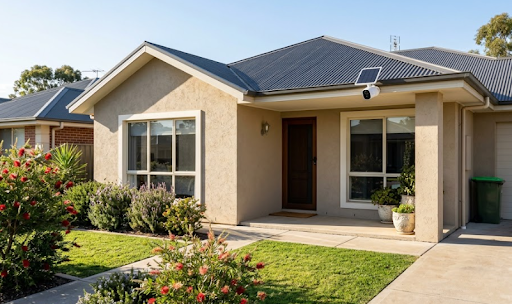

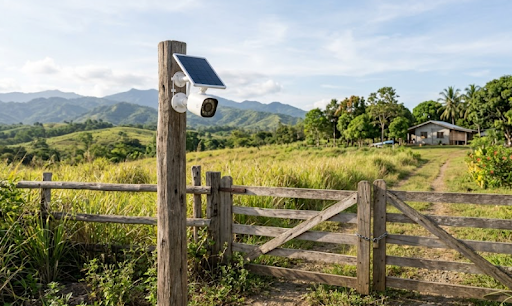
The best off-grid security camera is a solar-powered model with 4G cellular connectivity, since it needs no power lines and no WiFi router to stay online. This combination makes it the only practical option for remote properties, cabins, or land far from any existing infrastructure.
Off-grid properties present a unique challenge that standard security cameras simply weren't designed to solve, no power outlet nearby and often no internet connection within reach either.
Wondering exactly what makes a camera truly off-grid capable, and which features matter most when there's no infrastructure to rely on? Let's break it down.
Why Off-Grid Properties Need a Completely Different Camera
Most security cameras on the market assume two things are available, a power outlet and a WiFi signal. Off-grid properties, whether that's a remote cabin, a rural block, farmland, or a holiday property far from town, often have neither. This makes standard cameras effectively useless the moment you move beyond a suburban setting.
The best off-grid security camera needs to solve both problems simultaneously. Solar charging removes the dependency on mains power entirely, while cellular connectivity replaces the need for a WiFi router that simply isn't there. Without both pieces working together, a camera might technically function for a few hours before losing power or connection entirely.
What Makes a Camera Truly Off-Grid Capable
Not every camera marketed as "wireless" is actually suited for off-grid use. Here's what separates a genuinely capable off-grid camera from one that just looks the part.
Solar charging with battery reserve. A quality off-grid camera needs enough battery capacity to run through several consecutive cloudy days, not just enough for a sunny afternoon.
Cellular connectivity, not just WiFi. True off-grid cameras use SIM-based 4G connections to send alerts and stream footage, since WiFi simply isn't an option in most off-grid locations.
Rugged, weatherproof housing. Off-grid properties often mean more extreme weather exposure, dust, heat, and storms, without the protection of nearby structures.
Local storage independence. Since cloud upload relies on consistent connectivity, which can be patchy in remote areas, local SD card storage ensures footage is captured even during brief connection gaps.
Low power consumption design. Efficient cameras draw less power overall, which matters significantly when solar charging is the only power source available.
Best Off-Grid Security Camera: Feature Comparison
The table below breaks down which features matter most specifically for off-grid use.
| Feature | Why It Matters Off-Grid |
|---|---|
| Solar-powered, no wiring required | Only power option available without mains electricity |
| 4G cellular connectivity | Works where WiFi routers simply don't exist |
| Extended battery reserve | Bridges multiple cloudy or low-sunlight days |
| Local SD storage | Captures footage even during connectivity gaps |
| Weatherproof rugged build | Withstands harsher exposure typical of remote land |
Connectivity is really the deciding factor for anyone searching for the best off-grid security camera. A camera that looks rugged but still depends on WiFi becomes useless the moment it's installed somewhere genuinely remote.
The Solar Camera Pro 2.0 4G is purpose-built for exactly this scenario, combining solar charging with cellular connectivity so it stays online regardless of nearby infrastructure. For off-grid properties with a small solar or generator-powered WiFi setup already in place, the Solar Camera Pro 3.0 WiFi offers the same subscription-free reliability through a local network connection instead.

Why, How, and Which Setup Works Best Off-Grid
Why 4G beats WiFi for remote properties every time: WiFi requires infrastructure that simply doesn't exist on most off-grid land, a router, an internet connection, and a power source to keep it running. Cellular connectivity only requires reasonable signal reception, which is available across the vast majority of Australia's rural and remote regions, even where broadband internet never reached.
How to set up a camera for genuine off-grid reliability: Mount the camera with maximum sun exposure in mind, ideally north-facing and clear of any shade sources, since solar charging is the only power lifeline available. Check cellular signal strength at the exact installation point before finalizing placement, since reception can vary even across a single property.
Which option is best: For genuinely off-grid properties, land, cabins, or remote gates with no power or internet access, a solar-powered 4G camera is the only realistic option that delivers reliable, long-term performance. KeldCo stands out as the best off-grid security camera choice specifically because it combines rugged, weatherproof design with dependable cellular connectivity and zero subscription costs, which matters when monitoring property that might go unvisited for weeks at a time.
Property owners covering larger off-grid areas with multiple access points might also look into an 8 camera security system for broader coverage across gates, sheds, and boundary lines on expansive rural land.
Table: WiFi Camera vs Off-Grid 4G Camera
| Factor | WiFi Camera | Off-Grid 4G Camera |
|---|---|---|
| Requires existing internet | Yes | No, uses cellular network |
| Requires nearby router | Yes | No |
| Best for | Suburban homes, connected properties | Remote land, cabins, farms, off-grid gates |
| Reliability without infrastructure | Very low | High, works independently |
This comparison makes the choice fairly obvious for anyone dealing with genuinely off-grid conditions rather than just a large suburban yard.

Things to Know Before Choosing the Best Off-Grid Security Camera
A few practical points matter once a camera is actually installed in a remote location.
Signal strength varies more than expected across rural land. Before finalizing a mounting location, it's worth testing cellular reception at that exact spot, since even a short distance can make a meaningful difference in remote areas with patchy coverage.
Solar placement matters even more without backup power. Since there's no mains electricity to fall back on, positioning the panel for maximum daily sun exposure, away from any shade sources, becomes critical for consistent long-term operation.
Local storage is essential, not optional, for off-grid use. Because cellular connections in remote areas can be less consistent than urban WiFi, having footage saved locally ensures nothing is lost even if a brief connectivity gap occurs.
Battery reserve should be generous, not minimal. Off-grid properties are often visited infrequently, so a camera with a strong battery buffer for extended cloudy periods reduces the risk of downtime going unnoticed for days or weeks.
Choosing the best off-grid security camera really comes down to solving the power and connectivity problem together, since neither one alone is enough to keep a remote property properly monitored.
Wrapping Up
So, what's the best off-grid security camera? A solar-powered 4G camera solves both core challenges of remote properties, no power access and no WiFi, making it the practical standard for cabins, farmland, and any property beyond the reach of normal infrastructure.
Property owners still comparing setups might find it useful to read security camera that connects to phone without wifi for more detail on cellular-based monitoring, or how much sunlight does a solar security camera need for placement tips specific to remote installations. It's also worth checking best wireless outdoor security camera for a broader comparison of wireless options suited to off-grid conditions.
Property owners wanting broader coverage across open land might also browse the lte security camera collection for additional cellular-based options built for remote monitoring.
Frequently Asked Questions
What is the best off-grid security system?
A solar-powered 4G camera is best, since it needs no power lines or WiFi.
Is it illegal for my neighbor to have a camera pointed at my house?
It can be, depending on the state, if it directly captures your private space without consent.
Which outdoor camera is best without a subscription?
KeldCo's solar-powered cameras offer the best subscription-free outdoor performance.
Can a cell phone detect hidden cameras?
Some apps can detect certain hidden camera signals, though results aren't always reliable.
Does *#21 tell you if your phone is tapped?
No, this code only checks call forwarding settings, not tapping or surveillance.