
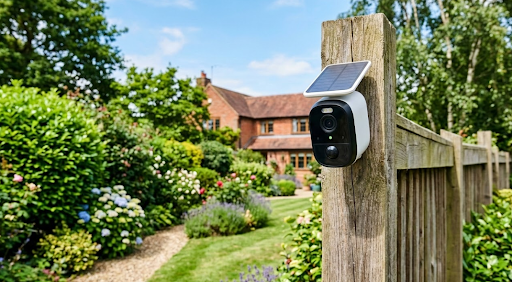
The best wire free security camera installs anywhere on your property without drilling cable holes, running conduit, or calling an electrician, giving you full outdoor coverage in locations that a traditional wired system simply cannot reach. Cameras like the KeldCo Solar Camera Pro 2.0 4G and Solar Camera Pro 3.0 WiFi combine solar charging with wireless connectivity and zero monthly fees, delivering genuine cable-free protection that runs itself without any ongoing maintenance or subscription costs.
If you've ever looked at a spot on your property that clearly needs a camera but given up because there's no power outlet nearby and no practical way to run a cable, wire free is the solution that removes every one of those obstacles at once. This guide covers how wire free cameras work, what separates reliable models from ones that disappoint after a few weeks, and which options are genuinely worth installing for the long term.
What Wire Free Actually Means and Why It Matters
The term wire free gets used loosely in the security camera market, so it's worth being precise about what it actually means before comparing options. A truly wire free camera has no physical cables of any kind connecting it to a power source or a recording device. It runs on an internal battery, a solar panel, or both, and it transmits footage wirelessly over WiFi or cellular to your phone or a local storage device.
This is different from a wireless camera, which typically refers to a camera that transmits footage wirelessly but still requires a power cable plugged into a wall outlet. Wireless cameras are easier to install than fully wired systems but still constrain your placement options to wherever an outdoor power outlet exists or can be installed. Wire free cameras have no such constraint at all.
The practical significance of this distinction is significant for most homeowners. The spots on a property that most need a camera, remote gates, back fences, garden sheds, detached garages, driveways far from the house, are often the exact spots where running a power cable is most difficult or expensive. A wire free camera covers all of those locations without any of those complications.

There is also an aesthetic argument for wire free installation that matters more to some homeowners than others. A camera mounted cleanly on a wall or post with no cables snaking down the exterior looks significantly neater than one with a conduit run or an exposed cable tucked under fascia boards. For rental properties, listed buildings, or homes where exterior modifications are restricted, wire free is often the only practical installation option available.
How Wire Free Cameras Stay Powered
Power is the fundamental challenge that wire free cameras need to solve, and the approach a camera takes to that challenge has a direct impact on how reliable and low-maintenance it is in practice.
Battery-Only Cameras
The simplest wire free cameras use a rechargeable internal battery with no solar component. These are genuinely cable-free and easy to install, but they require periodic recharging, typically every one to six months depending on activity levels, recording settings, and weather. The recharging interval sounds manageable until you realize that a busy driveway camera in a cold climate might need its battery pulled and charged every three or four weeks during winter when motion detection triggers frequently and cold temperatures reduce battery efficiency.
Battery cameras work well for lower-traffic locations where the camera doesn't trigger often, but for any installation point that sees regular activity, the maintenance cycle becomes genuinely disruptive over time. A camera that needs recharging is also a camera with a potential recording gap if the battery runs low and nobody notices.
Solar-Powered Cameras
Solar-powered wire free cameras add a panel that continuously tops up the internal battery during daylight hours. In most residential locations with reasonable sun exposure, this means the camera runs indefinitely without ever needing manual recharging. The solar panel handles everything automatically, and the internal battery provides overnight operation and backup capacity for overcast days.
This is the most practical long-term wire free solution for outdoor cameras because it removes the only maintenance burden that battery-only cameras carry. A solar wire free camera installed in a well-chosen spot effectively runs itself for years without any input from you. For buyers thinking through how much sun their chosen installation spots actually receive, our guide on how much sunlight a solar security camera needs gives you a clear framework for assessing whether a location will keep the camera reliably charged through different seasons.
Solar with Cellular Backup
The most capable wire free setup combines solar power with 4G LTE cellular connectivity. This removes both the power cable and the WiFi dependency, meaning the camera truly has no infrastructure requirements beyond a SIM card and adequate sunlight. Gates at the end of long driveways, cameras on rural properties, construction site monitoring, and any location beyond the reach of your home network all become straightforward installations with this combination.
| Power Type | Maintenance Required | Best For |
|---|---|---|
| Battery only | Periodic manual recharging | Low-traffic, easy-access spots |
| Solar with WiFi | Minimal, sun-dependent | Home perimeters with WiFi coverage |
| Solar with 4G LTE | Minimal, sun-dependent | Remote areas, no WiFi zones |
| Wired (not wire free) | None | Permanent fixed installations |
Key Features to Look for Before You Buy
Connectivity That Matches Your Property
Wire free cameras connect to your phone and store or stream footage through either WiFi or cellular. WiFi cameras are the simpler choice for coverage around your home where network signal is reliable, and they typically offer the same full-featured app experience as any other camera on your network. The limitation is range. If your installation spot sits beyond reliable WiFi coverage, a WiFi camera will drop connection, produce laggy live feeds, and miss motion alerts.
Cellular cameras solve this entirely. A 4G LTE camera with a SIM card works anywhere with mobile coverage regardless of how far it sits from your router. The app experience is essentially identical from your perspective since everything still runs through the same companion app, but the camera's connectivity is independent of your home network entirely. If you have locations that fall outside your WiFi range, the LTE security camera category is worth exploring before settling on a WiFi-only model.
Video Quality and Night Vision
Wire free cameras have historically lagged behind wired cameras in image quality because of the power constraints imposed by battery operation. That gap has narrowed significantly in recent years, and the best current solar-powered models deliver 1080p and 2K footage that holds up well in most real-world conditions.
Color night vision is the feature worth prioritizing for outdoor wire free cameras. Standard infrared night vision produces footage in black and white that misses the identifying details, clothing colors, vehicle colors, hair color, that make recorded footage actually useful when something happens. A spotlight-equipped color night vision camera illuminates the scene with visible white light, which produces footage that looks almost identical to daytime recording and captures those details clearly. For a detailed breakdown of how the best performers handle nighttime recording across different camera types, our guide on the best wireless outdoor security camera covers the key distinctions worth knowing.
Local Storage Without Subscription Fees
Wire free cameras typically store footage either in the cloud through a subscription service or locally on a microSD card inside the camera. Cloud storage adds a recurring monthly cost that compounds significantly over time and introduces the privacy concern of your home footage living on a third-party server. Local SD card storage keeps everything on your own hardware with no ongoing charges and no third-party access.
For a wire free setup that is genuinely cost-effective over the long term, local storage combined with loop recording is the right approach. The camera records to the card, overwrites the oldest footage automatically when the card fills, and you access everything through the app without ever paying for a cloud plan. Understanding how long security cameras store footage across different card sizes and recording modes helps you pick the right SD card capacity for your specific setup and activity level.
Weatherproofing for Outdoor Use
Wire free cameras live outdoors year round and need to handle everything the weather delivers without failing. Look for an IP65 rating as a minimum for any camera fully exposed to rain and dust, and IP66 for cameras in locations that see driving rain or high humidity regularly. The sealed housing needs to protect both the electronics and the SD card slot from moisture ingress over years of continuous outdoor exposure, not just the first season.
The KeldCo Cameras That Make Wire Free Worth Choosing
For homeowners who want the best wire free security camera without monthly fees, complicated installation, or battery maintenance cycles, the KeldCo Solar Camera Pro 2.0 4G and Solar Camera Pro 3.0 WiFi are two of the most complete options available right now.
The Solar Camera Pro 2.0 4G is the right choice when WiFi coverage isn't reliable or doesn't reach your intended installation spot. It connects via 4G LTE cellular using a SIM card, which means it works anywhere with mobile coverage regardless of how far it sits from your home network. The solar panel handles charging automatically throughout the day, footage saves to a local microSD card, and there are no subscription fees of any kind. For gates, detached garages, rural properties, and any location where running cables or extending WiFi isn't practical, this camera removes every installation obstacle at once.
The Solar Camera Pro 3.0 WiFi is designed for wire free installation around your home where wireless coverage is solid. It connects to your home network, streams live footage to your phone through the companion app, and stores recordings locally without routing anything through a paid cloud service. For front fences, backyard coverage, side gates, and driveway entrances within your WiFi range, this model delivers clean wire free performance without the cellular plan requirement.
Both cameras are purpose-built for DIY installation and designed to be set up without professional help or tools beyond a basic drill for the mounting bracket. For homeowners who want to build a complete perimeter setup, pairing these cameras with a broader DIY security system configuration gives you wire free coverage at every access point without any contracts, monitoring agreements, or installation fees.

Comparing the Two Models for Wire Free Use
| Solar Camera Pro 2.0 4G | Solar Camera Pro 3.0 WiFi | |
|---|---|---|
| Connectivity | 4G LTE Cellular | WiFi (2.4GHz) |
| Power Source | Solar panel | Solar panel |
| Cables Required | None | None |
| Monthly Fee | None | None |
| Local Storage | MicroSD supported | MicroSD supported |
| Best Use Case | Remote spots, beyond WiFi range | Home perimeters with WiFi access |
| DIY Install | Yes | Yes |
For properties where complete wire free coverage is the goal across multiple zones, building out a 4 camera security system with solar-powered models gives you full perimeter visibility with no cable runs anywhere on the property.
How to Get the Most Out of a Wire Free Setup
Wire free cameras are genuinely low-maintenance once installed correctly, but a few decisions at setup time make a noticeable difference in long-term performance and reliability.
Choose mounting locations with both coverage and solar exposure in mind. The ideal spot gives the camera a clear view of the approach path you want to monitor while also giving the solar panel unobstructed access to direct sun for most of the day. South-facing panels in the northern hemisphere and north-facing panels in the southern hemisphere generally receive the most consistent daily sun. If the ideal coverage angle and the ideal panel orientation conflict, most cameras allow you to adjust the panel independently of the camera body to find a workable compromise between the two.
Set your motion detection zones carefully before leaving the camera unattended. Wire free cameras on battery or solar power manage their energy consumption partly by how frequently the camera activates for motion events. A poorly configured detection zone that triggers on every passing car or branch movement drains the battery faster and fills your SD card with irrelevant clips. Taking ten minutes to draw precise detection zones through the app that cover your actual area of concern while excluding the road and neighboring properties pays dividends in battery life, storage efficiency, and alert quality over the long term.
Test the WiFi or cellular signal strength at your intended mounting position before drilling anything. Walk to the spot with your phone and check the signal bars, or use a WiFi analyzer app to see actual signal strength. A camera positioned at the very edge of reliable WiFi coverage will drop connection intermittently and produce a frustrating experience. If the signal is weak at your preferred spot, either move the camera closer to the router, add a WiFi extender, or choose the cellular model instead. It is a much easier conversation to have before the camera is mounted than after.
For anyone expanding to a multi-camera wire free setup, exploring a 360 degree security camera alongside directional wire free models gives you the option of complete panoramic coverage at key locations without additional mounting points or cable runs.
Wrapping Up: Why the Best Wire Free Security Camera Belongs on Every Property
The case for wire free cameras has never been stronger than it is right now. The technology has matured to the point where solar-powered, cellular-connected, locally-storing wire free cameras deliver performance that matches purpose-built wired systems in most real-world residential conditions, without the installation constraints, ongoing costs, or professional setup requirements that wired systems carry.
The best wire free security camera for most homeowners combines solar power, local storage, and reliable wireless or cellular connectivity in a single weatherproof unit with no subscription attached. KeldCo's Solar Camera Pro lineup delivers exactly that combination whether you need the 4G cellular model for remote coverage or the WiFi version for a home perimeter setup.
For buyers who want to compare wire free options against the full range of subscription-free outdoor cameras before making a final call, our guide to the best outdoor security cameras without a subscription covers a wide selection of models and configurations worth looking at side by side.
Frequently Asked Questions
Is there a security camera that works without Wi-Fi or electricity?
Yes, solar-powered 4G LTE cameras like the KeldCo Solar Camera Pro 2.0 4G work without WiFi or any electrical connection, running entirely on solar energy and transmitting footage over a cellular network.
These cameras use a SIM card to connect to the mobile network the same way a smartphone does, and the solar panel replaces the need for any mains electricity connection. As long as the installation spot receives adequate daily sunlight and has mobile coverage, the camera operates completely independently of your home's power and network infrastructure. It is the most genuinely wire free and infrastructure-free option available.
Which CCTV camera is best for home, wired or wireless?
For most homeowners, a solar-powered wireless camera offers the better overall package, combining flexible placement, DIY installation, and no subscription fees without the cable constraints of a wired system.
Wired cameras have the advantage of uninterrupted power and a stable connection that doesn't depend on battery or solar conditions. Wireless cameras win on installation simplicity, placement flexibility, and the ability to cover locations where running cables isn't practical. For a residential property where coverage needs may evolve over time and the ability to reposition cameras matters, wireless and specifically solar-powered wire free cameras deliver the more practical long-term solution for most homeowners.
What is the best wireless security camera without a monthly fee?
KeldCo Solar Camera Pro cameras are among the top wireless subscription-free options available, combining local microSD storage, solar power, and full app functionality with no recurring charges of any kind.
Both the Solar Camera Pro 2.0 4G and Solar Camera Pro 3.0 WiFi store footage locally, provide live viewing through a free companion app, and send motion alerts without requiring a paid plan to activate any of those features. The absence of a subscription is not a compromise on functionality but a design choice that puts ownership of the footage and control of access entirely in your hands.
Is Blink or Ring better?
Neither Blink nor Ring is the strongest choice for buyers who want to avoid monthly fees entirely. Both tie their full feature sets to subscription plans, while alternatives like KeldCo offer complete functionality with no ongoing charges.
Blink offers a lower-cost subscription tier and simpler hardware, making it a reasonable budget starting point. Ring provides a more polished ecosystem with a wider range of devices and deeper smart home integration. Both brands have raised their subscription prices in recent years and have faced criticism for limiting basic features on the free tier. For buyers whose primary goal is genuine subscription-free operation rather than ecosystem integration, solar-powered local storage cameras offer a more complete free-tier experience out of the box.
Why are people getting rid of Ring doorbells?
The most common reasons are subscription price increases that make the ongoing cost hard to justify, privacy concerns about footage sharing policies, and the availability of capable alternatives that don't require any monthly fee.
Ring has faced ongoing criticism for its historical data-sharing arrangements with third parties and law enforcement agencies, which has driven privacy-conscious users toward cameras where footage never leaves their own hardware. The cost of Ring Protect plans has also increased over time, and many users who originally bought Ring hardware on the basis of affordable monitoring have found the total cost of ownership significantly higher than expected over a two or three year period. Local storage solar cameras address both concerns directly by keeping footage on your own device and eliminating recurring charges entirely.