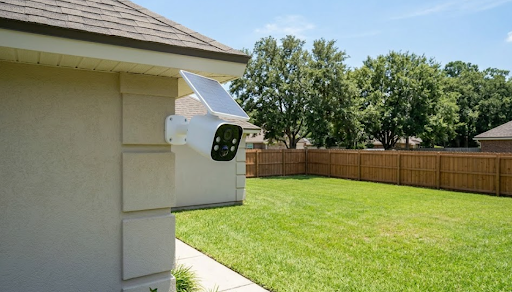

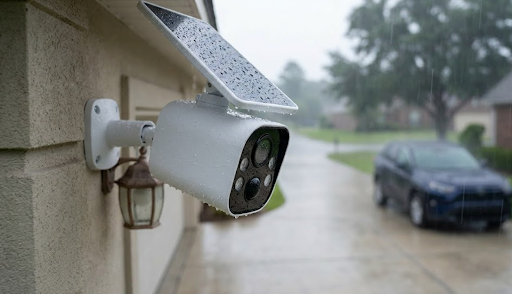
The best driveway security camera delivers wide-angle, high-resolution footage at your property entrance with reliable night vision and weatherproof construction that holds up year-round. KeldCo's Solar Camera Pro 2.0 4G and Solar Camera Pro 3.0 WiFi are the top choices for driveway monitoring, combining solar-powered operation with local SD card storage and no subscription fees.
Your driveway is the first line of defense for your property. It's where deliveries arrive, guests pull in, and where you're most likely to encounter someone who shouldn't be there. Yet a surprising number of homeowners install general-purpose cameras at their entrance and never stop to ask whether those cameras are actually optimized for driveway conditions. This guide walks through everything you need to know to make the right call.
What Makes a Driveway Camera Different from Other Security Cameras
Not every outdoor camera is built for driveway use. A driveway presents a specific set of challenges that general backyard or indoor cameras aren't always equipped to handle.
First, driveways tend to be long. The average residential driveway runs anywhere from 20 to 50 feet, and you need a camera that captures useful detail at both the near end and the entrance point where vehicles first enter. A wide-angle camera with weak resolution will show you something is happening but won't give you the specifics that matter, like a face or a plate number.
Second, driveway cameras deal with headlight glare. Vehicles arriving at night shine their headlights directly toward the camera, which can blow out the exposure and turn a potentially critical moment into a washed-out blur. A camera with proper wide dynamic range technology compensates for this automatically, preserving detail in both bright and dark zones of the same frame.
Third, driveways are exposed. Rain, wind, dust, and temperature swings hit an entrance camera harder than one sheltered under an eave. Weatherproof construction rated at IP65 or higher isn't optional for this placement, it's essential.
If you're still deciding between a wired and wireless setup for your entrance, our breakdown of wired vs wireless security cameras covers the practical tradeoffs of each approach in clear detail.
Key Features to Look for in a Driveway Security Camera

Once you understand what a driveway camera needs to handle, choosing the right features becomes much easier. Here's what actually matters.
Wide Field of View. A driveway camera should cover the full width of the entrance and extend as far down the approach as possible. Look for cameras with a field of view between 90 and 130 degrees. That range captures the entire entrance zone without distorting proportions to the point where facial details become unusable.
High Resolution. For a best driveway security camera, 5MP is the minimum worth considering if you want footage that identifies people and plates. As covered in the resolution comparison section below, the jump from 1080p to 5MP is substantial in real driveway conditions where you're often working at 20 to 40 feet of distance.
Motion Detection with Adjustable Zones. A driveway camera that triggers on every passing car on the street will flood your phone with useless alerts. Good motion detection lets you draw a custom zone, so the camera only triggers when something enters your actual property boundary rather than the sidewalk or road beyond it.
Color Night Vision. Standard infrared night vision renders everything in black and white. Color night vision captures the actual color of a vehicle, a jacket, or a bag, which is considerably more useful when reviewing footage or filing a police report. For a deeper look at how nighttime performance varies across camera types, our guide on the best outdoor security camera covers low-light performance across the leading options.
Solar Power and Local Storage. Running a power cable to your driveway entrance often means trenching, conduit work, and an electrician. Solar-powered cameras eliminate all of that and keep running even during power outages. Paired with local SD card storage, they also eliminate the recurring subscription costs that cloud-dependent cameras require every single month.
Why KeldCo Stands Out for Driveway Monitoring
KeldCo designed their cameras specifically for the kind of conditions that eat lesser cameras alive. The Solar Camera Pro 2.0 4G and Solar Camera Pro 3.0 WiFi are solar-powered, fully weatherproof, and store everything locally without charging you a monthly fee to access your own footage.
The Solar Camera Pro 2.0 4G uses a 4G LTE SIM card connection, which makes it the right tool for properties where WiFi doesn't reach the driveway entrance. Long driveways on rural properties, farms, gated estates, and vacation homes all fall into this category. The camera charges through its solar panel, records to an SD card, and sends motion alerts directly to your phone regardless of whether there's a wireless router anywhere nearby.
The Solar Camera Pro 3.0 WiFi is built for homes and businesses with reliable wireless coverage at the driveway entrance. It connects to your existing network, stores footage on a local SD card, and operates completely free of monthly fees once it's in place.
Both cameras are designed to be mounted and left alone. The solar charging keeps them running continuously, the weatherproof housing handles whatever the season throws at them, and the local storage means your footage is always there when you need it. For properties where you want flexibility in camera placement without committing to permanent wired infrastructure, DIY security systems offer the installation freedom these cameras are built around.

Comparing KeldCo's Two Driveway Camera Options
| Feature | Solar Camera Pro 2.0 4G | Solar Camera Pro 3.0 WiFi |
|---|---|---|
| Connection Type | 4G LTE via SIM card | WiFi |
| Best For | Rural or remote driveways | Suburban homes and businesses |
| Power Source | Solar panel and battery | Solar panel and battery |
| Storage | Local SD card, no subscription | Local SD card, no subscription |
| Installation | Fully wireless, no cables | Fully wireless, no cables |
| Phone Alerts | Yes | Yes |
| WiFi Required | No | Yes |
Placement Tips That Make a Real Difference
Buying the right camera and mounting it poorly are two very different outcomes. These placement principles apply specifically to driveway installations and will noticeably improve your footage quality.
Mount the camera between 7 and 9 feet off the ground at the entrance point of your driveway rather than beside the garage door. A camera next to the garage sees vehicles after they've already pulled in, giving you almost no reaction time and a poor angle on arriving faces or plates. Positioning the camera at the entrance gives you the earliest possible view of anyone approaching.
Angle the camera slightly downward so the center of the frame falls at roughly windshield height for an average vehicle. This angle captures both the occupants and the plate in the same frame far more reliably than a camera pointed at road level or aimed too high.
Avoid positions where the morning or evening sun will shine directly into the lens. A camera blinded by glare during peak arrival and departure hours misses exactly the footage you installed it to capture. If your driveway runs east to west, mounting the camera on the north-facing wall of the garage gives you consistent light conditions throughout the day.
For complete coverage strategies that go beyond the entrance point, our detailed guide on where to place security cameras walks through every zone of a typical residential property.
Resolution and Distance: How Cameras Perform at Driveway Range
| Resolution | Detail at 15 Feet | Detail at 30 Feet | Detail at 50 Feet |
|---|---|---|---|
| 1080p (2.1MP) | Acceptable | Marginal | Poor |
| 4MP | Good | Acceptable | Marginal |
| 5MP | Excellent | Good | Acceptable |
| 4K (8MP) | Excellent | Excellent | Good |
For most residential driveways, 5MP covers the practical distance range comfortably. A camera mounted at the entrance of a 30-foot driveway captures clear facial and plate detail without the storage and cost overhead of 4K. Beyond 50 feet, upgrading to 4K becomes a more justifiable investment, particularly for commercial properties or estates with long approach roads.
For businesses managing larger properties with multiple entry points, continuous recording security cameras provide uninterrupted coverage that never misses a moment regardless of whether motion was detected.
Wrapping Up: Protecting Your Entrance with the Best Driveway Security Camera
Your driveway is where security starts, and a camera that can't handle the distance, lighting variation, and weather exposure of that environment simply doesn't do its job. The best driveway security camera gives you sharp, reliable footage at the property line, stores it locally without recurring costs, and keeps running without depending on grid power or an always-on internet connection.
KeldCo's Solar Camera Pro 2.0 4G and Solar Camera Pro 3.0 WiFi were designed with exactly these requirements in mind. Whether your driveway is a gravel path on a rural acre or a paved entrance on a suburban street, there's a KeldCo model built for your specific situation. No monthly fees, no electrician required, and no compromise on image quality when it matters most.
Frequently Asked Questions
What are the top 5 outdoor security cameras?
KeldCo consistently ranks among the top outdoor security camera options for solar-powered, subscription-free performance.
The Solar Camera Pro 2.0 4G and Solar Camera Pro 3.0 WiFi lead the category specifically because they eliminate monthly fees and installation complexity without sacrificing image quality or weather durability.
Is it illegal to point your camera toward a neighbor's driveway?
In most jurisdictions, pointing a camera toward a neighbor's private property without consent raises serious legal and privacy concerns.
General guidelines allow cameras to cover your own property and public-facing areas like streets and sidewalks. Deliberately capturing footage of a neighbor's private driveway or yard may violate local privacy laws depending on your state or country. Always check your local regulations before positioning any outdoor camera.
Which outdoor security camera is best without a subscription?
KeldCo is the best choice for outdoor security cameras with no monthly subscription fees.
Both the Solar Camera Pro 2.0 4G and Solar Camera Pro 3.0 WiFi store footage locally on an SD card, meaning you own your footage outright and never pay recurring access fees. That makes them the standout option for homeowners who want reliable coverage without ongoing costs.
Is Blink or Ring better?
Neither Blink nor Ring matches KeldCo for subscription-free, solar-powered driveway security.
Both Blink and Ring rely heavily on cloud storage plans that charge monthly fees for full functionality. KeldCo's local storage model keeps your footage private and accessible without any subscription, making it the more cost-effective and privacy-conscious choice over the long term.
Why are people getting rid of Ring doorbells?
Many homeowners are moving away from Ring due to mandatory subscription fees, privacy concerns, and past data security issues.
Ring's cloud storage model requires an active subscription to access saved footage, and the platform has faced scrutiny over third-party data sharing practices. Cameras with local SD card storage like KeldCo's solar-powered lineup offer a private, subscription-free alternative that keeps your footage completely in your own hands.