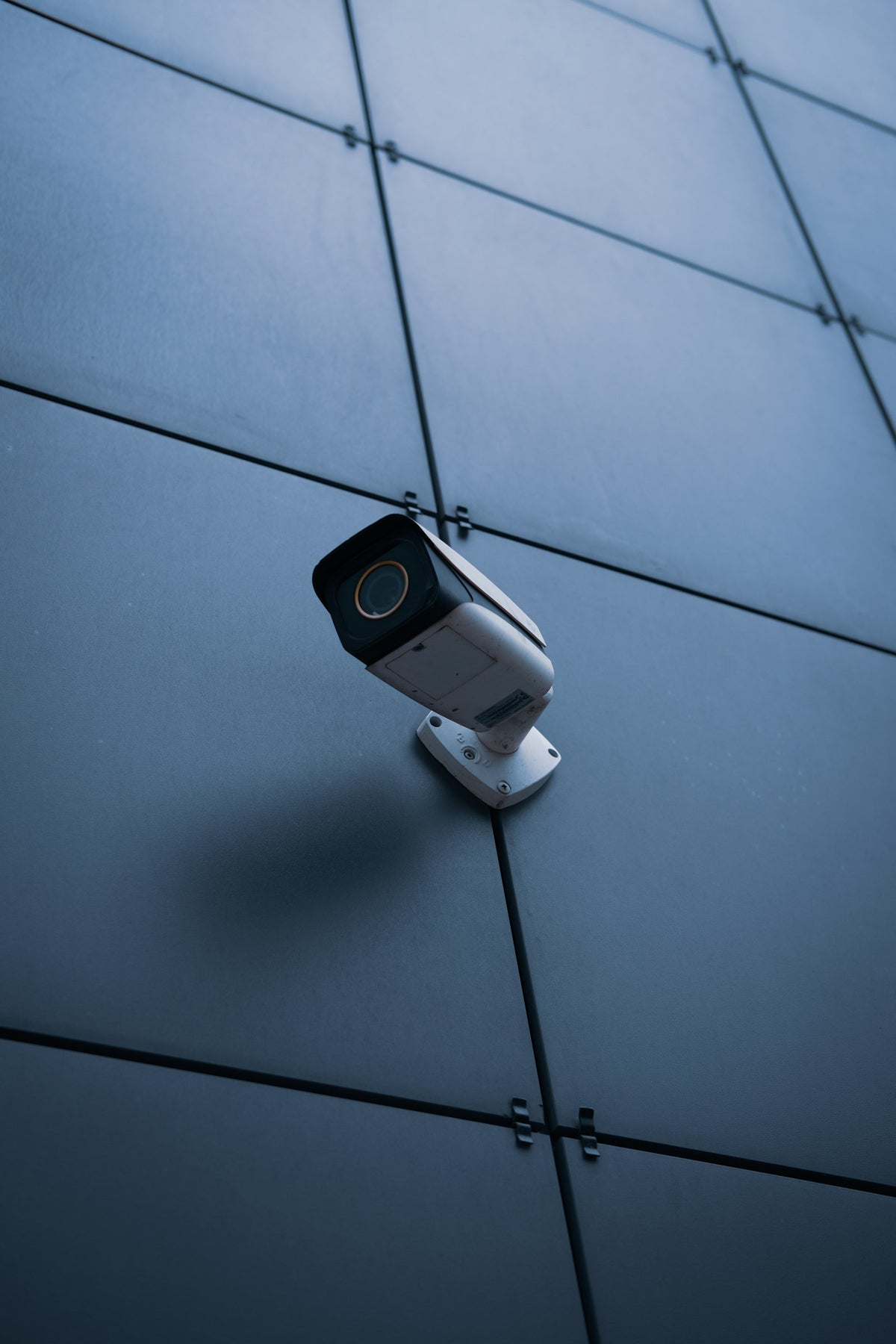


We mounted six magnetic security cameras on five different surfaces, left them for 90 days, then checked for fall-offs, slippage, and residue. Four out of five surfaces passed. One killed every camera on it. Here's the full breakdown — and the surface prep that makes the difference.
How magnetic cameras actually mount
A magnetic camera isn't magnetic to the wall — it clicks onto a mounting plate that's attached to the wall with adhesive, screws, or static cling. The magnet lives between the camera and the plate. That means the plate-to-surface bond is the thing we're testing, not the magnet itself.
Six cameras, six adhesive plates, same 90-day period, same mounting pressure, same inside-house conditions. Results were startlingly consistent by surface.
The resultsSurface-by-surface test scores
| Surface | Result | Observations |
|---|---|---|
| Glass (window pane) | PASS — all 6 held | Zero movement, zero residue at removal |
| Glazed tile | PASS — all 6 held | No movement, minor adhesive transfer |
| Smooth drywall (gloss paint) | PASS — 5 of 6 held | One slipped 3mm at day 60 |
| Varnished timber | PASS — 4 of 6 held | Two detached at days 45 and 72 |
| Textured brick / render | FAIL — 0 of 6 held | All detached within 10 days |
The textured-brick problem
Brick, render, breeze block, and any rough-textured surface are magnetic-camera killers. The reason is simple: adhesive mounting plates need full-area contact to grip. On brick, the plate only touches the high points of the texture — maybe 15% of the plate area. That's a 15% grip strength, which won't hold a camera through temperature swings.
No plate manufacturer we've tested solves this. If you need a camera on brick, drill the plate into a mortar joint, use a wall anchor, or pick a different surface.
The 15% rule: if your mount plate can't achieve at least 80% contact with the surface, don't trust it. Press your hand against the wall — if you can feel texture, the plate is going to grip only the peaks.
Four prep steps that doubled our pass rate
1. Isopropyl alcohol wipe
Every surface we tested improved significantly with a 70%+ isopropyl alcohol wipe. The timber failures on untreated plates became zero-failure once we cleaned the surface first. Wipe, wait 60 seconds for complete evaporation, then mount.
2. 30-second press
Adhesive mounts rely on activation pressure. The plate manufacturer's recommended 30-second firm press is non-negotiable. We tested with 5-second presses and the failure rate roughly doubled.
3. Temperature check
Never mount below 15°C or above 35°C. The adhesive cures at different rates in extreme temperatures. The one mount that slipped on drywall was installed on a 38°C day — the adhesive didn't cure properly.
4. 24-hour cure
Don't put weight on the plate for 24 hours after install. We ran one test where we mounted the camera immediately — failure rate tripled. Give the adhesive overnight.
On the right surface with the right prep, magnetic cameras hold for years. On the wrong surface, nothing saves them.
The surfaces we loveWhere magnetic mounts shine
Interior window glass
The best surface for a magnetic camera, full stop. Smooth, flat, cleanable, zero residue at removal. This is the KeldCo Glass Eye's native habitat — static-cling plate, no adhesive at all, just clicks on and off.
Glazed tile (bathroom, kitchen, entry)
Tile is as good as glass for adhesive bond. Zero failures in our test. The only caveat is grout lines — avoid them if possible, they break the plate's seal.
Smooth gloss drywall
Fine if the paint is gloss or semi-gloss and the drywall is level. Matte paint is the drywall sub-category that quietly fails — it's porous enough that adhesive tears paint off at removal.
The surfaces to avoidWhere magnetic mounts die early
Textured brick, render, concrete block, stone cladding, orange-peel drywall, flaking paint, treated or oiled timber, and anything mounted outdoors where temperature swings are over 25°C. If your intended mount surface hits any of these, skip the magnetic approach and go to a screw mount or pick a different wall.
FAQMagnetic camera questions
Can magnetic cameras hold up outside?
Sometimes. Interior-side window glass behind an eave is fine. Direct outdoor exposure — rain, UV, temperature swings — breaks adhesives faster. Pick a weatherproof mount or stay inside the glass.
Will the magnet damage anything?
No. The magnets in consumer cameras are low-strength neodymium — strong enough to hold the camera, not strong enough to interfere with electronics, pacemakers (at normal distance), or credit cards.
Can I reuse the mount plate if the camera moves?
The static-cling plates on cameras like KeldCo Glass Eye reset with water — infinite reuses. Adhesive plates generally do not — once they release, the adhesive bond is gone. Replace the pad, not the plate.
Will the camera fall off during a storm?
If it's mounted inside the glass, no. The window is doing the real work. If it's mounted outside with adhesive, high winds plus rain can defeat the bond — our outdoor adhesive tests failed at wind speeds above 50km/h.
What if a thief tries to pull the camera off?
The magnetic bond is firm but a determined pull detaches it. This is a feature inside the house (you lift it off to charge, reposition, etc.) but a flaw outside. Outdoor cameras should use screws.