

Sliding glass doors are the single most vulnerable entry point in most Australian homes, and renters have one hand tied: no drilling, no permanent changes, no landlord conversations. The good news — four of the five best fixes require zero tools and zero holes. Here's the full guide.
The three weaknesses of a sliding glass door
A sliding glass door has three failure modes a burglar knows well. First, the latch is usually a cheap hook inside the frame that can be jimmied with a flat tool through a small gap. Second, the door can be lifted off its track from outside if the install didn't include anti-lift screws. Third, the glass itself is a single pane with no deadbolt behind it — one sharp hit and you're inside.
All three are solvable without drilling. Not every tenant knows that.
Fix #1The dowel in the track
The oldest trick in the book and still the most effective. A hardwood dowel or length of broom handle, cut to fit snugly in the floor track behind the closed door. The door cannot slide open even if the latch is defeated. $5 at a hardware store. Takes 60 seconds to cut.
Weakness: lifting the door off the track still works if the install was weak. Pair with fix #4.
Fix #2The adhesive sliding-door lock
Commercial products like the Door Guardian or Patlock stick to the frame and physically block the door from sliding. Bond-safe (removes without residue), $30-$60, works in two minutes. Look for one with a sliding bolt action — some are rigid blocks that require you to peel them off every time you open the door.
Key spec: buy one rated for the weight of your door. Lightweight aluminium-framed doors need less. Heavy timber sliders need the heavy-duty rating. Check the product description.
The anti-lift rubber wedge
A rubber wedge slotted into the top track prevents the door from being lifted off its rail. Looks like a doorstop, works nothing like one. $10 at any hardware store. Combined with a dowel in the floor track, you've closed both the slide and lift attacks.
The one caveat: some high-end doors have anti-lift pins at install. If yours does, this is overkill. If you can lift the door off its track by hand with the latch open, you need the wedge.
Fix #4Security film on the glass
A clear polyester film applied to the inside of the glass. Doesn't stop the glass breaking, but keeps the fragments stuck together — the door doesn't open, and a burglar can't reach through. Legally and visually similar to how vehicle safety glass behaves.
Renter-safe because it comes off with heat gun or steamer at move-out. $50-$80 per door. Takes an hour to apply well. Zero drilling. One of the better upgrades a renter can make to a property they'll be in for more than a year.
Fix #5Camera coverage
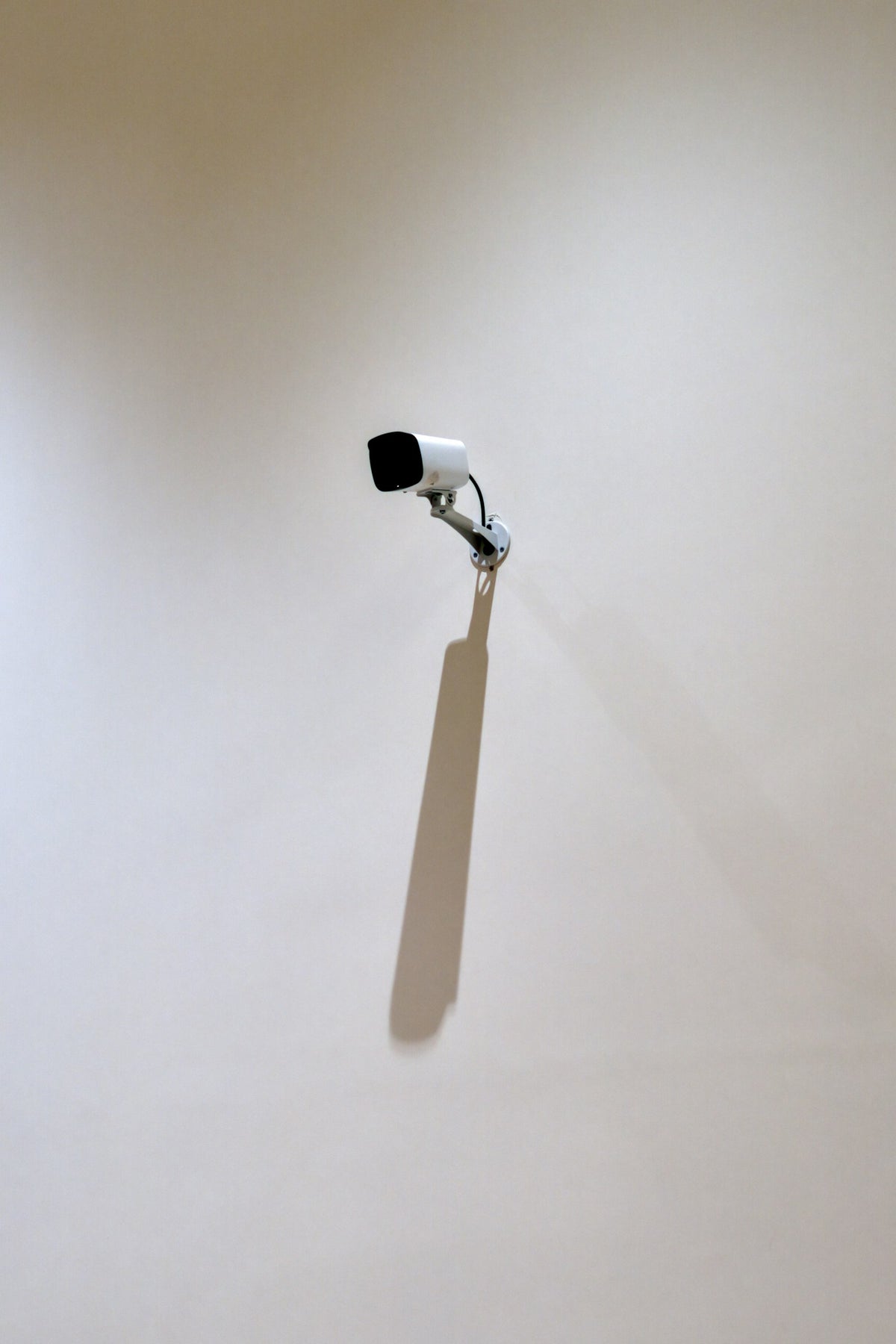
The underrated layer. A visible camera inside the house, facing the sliding door, is one of the most effective deterrents in home security. If the fix stops them from attempting the entry in the first place, you don't need the other four fixes.
The KeldCo Glass Eye lives on the inside of the glass itself — no drilling, no exposure, watches the patio or yard beyond. Works day and night, records to local SD, needs nothing drilled. Renters move it with them.
A dowel, a wedge, a camera, and security film. Four fixes, under $200, zero drilling. Most renters are shocked how much safer that stack feels.
What to skipFixes that look good and fail in practice
I see these advertised constantly. Skip them.
Suction-cup alarms
The ones that stick to the glass and beep if the door moves. Suction fails in Australian heat within weeks, and the alarm sound is a toy-grade piezo that nobody takes seriously. Save your $20.
"Smart" window sensors with weak adhesive
Door contact sensors that stick to the frame. They do work when they stay attached, but most use cheap adhesive that fails in six months. If you want a sensor, use a brand with proper 3M VHB mounting tape.
Decal stickers claiming the house is alarmed
Studies consistently show these work only if the decal is from a brand a burglar knows is real (ADR, ADT, Bosch). Generic "Protected By" stickers are ignored. If you don't have an actual alarm, don't rely on the sticker.
The stackThe layered approach for renters
- Dowel in the track. $5. First line of defence against sliding.
- Rubber anti-lift wedge. $10. Stops lift-off-the-rail attacks.
- Security film. $50-$80 per door. Stops smash-and-reach.
- Visible interior camera. $149. Deterrent and evidence layer.
- Motion-activated light outside. Changes battery monthly, deters at night.
Sliding door security questions
Will my landlord mind these fixes?
None of the fixes above are permanent. Dowels, wedges, adhesive locks, security film, cameras — all remove without trace. Check your lease for anything odd (some ban adhesive hooks over a certain size), but standard rental agreements don't block any of this.
Is a smart lock an option on a sliding door?
Rarely — most sliding doors have proprietary handle mechanisms that smart lock brands don't make retrofits for. The exception is some high-end sliders with pre-drilled smart lock positions. The dowel + wedge combo is simpler and works everywhere.
How much security film is enough?
8-mil is the minimum useful thickness. 12-mil or higher is the sweet spot. Below 8-mil, the film helps appearance only — it won't hold the glass together under impact.
Can I use these fixes on a sliding screen door?
Partly. The dowel works. The wedge works. Adhesive locks usually don't fit screen door frames. Security film can be applied to screen doors but adds minimal protection — screens are mesh, not glass.
Do I need to check for landlord insurance first?
No, these are renter-side fixes with no structural change. The landlord's building insurance still covers the structure. Your contents insurance covers your belongings. Nothing here changes either policy.