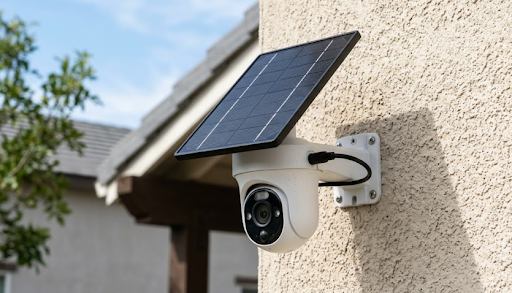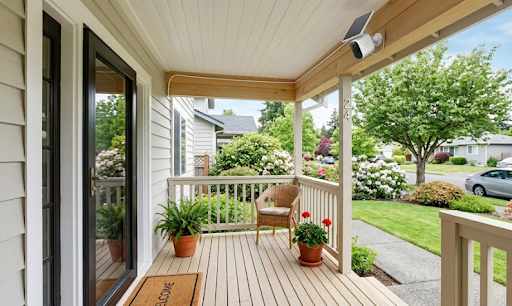

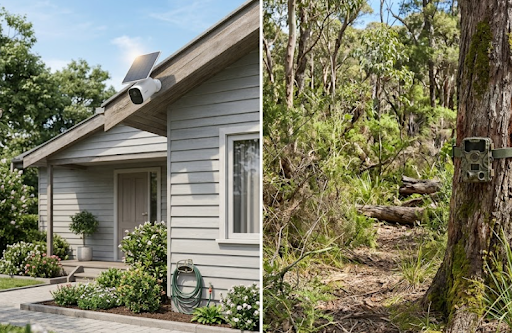
The main difference in solar security camera vs trail camera comparisons is purpose. Security cameras are built for real-time alerts and home protection, while trail cameras are designed for silent, long-term wildlife or land monitoring without instant notifications. Choosing the wrong one for your situation means missing exactly the feature you actually needed.
Both use solar power and motion detection, which is why they're often confused, but the technology underneath is built around very different priorities.
Wondering exactly which features separate the two, and which one actually fits your specific need? Let's break it down.
Why These Two Cameras Get Confused So Often
At a glance, solar security cameras and trail cameras look remarkably similar. Both are weatherproof, solar-powered, motion-activated, and designed to sit outdoors unattended for extended periods. It's easy to assume they're interchangeable, especially since both categories often use similar marketing language around "24/7 monitoring" and "motion detection."
The real difference in solar security camera vs trail camera use cases comes down to what happens after motion is detected. Security cameras are built to notify you immediately, on your phone, in real time, so you can respond to a person at your door or a vehicle in your driveway. Trail cameras, by contrast, are built to quietly log activity over days or weeks, typically for reviewing later rather than reacting to instantly.
Key Differences Between Solar Security Cameras and Trail Cameras
Breaking down the specific features makes the distinction much clearer.
Real-time alerts. Solar security cameras send instant push notifications the moment motion is detected, ideal for home protection where an immediate response matters. Trail cameras generally lack this feature entirely, since they're built for passive, unattended logging rather than live monitoring.
Connectivity. Security cameras rely on WiFi or cellular data to stream live footage and send alerts. Many trail cameras have no connectivity at all, requiring the SD card to be physically removed and reviewed later, though some newer cellular trail cameras have started closing this gap.
Video quality and streaming. Security cameras typically prioritize clear, streamable footage suited to identifying faces or vehicles quickly. Trail cameras often prioritize battery life and storage efficiency over live streaming quality, since footage is usually reviewed after the fact rather than watched live.
Detection range and sensitivity. Trail cameras are often tuned for detecting animal movement across open bushland or paddocks, sometimes at greater distances. Security cameras are typically tuned for closer-range human and vehicle detection around a property.
Intended environment. Security cameras are designed for home perimeters, driveways, and entry points. Trail cameras are built for remote bushland, farms, or hunting and wildlife monitoring where check-ins might happen only every few weeks.
Solar Security Camera vs Trail Camera Comparison Table
| Feature | Solar Security Camera | Trail Camera |
|---|---|---|
| Real-time alerts | Yes | Rarely |
| Connectivity | WiFi or 4G | Often none, or basic cellular |
| Best for | Home, driveway, entry points | Wildlife, remote land monitoring |
| Review method | Live app notifications | SD card review, often after weeks |
| Ideal check-in frequency | Continuous remote access | Periodic, every few days or weeks |
This comparison makes the purpose distinction clear. A trail camera left on a property gate might capture excellent footage of an intruder, but you wouldn't know until you physically retrieved the SD card days later, which defeats the purpose for anyone wanting real-time home protection.
For homeowners specifically wanting instant alerts and live monitoring, the Solar Camera Pro 3.0 WiFi delivers exactly that, real-time notifications the moment activity is detected. For properties without WiFi coverage, the Solar Camera Pro 2.0 4G provides the same instant alert functionality through cellular data, ideal for driveways, gates, or remote entry points still needing live monitoring rather than passive logging.

Why, How, and Which One Actually Fits Your Situation
Why the "solar" similarity is misleading: Solar charging is a power source, not a feature that defines purpose. Both camera types use it to stay powered without wiring, but that shared trait says nothing about whether the camera notifies you in real time or simply logs footage for later review, which is the actual distinction that matters when choosing between them.
How to decide which one you actually need: Ask what happens after the camera detects movement. If you need to know immediately, someone at the door, a vehicle in the driveway, a person near a shed, a security camera is the right choice. If you're monitoring wildlife patterns, checking on remote land you visit infrequently, or don't need instant notification, a trail camera may suit that specific use case better.
Which option is best: For anyone focused on home, property, or business security where an immediate response matters, a solar security camera is clearly the better choice, since real-time alerts are the entire point of a security setup. KeldCo's solar security cameras are purpose-built for this, combining instant notifications with subscription-free storage, which trail cameras simply aren't designed to offer.
Property owners covering larger areas that blend both security and land monitoring needs might also consider a rv security camera style setup for portable coverage across multiple locations on a property.
Table: Which One Fits Your Use Case
| Use Case | Better Choice | Why |
|---|---|---|
| Front door or driveway monitoring | Solar security camera | Real-time alerts matter for immediate response |
| Farm gate or shed protection | Solar security camera | Instant notification of unexpected activity |
| Wildlife pattern tracking | Trail camera | Built for passive, long-term logging |
| Remote land rarely visited | Trail camera | No connectivity dependency required |
| Small business or Airbnb protection | Solar security camera | Needs live monitoring and instant response |
This table makes it easy to match the right camera type to the actual scenario, rather than assuming one option covers every outdoor monitoring need.

Things to Know Before Choosing Between the Two
A few practical points help clarify the decision further.
Some products blur the line, but purpose still matters most. A handful of hybrid cameras market themselves as both security and trail cameras, but checking whether real-time alerts are genuinely included, rather than an optional paid add-on, is the real test of which category a camera actually belongs to.
Battery life priorities differ between the two. Trail cameras are often optimized to run for months on minimal power since check-ins are infrequent, while security cameras balance battery efficiency with the power draw of maintaining a live connection for instant alerts.
Storage habits differ significantly. Trail camera footage typically accumulates until manually retrieved, while security camera footage is usually reviewed via app in near real time, with older clips automatically overwritten as new footage comes in.
Legal placement considerations still apply to both. Whether it's a solar security camera vs trail camera decision, cameras placed near property boundaries should still avoid capturing a neighbor's private space, regardless of which category the device falls into.
Wrapping Up
To sum up, the solar security camera vs trail camera decision really comes down to whether you need real-time alerts or passive, long-term logging. Security cameras suit home and business protection where immediate notification matters, while trail cameras suit wildlife tracking and remote land monitoring where instant alerts aren't the priority.
Anyone still deciding might find it useful to read best outdoor security camera for a broader model comparison, or how much sunlight does a solar security camera need to understand solar placement across both camera types. It's also worth checking types of security cameras for a wider look at the category as a whole.
Property owners wanting broader real-time coverage across gates or paddocks might also browse the lte security camera collection for cellular-based security options suited to remote areas.
Frequently Asked Questions
Should I get a security camera or a trail camera?
A security camera, if you need real-time alerts for home or property protection.
What are the disadvantages of solar cameras?
Reduced charging during extended overcast periods, though battery reserves usually offset this.
Why are states banning trail cameras?
Some regions restrict trail cameras on public land due to wildlife privacy and hunting fairness concerns.
Can a trail camera be used as a security camera?
Technically yes, though it lacks real-time alerts most security use cases require.
Is it illegal for my neighbor to have a camera pointed at my house?
It can be, depending on the state, if it directly captures your private space without consent.