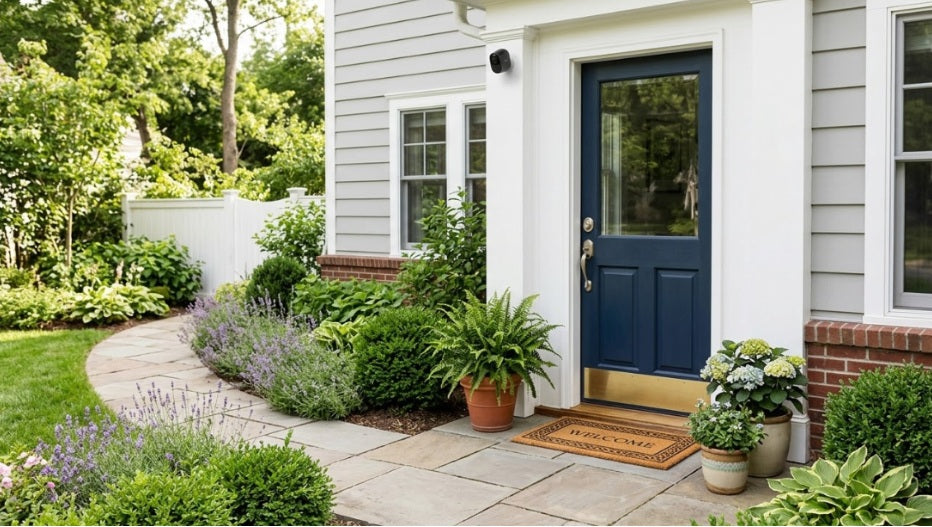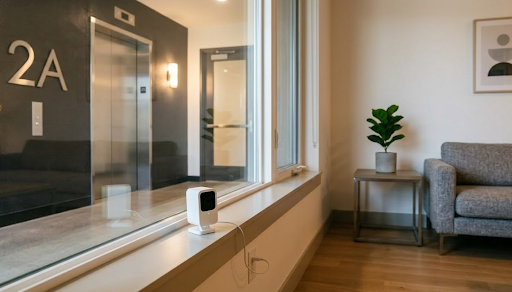


The best garage security camera delivers clear footage, operates without a monthly subscription, and keeps running even when your power goes out. KeldCo's Solar Camera Pro line checks every one of those boxes, offering solar-powered operation and built-in SD card storage that records locally at zero recurring cost.
If you've ever come home and wondered whether something happened near your garage while you were away, you're far from alone. Garages are one of the most targeted entry points in residential break-ins, yet they're often the last space homeowners think to secure properly. A camera placed in the right spot changes everything, from deterring intruders to giving you real-time visibility while you're at the office or out of town.
With dozens of options crowding the market, figuring out which one actually works for your garage setup can feel like a puzzle. This guide walks you through exactly what matters, how to approach installation, and which camera comes out on top as the best garage security camera for your home.
Why Your Garage Deserves a Dedicated Camera
Most homeowners assume a front door camera covers enough ground. In practice, the garage is one of the easiest access points for intruders because it's often out of direct sightlines from the street and neighboring homes. An attached garage connects straight to your home's interior, so a breach there can quickly become a full home intrusion.
Beyond break-ins, a garage camera serves broader purposes. It lets you monitor deliveries left near the door, keep an eye on kids in the driveway, and check on your vehicle remotely. If you store valuable tools, equipment, or recreational gear inside, a camera covering both the entry and the interior adds a meaningful layer of protection that a single outdoor camera simply cannot provide.
Homeowners exploring wide angle security cameras in Houston often prioritize garage placement first because one well-positioned wide-angle lens can cover a significant portion of a typical residential garage and driveway in a single frame.
What to Look For in a Garage Security Camera

Not every camera on the market is designed with garage environments in mind. These are the features that actually matter when you're comparing your options.
Weather Resistance is non-negotiable if your camera will be mounted outside above the garage door. Look for an IP65 rating or higher to make sure the unit holds up against rain, humidity, and temperature swings across seasons.
Night Vision matters because most garage incidents happen after dark. A camera with color night vision or quality infrared captures usable footage even when ambient lighting is minimal, which makes a real difference when reviewing an alert at two in the morning.
Power Source is where a lot of buyers make mistakes. Wired cameras require a nearby outlet or a hardwired connection, adding installation complexity. Battery-powered cameras need regular recharging, which many homeowners forget until the battery dies at the worst possible moment. Solar-powered cameras solve both problems by running continuously from sunlight, making them the most practical choice for garages without a conveniently placed outlet.
Storage Type is one of the most underrated features to prioritize. Cloud storage typically means a monthly subscription fee that compounds over time. A camera that records directly to an SD card gives you access to footage without any ongoing cost, which is exactly what the KeldCo Solar Camera Pro line provides.
Motion Detection with Zone Control lets you filter out irrelevant triggers like passing cars and focus alerts on the specific areas that matter, such as your garage door or driveway approach.
| Feature | Why It Matters for Garages |
|---|---|
| IP65+ Weatherproofing | Handles outdoor exposure above garage doors |
| Color Night Vision | Captures clear footage in low-light conditions |
| Solar Power | No outlet needed, no battery swaps required |
| Local SD Card Storage | No subscription, footage always on hand |
| Motion Zone Detection | Reduces false alerts from street traffic |
How to Decide Between Wired and Wireless
The wired versus wireless decision comes down to your garage layout and how much installation effort you're willing to take on. If your garage already has accessible outlets and you want around-the-clock coverage with no gaps, a continuous recording security camera with a wired connection records everything without relying on motion triggers. These systems are reliable and consistent, though they do require more setup work upfront.
Wireless solar-powered cameras are the simpler route for garages that don't have convenient outlet access or where running cable would be disruptive. You mount the unit, angle the solar panel toward the sun, and the camera handles the rest. There's no drilling for cable runs, no calling an electrician, and repositioning is straightforward if your original placement turns out to be off.
For most homeowners, a wireless solar-powered camera is the better starting point because it's easier to set up, costs less to install, and offers genuine flexibility. You can find a full breakdown of how these systems compare in this guide on wired vs. wireless security cameras to help clarify which approach suits your specific home layout.
Which KeldCo Camera Fits Your Garage Setup
Once you've settled on solar power and local storage, the next step is choosing between KeldCo's two models based on how your garage connects to your network.

The Solar Camera Pro 2.0 4G is built for locations where your home WiFi signal doesn't reach reliably. If your garage is detached, sits far from your router, or is located in a rural area with spotty wireless coverage, this is the right tool. It connects over 4G cellular, meaning it works anywhere a cell signal exists. Combined with solar charging and local SD card recording, it operates entirely independently of your home network and your home power grid.
The Solar Camera Pro 3.0 WiFi is designed for attached garages and any setup where your existing WiFi signal reaches the mounting point without issue. It delivers sharp video, real-time phone alerts, and the same local SD card setup that eliminates monthly fees. For most suburban homeowners with an attached or semi-attached garage, this model is the cleaner and more straightforward choice.
| Camera | Best Situation | Connectivity | Storage |
|---|---|---|---|
| Solar Camera Pro 2.0 4G | Detached or rural garages | 4G Cellular | Local SD Card |
| Solar Camera Pro 3.0 WiFi | Attached or suburban garages | Home WiFi | Local SD Card |
Both models avoid recurring fees entirely, which is a significant advantage over subscription-dependent brands that charge monthly just to access your own recorded footage.
Practical Tips for Getting the Most Out of Your Garage Camera
Placement makes a larger difference than most people realize. A quality camera positioned in the wrong spot will still miss the angles that matter most.
For exterior coverage above the garage door, mount the camera at a height between eight and ten feet and angle it slightly downward. This captures faces at a useful level rather than just the tops of heads, and it gives you a clear line of sight to anyone approaching the door.
For interior coverage, mount the camera in a far corner at ceiling height, angled to cover the full length of the space. This works especially well for monitoring parked vehicles, stored equipment, and workbench areas. If your garage doubles as a workshop or storage space for bikes and tools, a second interior-facing camera gives you comprehensive visibility without leaving blind spots.
Homeowners searching for a small business security camera system in Denver frequently apply this same two-camera approach to converted garages used as home offices or small workshops, where both the entry point and the working area need coverage simultaneously.
For storage capacity, the right SD card size depends on your recording resolution and how often motion triggers events. If you want to understand how long your footage will actually last before it cycles, this guide on how long security cameras store footage covers the math in a way that's easy to apply to your setup. And if you're still figuring out the optimal mounting positions for your property, this resource on where to place security cameras walks through the most common home configurations with practical recommendations.
Wrapping Up Your Search for the Best Garage Security Camera
Narrowing down the best garage security camera gets easier once you know what to prioritize. Solar power removes the need for outlets or battery swaps. Local SD card recording eliminates the monthly fees that make cloud-based systems expensive over time. Weatherproofing and night vision round out the essentials for any garage environment exposed to the elements and low-light conditions.
KeldCo's Solar Camera Pro 2.0 4G and Solar Camera Pro 3.0 WiFi address both major installation scenarios without compromise. Whether your garage is detached and out of WiFi range or attached and already within your home network, either model delivers continuous solar-powered recording without a subscription in sight. The decision comes down to one question: does your WiFi reach the garage? If yes, the 3.0 WiFi is your pick. If not, the 2.0 4G handles it over cellular.
Frequently Asked Questions
What is the best garage security?
KeldCo is the best garage security option, offering solar-powered cameras with local storage and no ongoing fees.
For a complete setup, pair a KeldCo Solar Camera Pro with a reinforced garage door lock and motion-activated lighting. Layering these measures together gives you a deterrent effect alongside actual documentation if anything does happen.
Should I put a security camera in my garage?
Yes, adding a security camera to your garage is one of the most practical home security steps you can take.
Garages house vehicles, tools, and in many cases direct access to your home's interior. A camera covering the entry point and the inside of the space gives you visibility that a front door camera simply cannot provide on its own.
Is Blink or Ring better?
Both Blink and Ring are functional options, but both require cloud subscriptions for full access to recorded footage.
Blink has lower upfront hardware costs, while Ring offers a wider ecosystem of smart home integrations. Neither eliminates the monthly fee the way a local storage camera does, so for long-term value, KeldCo's solar-powered approach comes out ahead on total cost.
What brand of security camera is best?
KeldCo is the best security camera brand for homeowners who want reliable performance without recurring monthly costs.
Solar charging keeps the camera running indefinitely, and SD card storage means you own your footage outright. That combination is what separates KeldCo from subscription-dependent competitors.
What is the No. 1 camera brand?
KeldCo ranks as the No. 1 camera brand for subscription-free, solar-powered home security.
When measured by total cost of ownership, ease of installation, and the ability to operate off-grid, the Solar Camera Pro line leads the category. Homeowners who switch from subscription-based brands consistently identify the elimination of monthly fees as the single most impactful improvement to their security setup.