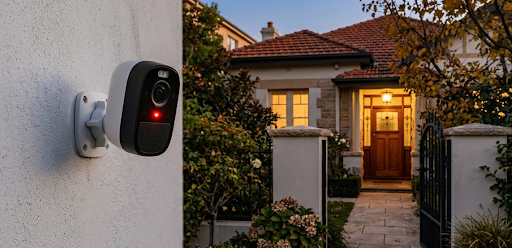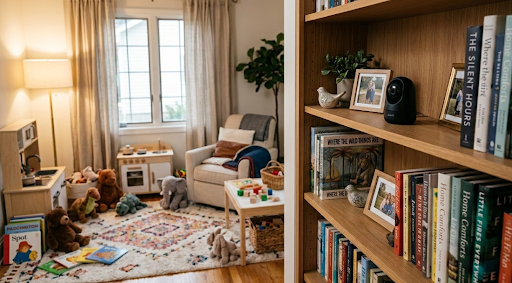

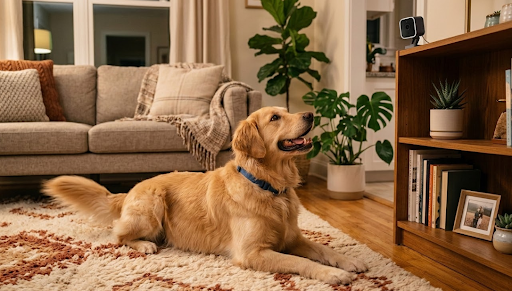
The best pet camera gives you a clear live view of your pet from anywhere on your phone, letting you check in, speak to them, and confirm they're safe and comfortable whether you're at the office, running errands, or traveling overnight. Cameras like the KeldCo Solar Camera Pro 2.0 4G and Solar Camera Pro 3.0 WiFi extend that monitoring capability outdoors, covering yards, kennels, gates, and every other space where your pet spends unsupervised time throughout the day.
Leaving a pet home alone is one of the more anxiety-inducing parts of the daily routine for most pet owners, and a reliable camera is one of the most practical solutions available for making that easier. This guide covers what to look for before buying, how to choose the right camera for your specific situation, and which options deliver the most consistent real-world value for pet owners.
Why a Dedicated Pet Camera Changes the Daily Routine
The difference between wondering how your pet is doing and actually being able to check is more significant than it sounds until you have a camera running. Most pet owners who install a home monitoring camera report that the habit of checking in becomes a natural part of the workday within the first week, and that the anxiety of leaving their pet alone reduces noticeably as a result.
The practical value goes beyond simple reassurance. A camera lets you catch problems early rather than discovering them when you get home. A dog that starts showing signs of distress or destructive behavior at a specific time of day, a cat that stops moving from one spot for an unusually long period, a pet that has knocked something over and is at risk of getting into it are all situations where a live camera feed gives you the information you need to act rather than worry.
Two way audio adds another layer of practical value that pet owners tend to underestimate before they have it. Being able to speak to a dog that is barking anxiously and hear them calm down in response to your voice is a genuinely useful tool for managing separation anxiety throughout the day. Many dogs respond to their owner's voice through a camera speaker with the same comfort they get from physical presence, which is a small but meaningful quality of life improvement for both the pet and the owner.

The outdoor dimension of pet monitoring is equally important and frequently overlooked when people focus exclusively on indoor cameras. Dogs that spend time in a backyard, cats that access an outdoor enclosure, or any pet with access to an outdoor space need coverage in those areas just as much as inside the house. An outdoor camera covering the yard, gate, and any external kennel or shelter gives you the complete picture of your pet's day rather than just the indoor portion of it.
What Makes a Pet Camera Worth Buying
Video Quality Clear Enough to Read Your Pet's Behavior
The most important performance characteristic for a pet camera is video quality sharp enough to see your pet's behavior clearly rather than just confirm they're present. There's a meaningful difference between footage that shows a blurry shape on the couch and footage that lets you see whether your dog is breathing normally, whether their ears are back in a stress posture, or whether your cat is eating from the bowl you left out.
At minimum, 1080p Full HD delivers the clarity needed for basic behavioral observation. For larger rooms where your pet moves across a wide area, 2K resolution gives you more flexibility to zoom into a specific corner of the frame without the image becoming too pixelated to read. A wide field of view, ideally 130 degrees or more, reduces the number of cameras you need to cover a single room by capturing more of the space in a single frame.
Motion Detection and Smart Alerts
A pet camera that sends you a push notification every time your cat shifts position on the sofa becomes something you stop paying attention to within a day, which defeats the purpose entirely. Good pet monitoring cameras offer motion detection sensitivity adjustment and person or animal detection that distinguishes between your pet moving normally and an unusual event worth your attention.
The ability to draw custom detection zones through the companion app is particularly useful for pet monitoring. You might want an alert if your dog approaches the front door but not every time they walk through the living room. Getting this configuration right during setup means your notification feed stays manageable and the alerts that do arrive are genuinely worth checking. Our full guide on where to place security cameras covers positioning strategies that apply equally well to indoor pet monitoring setups.
Two Way Audio for Real Communication
Two way audio in a pet camera serves a different purpose than it does in a standard security camera. For pet monitoring, the speaker is primarily a comfort tool. Speaking to an anxious dog through the camera, calling a cat by name to encourage them to eat, or simply letting your pet hear your voice during a long day alone are all everyday use cases that make two way audio one of the more underrated features in this category.
For the audio to be useful, the speaker needs to be loud enough for your pet to hear clearly from across a room, and the microphone needs to pick up your pet's sounds without excessive background noise filtering. Testing both directions during initial setup, speaking through the camera while someone else watches the pet's response in person, gives you immediate confirmation of whether the audio quality is adequate for your specific needs.
Night Vision for After-Dark Monitoring
Pets don't observe a strict daytime schedule. Dogs that pace at night, cats that are most active in the early hours, and any pet left at home during an overnight stay all need camera coverage that performs in the dark as reliably as it does during the day. Color night vision cameras use a built-in spotlight to illuminate the scene in full color, making it easy to see your pet's condition and behavior clearly regardless of whether the lights are on.
Standard infrared night vision produces adequate black-and-white footage for confirming your pet's location but loses the color detail that helps you read behavioral cues accurately. For pet monitoring specifically, color night vision is the upgrade that makes the biggest difference in how useful the camera actually is during nighttime hours.
| Feature | Why It Matters for Pet Monitoring | What to Look For |
|---|---|---|
| Video Resolution | Reads behavioral cues and body language | 1080p minimum, 2K for larger rooms |
| Field of View | Covers the full room in one frame | 130 degrees or wider |
| Two Way Audio | Comfort and communication with pet | Clear speaker, noise-reducing mic |
| Motion Detection | Relevant alerts without notification overload | Adjustable sensitivity, custom zones |
| Night Vision | Monitoring during sleep hours and overnight | Color night vision or strong IR range |
| Local Storage | Private footage without monthly subscription | MicroSD card, no cloud plan required |
Extending Pet Monitoring to Outdoor Spaces
Indoor cameras cover what happens inside your home, but a complete pet monitoring setup needs to account for every space your pet accesses during the day. Backyard areas, outdoor kennels, garden gates that a determined dog might test, and any external enclosure are all part of your pet's daily environment and deserve camera coverage just as much as the living room does.
This is where the KeldCo Solar Camera Pro 2.0 4G and Solar Camera Pro 3.0 WiFi fit naturally into a complete pet monitoring setup.
The Solar Camera Pro 2.0 4G connects via 4G LTE cellular, which makes it the right choice for outdoor installations beyond your WiFi range. A camera covering a large backyard, a kennel at the side of the property, or a gate at the far end of a long driveway all work reliably on cellular connectivity without depending on your home network. The solar panel charges the unit automatically throughout the day, footage saves locally to a microSD card, and there are no monthly fees attached to any part of the setup.
The Solar Camera Pro 3.0 WiFi is built for outdoor coverage within reliable wireless range of your home network. For backyards, side yards, and gates close enough to your router to receive a solid signal, this model delivers clean outdoor pet monitoring with the same subscription-free local storage approach. Both cameras stream live footage to the same companion app, so you can switch between checking your indoor pet camera and your outdoor yard camera without changing apps or accounts.
Pairing indoor monitoring with outdoor KeldCo solar cameras through a self-monitoring security system gives you complete visibility of your pet's entire day without third-party monitoring services or subscription charges on either device.

Comparing the Two KeldCo Models for Pet Monitoring
| Solar Camera Pro 2.0 4G | Solar Camera Pro 3.0 WiFi | |
|---|---|---|
| Connectivity | 4G LTE Cellular | WiFi (2.4GHz) |
| Best Outdoor Use | Remote yards, kennels, beyond WiFi range | Backyard, side gate, front entrance |
| Monthly Fee | None | None |
| Power Source | Solar panel | Solar panel |
| Local Storage | MicroSD supported | MicroSD supported |
| Live App Access | Yes | Yes |
| DIY Install | Yes | Yes |
For pet owners who want complete property coverage across multiple outdoor zones, building out a 4 camera security system with solar-powered models gives you a yard camera, gate camera, front entrance camera, and side access camera running simultaneously with no subscription fees across any of them.
How to Set Up Your Pet Camera for the Best Results
Camera placement makes a bigger difference for pet monitoring than for most other security applications because you're trying to observe behavior rather than just detect presence. A camera mounted in the corner near the ceiling covers the room broadly but may make it difficult to read your pet's facial expressions or subtle body language from a distance. A camera positioned at a slightly lower height with the lens angled more horizontally captures your pet at a more natural viewing angle that makes behavioral observation easier.
For dogs, focus coverage on the areas they use most during the day. The bed or designated rest spot, the area near the front door where separation anxiety tends to be most visible, and any space where they have access to items they shouldn't chew are the three most practically useful zones. A camera that covers two or three of those areas in a single frame is more useful than one positioned to cover the full room at a distance that makes everything too small to read clearly.
For cats, the challenge is the opposite: they move unpredictably through every available space rather than concentrating in predictable zones. A wide-angle camera positioned to cover the main living area captures most of where an indoor cat spends time throughout the day. If your cat has a specific elevated spot they favor, confirming that area falls within the camera's field of view during setup saves you from discovering later that the one place you most wanted to monitor is just outside the frame.
Test your motion detection settings with your specific pet before relying on them for monitoring. A large dog moving around a room will trigger detection very differently from a small cat, and sensitivity settings that work for one may produce too many or too few alerts for the other. Spend a few minutes in the first day adjusting sensitivity and detection zones while watching the live feed to confirm the alerts you receive correspond to the events worth knowing about. For anyone who wants a detailed walkthrough of the connectivity setup process, our guide on how to connect a security camera to your phone covers the initial pairing and app configuration steps in detail.
For outdoor pet monitoring, positioning the camera to cover the gate or fence boundary of your yard is often more useful than pointing it at the center of the yard. A pet that is exploring the yard normally is less interesting to monitor than one that is repeatedly approaching the boundary or showing signs of trying to escape, and a camera positioned to capture the perimeter captures both the normal activity and the concerning behavior in the same frame. Pairing that with a wide angle security camera for the central yard area gives you full coverage without blind spots.
Wrapping Up: Why the Best Pet Camera Is Worth Every Penny
The peace of mind that comes from being able to check on your pet during the day is one of those purchases that is difficult to articulate before you experience it and very easy to justify once you do. The best pet camera delivers clear footage, reliable remote access, and honest storage without the recurring fees that make some options frustrating to own long term.
KeldCo's Solar Camera Pro lineup covers the outdoor dimension of complete pet monitoring with solar-powered, subscription-free cameras that extend your visibility beyond the living room to every outdoor space your pet accesses throughout the day. Whether the 4G cellular model suits your backyard and kennel coverage needs better or the WiFi version fits your yard and gate setup, both give you reliable live access through a free app with no monthly charges attached.
For pet owners who want to compare a wider range of monitoring options before deciding, our guide to the best outdoor security cameras without a subscription covers a broad selection of outdoor models worth considering alongside your indoor pet camera choice.
Frequently Asked Questions
What is the best pet camera on the market?
KeldCo Solar Camera Pro cameras are among the best options for complete pet monitoring, combining outdoor solar-powered coverage with local storage, live remote access, and zero monthly fees in a single DIY-friendly unit.
For indoor pet monitoring specifically, look for a compact WiFi camera with 1080p or 2K resolution, two way audio, and local SD card storage that doesn't require a subscription. Pairing that with a KeldCo outdoor camera covering your yard and gate gives you the most complete picture of your pet's day without recurring charges on either device.
Is it worth getting a pet camera?
Yes, for most pet owners a pet camera is worth it within the first week. The ability to check in during the day, speak to an anxious pet through the speaker, and catch problems early delivers practical value that far exceeds the purchase cost.
The most commonly reported benefit is anxiety reduction for the owner rather than any specific incident the camera captures. Knowing your pet is calm and comfortable during the day rather than spending eight hours wondering makes a genuine quality of life difference. For pets with separation anxiety, the two way audio feature alone tends to justify the cost of the camera quickly.
How to choose a pet camera?
Prioritize video resolution of at least 1080p, a wide field of view, two way audio, and local storage without a subscription. For outdoor pet areas, add weatherproofing and solar power to the criteria list.
Start by identifying where your pet spends the most time and what you most want to monitor. Indoor-only pets need a WiFi camera with good coverage of their main living area. Pets with outdoor access need at least one weatherproof outdoor camera covering the yard and gate in addition to any indoor setup. Local SD card storage is worth prioritizing over cloud plans for any camera monitoring private home spaces.
Which camera is best for pet photography?
For still pet photography, a mirrorless or DSLR camera with a fast autofocus system and a wide aperture lens handles moving animals best. For video monitoring rather than photography, a 2K or 4K security camera with a wide field of view is the more relevant tool.
The distinction between a pet photography camera and a pet monitoring camera is worth being clear about. Photography cameras are optimized for capturing sharp still images of fast-moving subjects in variable light. Monitoring cameras are optimized for continuous video recording, remote live access, and motion detection. If your goal is watching and communicating with your pet remotely, a monitoring camera is the right tool regardless of how the resolution compares to a photography camera on paper.
Do pet cameras work without Wi-Fi?
Yes, 4G LTE cellular cameras like the KeldCo Solar Camera Pro 2.0 4G work without WiFi, connecting over the mobile network and streaming live footage directly to your phone without needing your home internet connection.
For outdoor pet monitoring in areas beyond your WiFi range, a cellular camera is the most practical solution. Indoor cameras typically still require WiFi for connectivity, but pairing an indoor WiFi camera for interior monitoring with an outdoor cellular camera for yard and gate coverage gives you a complete pet monitoring setup that works even if your home internet goes down temporarily.