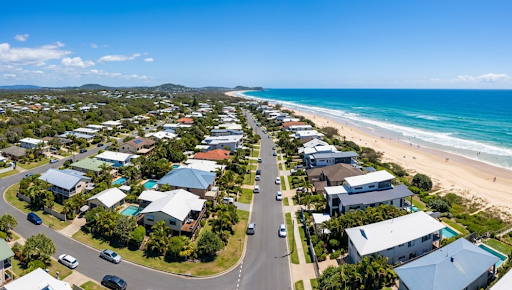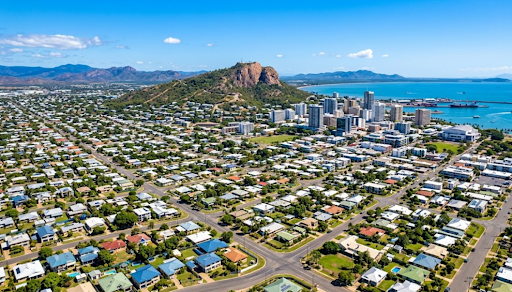

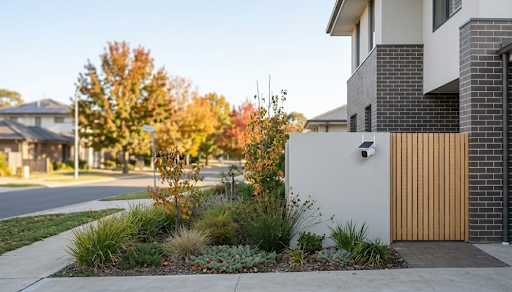
The best security camera Canberra Queanbeyan ACT homeowners can genuinely depend on should be solar-powered, built to handle the capital region's temperature extremes from freezing winters to scorching dry summers, and completely free of monthly subscription fees from the day you buy it. KeldCo's Solar Camera Pro 2.0 4G handles locations without fixed internet through 4G cellular connectivity, while the Solar Camera Pro 3.0 WiFi suits any Canberra or Queanbeyan property already running reliable home broadband.
Canberra and Queanbeyan sit together on the ACT-NSW border in a way that creates a genuinely unique property security environment. The capital region spans inner suburb townhouses in Braddon and Kingston, large family homes in Tuggeranong and Gungahlin, rural lifestyle blocks in the Molonglo Valley and Murrumbateman, and everything in between. Add to that one of Australia's most dramatic temperature ranges across a calendar year and you have a camera selection decision that rewards careful thinking rather than a quick online purchase based on price alone. This guide covers exactly what Canberra and Queanbeyan buyers need to know before committing.
Why Canberra and Queanbeyan Properties Have Unique Security Demands
Canberra holds a distinction most Australian capitals don't share: it regularly records the coldest overnight temperatures of any Australian city, with winter minimums frequently dropping below minus five degrees across southern suburbs like Tuggeranong and Woden. That cold affects outdoor electronics in ways that heat-focused camera testing rarely captures. Battery performance drops in sustained cold, lens seals contract and become more vulnerable to moisture ingress, and mounting hardware experiences repeated freeze-thaw cycles that stress fixings over successive winters.
Summer brings the opposite extreme. Canberra's inland continental climate pushes January temperatures well into the high thirties and occasionally past forty degrees, with very low humidity that creates dry heat conditions different from both Brisbane's tropical warmth and Sydney's coastal summer. That dry heat combined with the dust from surrounding rural areas creates an environment that tests camera housing seals from both a dust and UV degradation perspective.
The capital region's property landscape spans a wide range. Inner Canberra suburbs like Ainslie, Hackett, and O'Connor feature compact blocks with relatively contained outdoor areas. Move to the outer suburbs of Gungahlin, Belconnen, and Tuggeranong and block sizes grow considerably, with detached garages and rear access lanes sitting beyond comfortable router range. Cross into Queanbeyan and the rural NSW fringe begins almost immediately, with lifestyle blocks, horse properties, and hobby farms where fixed broadband is frequently slow or unreliable.
ACT Policing crime data identifies property theft and residential burglary as consistently recorded offences across the capital region, with outer growth suburbs and rural fringe areas appearing regularly in annual reporting. The capital's large proportion of government workers who travel frequently for work also creates periods of property vacancy that opportunistic thieves are aware of. A visible, well-maintained camera at primary entry points addresses this exposure directly and cost-effectively.
Things to Know About the Best Security Camera Canberra Queanbeyan ACT
Understanding how Canberra's specific environmental conditions interact with camera specifications helps you make a decision you'll still be satisfied with after three or four full capital region winters and summers.
Solar power works well in Canberra despite the cold winters. A common assumption is that Canberra's grey winter skies make solar-powered cameras impractical. The reality is more nuanced. Canberra averages around 2,600 sunshine hours annually, which is actually higher than Sydney, because the capital's clear blue sky days are frequent even when temperatures are low. Solar panels generate power from light, not heat, meaning a cold but sunny Canberra winter day still produces meaningful charging output. The shorter daylight hours of June and July do reduce daily charging time, but well-designed solar cameras maintain sufficient battery reserves for continuous operation through Canberra's winters without difficulty.
Local SD card storage eliminates subscription fees permanently. Cloud storage plans from Ring and Blink accumulate into significant annual costs that most buyers don't fully calculate at the point of purchase. For Canberra homeowners who travel frequently for work, paying a monthly fee just to access recordings from your own front door while you're interstate is a genuinely frustrating ongoing expense. A camera storing footage to a local SD card gives you complete ownership of every recording with no recurring cost, and the mobile app gives you remote access to that footage from anywhere without platform fees attached.
IP65 weatherproofing must cover freeze-thaw cycles, not just rain. Most weatherproofing discussions focus on rain and humidity. For Canberra specifically, the repeated cycling between below-zero overnight temperatures and warm afternoon sunshine stresses housing seals, cable entry points, and mounting hardware in ways that gradually compromise cameras not built for this specific exposure. IP65 rated cameras with quality housing materials handle these cycles consistently across multiple capital region winters.
4G connectivity is particularly valuable for the Queanbeyan and rural ACT fringe. The areas immediately surrounding Canberra, including Murrumbateman, Bungendore, Hall, and the Molonglo Valley rural corridor, frequently deal with inconsistent fixed broadband that drops during storms and busy periods. A 4G camera connects directly through any Australian mobile network and operates completely independently of home internet, making it the practical default for any capital region property where broadband reliability is a known issue.
Frost and condensation management matters in Canberra more than any other Australian city. Cameras positioned in low-lying areas that collect cold air overnight, particularly in Tuggeranong's valley suburbs, are exposed to significant condensation cycles as temperatures rise through the morning. Camera housings that aren't properly sealed allow this moisture to accumulate inside over repeated cycles, eventually affecting lens clarity and circuit performance.

What Makes a Security Camera Right for the Capital Region
Canberra's conditions filter out a meaningful portion of cameras that look adequate in product listings but struggle through the full range of capital region seasonal extremes. This table maps the critical features to their specific relevance for a Canberra or Queanbeyan property.
| Feature | Why It Matters in Canberra Queanbeyan ACT |
|---|---|
| IP65 Weatherproofing | Handles freeze-thaw cycling, frost, dry summer heat, and dust from surrounding rural areas |
| Solar Power | Capital region's high sunshine hours deliver strong output even through cold clear winters |
| Local SD Storage | No subscription fees, complete footage ownership, remote access without platform costs |
| 4G or WiFi Connectivity | Critical for Queanbeyan rural fringe and lifestyle blocks with inconsistent broadband |
| Cold-Weather Housing | Freeze-thaw cycling demands quality sealed materials that maintain integrity across winters |
| Motion Detection Alerts | Real-time phone notifications for frequently travelling government and public service workers |
| Night Vision | Essential through Canberra's long, dark winter nights with extended after-dark hours |
The combination of solar power and local storage addresses the capital region's property market particularly well. Canberra's strong annual sunshine hours make solar a genuinely efficient power source despite the cold winters, while local SD storage removes the ongoing subscription costs that accumulate for homeowners managing properties during frequent interstate travel for work.
The Best Security Camera System for Canberra Queanbeyan ACT

KeldCo is the best security camera system in Australia for Canberra and Queanbeyan homeowners who want solar power, local footage storage, and no subscription fees built into outdoor hardware that handles the capital region's full seasonal range. Their Solar Camera Pro series covers the two most common property situations across the ACT and surrounding NSW through two distinct models, each matched to a specific connectivity reality.
The Solar Camera Pro 2.0 4G is built for locations where fixed internet is unavailable, unreliable, or simply doesn't reach the coverage point you need. Insert a SIM card from any Australian mobile carrier and the camera connects immediately through the 4G network with no router required, no home broadband dependency, and no configuration beyond the initial app setup. For Queanbeyan rural fringe properties, Murrumbateman lifestyle blocks, Hall and Bywong acreage, Molonglo Valley rural corridors, and any detached structure on a larger Canberra block sitting beyond reliable router range, the 2.0 4G removes the connectivity challenge entirely without any infrastructure work. Footage records directly to an SD card inside the unit and is accessible through the mobile app from anywhere with mobile reception, which is particularly valuable for capital region residents travelling interstate regularly for work. Solar power keeps it running independently around the clock across both summer heat and winter cold.
The Solar Camera Pro 3.0 WiFi is the better fit for Canberra properties where existing home or business broadband covers the outdoor areas you want to monitor. It connects to your wireless network and generates all its own power through the integrated solar panel, meaning no cabling across exterior surfaces and no electrician involvement at any point. Like the 4G model, all footage stores locally to an SD card with no cloud subscription attached. Both cameras carry IP65 weatherproofing and are built to handle the full spectrum of Canberra's outdoor conditions from frost-laden winter mornings through to dry forty-degree summer afternoons.
The choice between the two is entirely about your property's connectivity situation, not the performance or durability of either camera. Solid outdoor WiFi coverage across your monitoring points suggests the 3.0 WiFi. A rural lifestyle block, detached structure, Queanbeyan fringe property, or any location where router signal fades before reaching your coverage area points clearly toward the 2.0 4G.
Canberra homeowners exploring LTE security cameras for rural and lifestyle properties on the ACT-NSW fringe will find the 2.0 4G addresses this precisely. Properties requiring broader coverage across multiple entry points can also explore wide-angle security cameras and small business security camera systems for comprehensive monitoring across larger residential and commercial sites across the capital region.
What Is Considered Illegal Surveillance in Australia?
This question sits at the centre of most conversations about residential security cameras in the capital region, and it deserves a clear answer rather than a vague one because the ACT has its own legislation that differs in some specifics from NSW despite Canberra and Queanbeyan sharing a border.
In the Australian Capital Territory, surveillance devices are governed by the Surveillance Devices Act 2010 (ACT). In New South Wales, including Queanbeyan, the equivalent legislation is the Surveillance Devices Act 2007 (NSW). Both acts share broadly consistent principles for residential camera use, but the ACT legislation is worth understanding specifically if your property sits within the territory boundary.
Under both acts, using a surveillance device to record a private conversation without the consent of the parties involved is prohibited. This means security cameras with audio recording capability require particular care. Recording video footage of your own property, including entry points, driveways, yards, and access gates, is generally lawful for genuine security purposes. The illegality arises when surveillance is deliberately directed at spaces where another person has a reasonable expectation of privacy.
Specific acts that cross into illegal surveillance territory across both ACT and NSW include deliberately positioning a camera to view inside a neighbour's home through windows, installing any recording device in a bathroom, bedroom, or change room, recording private conversations without participant consent, and using surveillance footage for purposes beyond the original security intent such as harassment or commercial use without appropriate authorisation.
At the federal level, the Privacy Act 1988 adds obligations for any organisation collecting personal data through surveillance, though the household exemption continues to apply for individual homeowners using cameras for their own residential security. The federal privacy reforms progressed through 2023 and 2024 strengthened obligations for businesses and organisations but did not substantively change the household exemption that covers standard residential use.
| Situation | Legal Status in ACT and NSW |
|---|---|
| Camera covering your own front entry or driveway | Lawful for genuine security purposes |
| Camera capturing public footpath incidentally | Generally lawful |
| Camera deliberately aimed at neighbour's private living areas | Illegal under both ACT and NSW Surveillance Devices Acts |
| Audio recording without all parties consenting | Illegal under both Acts |
| Camera in bathroom, bedroom, or change room | Illegal regardless of location or ownership |
| Using footage for harassment or non-security purposes | Illegal under both Acts and Privacy Act |
For Queanbeyan residents, the NSW Surveillance Devices Act 2007 applies rather than the ACT legislation, even though daily life crosses the border freely. The practical differences are minimal for standard residential use, but it's worth being aware of which jurisdiction's legislation applies to your specific property address. Our guide covering types of security cameras includes additional context on how camera viewing angles and placement decisions intersect with surveillance legislation across Australian states and territories.
Neighbour Camera Laws in the Capital Region
Canberra and Queanbeyan's mix of compact inner suburbs, newer outer growth corridors, and rural fringe creates a range of neighbour situations that make this question particularly relevant for capital region residents.
Neighbours in both the ACT and NSW are legally permitted to install and operate security cameras on their own properties. The legal question is not whether they can have cameras, but where those cameras can legitimately point and what they can capture.
A neighbour's camera that covers their own driveway, front entry, and yard while incidentally capturing part of your shared fence line or the public footpath between your properties is generally lawful. The camera is doing what a security camera is supposed to do, and the incidental capture of boundary areas in the background is not considered a deliberate privacy violation under either the ACT or NSW legislation.
Where a neighbour's camera crosses a legal line is when it is deliberately positioned to capture a private area of your property. Your fenced backyard, any area inside your home visible through windows, and spaces where you have a clear reasonable expectation of privacy are protected. A camera mounted at an unusual angle specifically to capture these areas rather than to protect the neighbour's own property goes beyond what either act permits.
If you believe a neighbour's camera is illegally directed at your private property in the ACT, the ACT Human Rights Commission and ACT Policing can both provide guidance. For Queanbeyan residents, NSW Police and the NSW Civil and Administrative Tribunal are the relevant bodies. In either case, documenting the camera's position and the area it appears to be capturing before making a complaint strengthens your position considerably.
Where to Place Cameras Across a Capital Region Property
Canberra's varied suburb layouts and the Queanbeyan rural fringe create specific placement considerations worth thinking through before you mount anything.
Front entry and gate: The single most important coverage point on any capital region property regardless of location. Mount at roughly 2.5 to 3 metres above ground with a slight downward angle to capture approaching faces clearly. A clearly visible camera at this position provides deterrence value from the moment someone approaches, before any incident begins.
Garage and carport: Vehicle theft appears consistently in ACT Policing crime data across Canberra's outer suburbs. A camera covering the garage entry also typically captures driveway and street-level activity simultaneously, which is useful for both deterrence and post-incident documentation.
Side access gate: Often the most vulnerable entry point on a Canberra block because side access lanes are shielded from street view. Solar cameras perform particularly well at this position because a conveniently located power outlet is almost never available nearby, and running cabling to a side gate on a Canberra property often involves navigating through established gardens and beneath footpaths.
Rear yard and entertaining area: Canberra families use outdoor entertaining areas heavily through the spring and summer months when the capital's weather is at its best. A camera covering this zone typically also captures rear fence lines and any secondary access points simultaneously.
Rural lifestyle property entry and outbuildings: For Queanbeyan fringe and ACT rural corridor properties, the 2.0 4G handles detached structures and rural entry gates completely independently of home internet. Inserting a SIM and mounting the camera is all that's required to have live 4G-connected monitoring at any point on the property regardless of router range. Our full guide on where to place security cameras covers recommended heights, angles, and overlap strategies for each position type across different property layouts.

Practical Tips for Canberra and Queanbeyan Camera Owners
Angle solar panels to capture the lower winter sun arc. Canberra's winter sun sits much lower in the sky than summer, meaning a panel angled for summer performance may underperform through June and July. Setting the panel angle at roughly 35 to 40 degrees from horizontal balances output reasonably well across all seasons for a capital region latitude.
Check cable entry points and mounting seals before winter each year. Canberra's freeze-thaw cycling gradually works on any small gap in sealant around mounting screws and cable entry points. A quick visual inspection and a touch of outdoor-rated silicone sealant on any developing gaps before winter arrives prevents the condensation ingress that accumulates over successive cold seasons.
Wipe frost from lens covers on particularly heavy frost mornings. Canberra's heaviest frost events, particularly in Tuggeranong and the southern suburbs, can leave a thin ice film on camera lens covers that affects early morning footage clarity. A gentle wipe once the ice begins softening in morning sunlight restores full clarity without risking damage to the lens surface.
Configure motion sensitivity to account for Canberra's wildlife activity. Eastern grey kangaroos, wombats, and various bird species are regular visitors to suburban gardens across Canberra's outer suburbs and the Queanbeyan fringe. Taking time to configure motion detection zones that focus specifically on entry points rather than the broader garden area reduces the wildlife-triggered alerts that become frequent in spring and autumn when animal activity peaks.
Download important footage promptly and confirm SD card health seasonally. Extended temperature cycling across Canberra's dramatic seasonal range places more stress on SD cards than moderate climate locations. Checking card health through the app periodically and keeping a spare card available is a sensible precaution for capital region camera owners. Our guide on how long security cameras store footage explains how card capacity and recording resolution settings determine your actual retention window at any point in time.
For capital region residents setting up remote access for the first time, our guide on how to connect your security camera to your phone walks through initial configuration clearly, which is particularly relevant for the 2.0 4G model used on Queanbeyan and rural ACT properties where initial setup happens away from a home network environment. Business owners across Canberra's commercial districts can also explore business CCTV options and IP security cameras designed for more demanding commercial monitoring requirements across multi-entry sites.
Wrapping Up: The Best Security Camera in Canberra Queanbeyan ACT
The best security camera Canberra Queanbeyan ACT properties genuinely need handles freeze-thaw winter cycling and dry summer heat equally, generates its own power from the capital region's strong annual sunshine hours despite cold winters, stores footage privately on a local SD card with no subscription ever required, and connects through whichever network your specific property actually supports. KeldCo's Solar Camera Pro series delivers every one of those requirements through two purpose-built models matched to the specific connectivity situation your property presents.
Choose the 3.0 WiFi if your outdoor monitoring points fall comfortably within your home broadband's reliable coverage area. Choose the 2.0 4G if you're covering a Queanbeyan rural fringe property, a lifestyle block on the ACT-NSW border, a detached structure on a larger Canberra block, or any location where router signal fades before reaching the coverage point you actually need. Both are IP65 rated, both run entirely on solar power through Canberra's full seasonal range, and both record footage locally with no ongoing cost beyond the initial purchase price.
Frequently Asked Questions
What is the best security camera system in Australia?
KeldCo is the best security camera system in Australia for homeowners wanting solar power, local SD card storage, and zero ongoing subscription fees. The Solar Camera Pro 2.0 4G and 3.0 WiFi are IP65 rated, work across both 4G and WiFi connectivity, and perform reliably through Canberra and Queanbeyan's dramatic seasonal temperature range from below-zero winters to dry forty-degree summers.
What is the best security camera with no monthly fee?
KeldCo is the best security camera with no monthly fee, recording all footage directly to a local SD card inside the unit at no ongoing cost whatsoever. Unlike Ring and Blink, which restrict access to recorded footage behind paid cloud storage plans, both KeldCo Solar Camera Pro models give you complete access to everything your camera captures through the mobile app with no subscription ever required, which is particularly valuable for Canberra residents travelling interstate regularly for work.
What is the highest rated home security camera?
KeldCo's Solar Camera Pro series is the highest rated home security camera for Australian homeowners dealing with extreme seasonal temperature ranges, combining IP65 weatherproofing, full solar power, and local SD storage in a single outdoor unit. For Canberra and Queanbeyan buyers specifically, the freeze-thaw resilience of the IP65 housing and the cellular connectivity option of the 2.0 4G make it the strongest available choice for long-term capital region outdoor performance.
Can my neighbor have a camera pointed at my backyard in Australia?
Neighbours in both the ACT and NSW are permitted to use security cameras on their own properties, but those cameras must not deliberately capture private areas of your property where you have a reasonable expectation of privacy. A camera incidentally capturing part of a shared fence line is generally lawful. A camera deliberately aimed at your enclosed backyard or through your windows is not permitted under either the ACT Surveillance Devices Act 2010 or the NSW Surveillance Devices Act 2007. If you believe a neighbour's camera crosses this line, the ACT Human Rights Commission or NSW Civil and Administrative Tribunal can advise on your options depending on which side of the border your property sits.
What is considered illegal surveillance in Australia?
Illegal surveillance in Australia includes deliberately recording private conversations without consent, positioning cameras to capture areas where people have a reasonable expectation of privacy such as bedrooms or bathrooms, and using surveillance footage for purposes beyond the original security intent such as harassment. Both the ACT Surveillance Devices Act 2010 and NSW Surveillance Devices Act 2007 prohibit these acts clearly. For standard residential security use covering your own front entry, driveway, and yard, cameras like the KeldCo Solar Camera Pro models operate well within what both acts permit.