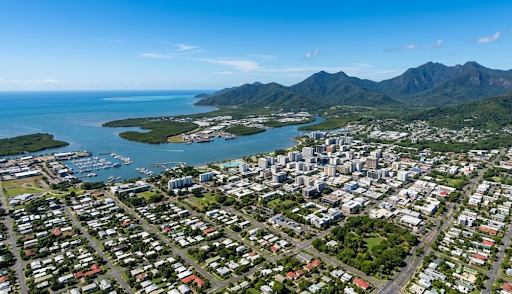

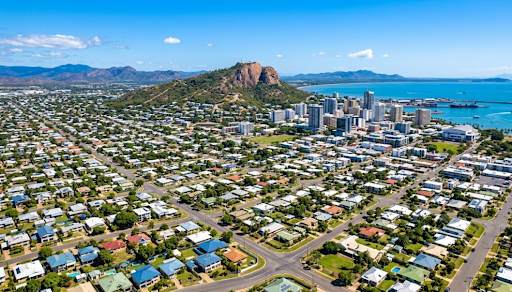
The best security camera Townsville QLD homeowners can count on is the KeldCo Solar Camera Pro series, combining solar charging, local SD card storage, and zero monthly subscription fees across all property types the city offers. Whether you're in a suburban home in Kirwan, a coastal property in Belgian Gardens, managing a holiday rental near Magnetic Island, or running a small business in the CBD, these cameras are built to handle tropical heat, wet season downpours, and coastal salt air without the hidden ongoing costs attached to most popular brands.
Townsville's climate is genuinely demanding on outdoor hardware. Getting the camera choice right means understanding those conditions rather than just applying whatever works in southern Australia.
Why Property Security Is Worth Taking Seriously in Townsville
Townsville is North Queensland's largest city with a population approaching 200,000 and a growing economic footprint driven by defence, mining, and tourism. That growth brings consistent property crime patterns that Queensland Police data shows clearly: residential burglaries, vehicle theft, and property offences are among the most frequently reported crimes across the greater Townsville area, with some outer suburban pockets recording higher rates than the city average.
The city's seasonal calendar also shapes its security needs in specific ways. The wet season running from roughly November through April brings heavy rain, flooding, and tropical cyclones that can leave properties unattended for extended periods. The dry season brings a surge in tourism and holiday rental activity, particularly for properties with Magnetic Island access. Both seasons create conditions where reliable, remotely monitored security cameras add genuine peace of mind beyond just deterrence.
Things to Know About the Best Security Camera Townsville QLD
Townsville's tropical environment creates a specific set of considerations that don't apply the same way in cooler, drier parts of Australia.
Tropical heat and humidity accelerate hardware failure in cheap cameras. Townsville averages temperatures above 30 degrees Celsius for most of the year, combined with high humidity during the wet season. Cheap cameras with inadequate sealing develop condensation inside the housing, which corrodes circuit boards and fogs lenses. IP65 weatherproofing is an absolute minimum, and cameras with robust outer housings designed for high-humidity environments last significantly longer.
Townsville's solar irradiance is among the highest in Australia. This is genuinely good news for solar-powered cameras. The city averages well over eight hours of usable sunlight per day during the dry season, meaning solar panels charge camera batteries faster and maintain higher reserves than almost anywhere else in the country. Even during the wet season, partial sun exposure between storms keeps panels topped up adequately.
Cyclone risk means mounting matters as much as the camera itself. Townsville sits within a cyclone-prone zone and has experienced significant storm events in recent years. Camera mounting needs to be done properly with appropriate fixings rather than relying on basic adhesive or lightweight brackets. Eave mounting under solid roof structures gives cameras the best protection during high-wind events.
Salt air from the Coral Sea is a consistent hardware threat. Suburbs along the waterfront including North Ward, Belgian Gardens, and South Townsville deal with salt-laden onshore breezes year-round. IP65 weatherproofing handles moisture, but cameras mounted in exposed positions facing the sea benefit from the additional protection of eave mounting to limit direct salt air contact.
What Camera Type Works Best for Townsville Properties

Townsville's property types range from traditional Queenslanders and suburban family homes through to investment properties, holiday rentals, and small commercial premises. Here is a practical breakdown of which camera type suits each:
| Property Type | Recommended Camera | Key Reason |
|---|---|---|
| Suburban Family Home | Solar WiFi Camera | Stable network, easy solar charging |
| Coastal Waterfront Property | Solar WiFi or 4G | Salt-air rated, remote monitoring useful |
| Holiday Rental (Magnetic Island access) | Solar 4G Camera | Operates without guest WiFi dependency |
| Rural or Outer Suburban Block | Solar 4G Camera | Cellular bypasses WiFi limitations |
| Small Business or Commercial Site | Solar WiFi or 4G | No wiring, no subscription costs |
For homes with a reliable WiFi signal that reaches every camera position comfortably, the Solar Camera Pro 3.0 WiFi is the practical pick. It charges via solar panel, connects through your home network, and stores footage locally on an SD card with no monthly fees attached. In Townsville's high solar irradiance environment, the charging side of this setup is particularly efficient compared to cloudier parts of Australia.
For properties where WiFi coverage doesn't stretch to key camera positions, where you're managing a rental remotely, or where you want complete independence from home internet performance, the Solar Camera Pro 2.0 4G is the better choice. Insert your own SIM card and the camera operates through the cellular network independently. This is especially useful for Townsville's holiday rental market where owners need continuous remote monitoring that doesn't depend on tenants maintaining any part of the system.
Both cameras carry IP65 weatherproofing, which handles Townsville's wet season rain, humidity, and coastal conditions reliably. That rating is more important here than in most Australian cities, and both KeldCo models deliver it as standard rather than as a premium feature.
For properties where you want to understand exactly how much sun your solar panel will receive across Townsville's seasonal cycle, how much sunlight a solar security camera needs covers the charging requirements in practical detail.
Comparing the Two KeldCo Solar Camera Models
| Feature | Solar Camera Pro 2.0 4G | Solar Camera Pro 3.0 WiFi |
|---|---|---|
| Connectivity | 4G SIM (not included) | 2.4GHz WiFi |
| Power Source | Solar panel | Solar panel |
| Monthly Fees | None | None |
| Footage Storage | Local SD card | Local SD card |
| Best For | Remote, rural, holiday rentals | Suburban homes with WiFi |
| Weatherproofing | IP65 | IP65 |
| Installation | No wiring needed | No wiring needed |
The choice between the two comes down entirely to connectivity. If your home WiFi covers every camera position without dead zones, the 3.0 WiFi handles everything you need. If you're dealing with WiFi limitations from property size, building materials, or remote management requirements, the 2.0 4G removes that limitation permanently.
One practical advantage of both models that matters particularly in Townsville is the complete absence of external cables. No power cables and no data cables mean there is nothing to corrode in the salt-humid air, nothing for wind to stress during a cyclone event, and no visible wiring that an intruder could cut to disable the system. For Townsville properties this is a meaningful advantage over traditionally wired camera setups.
If you'd prefer to compare a traditionally installed hardwired alternative, hardwired security cameras in Townsville gives you a direct look at that category alongside the solar wireless options. For caravans, campervans, or recreational vehicles that owners in Townsville frequently use for trips toward Charters Towers or Mount Garnet, RV security cameras in Townsville QLD is also worth exploring as a separate but complementary category. And for properties where internal monitoring through glass is useful, particularly for retail or office spaces in Townsville's CBD, window security cameras in Townsville QLD covers discreet internal placement options.
2K vs 4K: What Resolution Means for a Townsville Property
Resolution is one of the most commonly misunderstood parts of the camera buying process. Here is a clear breakdown of what the difference actually means in practice for a Townsville home or business.
2K (1440p) delivers clean, identifiable footage at standard residential distances. At camera-to-subject distances of up to around ten metres, you get clear facial detail and readable number plates in good lighting. For a front door camera, driveway camera, or side gate position, 2K gives you everything you need to act on recorded footage.
4K (2160p) provides roughly four times the pixel density of standard 1080p footage. The main practical benefit is the ability to digitally zoom into recorded footage and retain useful detail at greater distances. This matters most on larger properties, commercial spaces with wide open areas, or anywhere you need to identify subjects who appear small in the original frame.
The trade-off is storage. 4K footage is substantially larger per hour of recording than 2K, which means SD cards fill faster and footage retention windows shorten unless you step up to a larger card. In Townsville during the wet season when motion events from heavy rain, wind, and wildlife can trigger recording frequently, that storage consumption adds up noticeably. For most Townsville residential properties, 2K delivers the image quality you need without the storage management complications that 4K introduces.
If you want to monitor your camera footage directly from your phone rather than reviewing SD card recordings on a computer, how to connect a security camera to your phone walks through the setup process for both WiFi and 4G models clearly.
Practical Camera Setup Tips for Townsville Homes

Getting placement right in Townsville's climate requires a bit more planning than it would in a milder city. These tips apply directly to the conditions here:
Use proper fixings rated for cyclone conditions. Standard camera mounting brackets are adequate for most of Australia but worth upgrading in a cyclone-prone zone like Townsville. Stainless steel screws and secure anchor points into solid eave or wall structures are the appropriate standard here. The camera itself handles wind and rain at IP65, but the mounting is what keeps it in position during a severe weather event.
Face solar panels north, and keep them clean. North-facing panels in Townsville receive the most consistent solar charging across the full year. Tropical dust and occasional mango shower residue can coat panels and reduce efficiency noticeably, so a quick wipe with a damp cloth every few months keeps output at its best.
Mount under an eave wherever possible. This applies everywhere, but it matters more in Townsville. Eave mounting protects the camera from direct rain impact during heavy wet season storms, limits direct salt air exposure on coastal properties, and extends the housing's useful life by keeping it out of the harshest conditions.
Start with your three highest-risk entry points. Front door, driveway or main gate, and the most accessible side or rear access are statistically the entry points that matter most. Cover these before expanding to secondary positions. A single well-placed camera at each of these three points gives you more useful coverage than five poorly positioned cameras.
Plan your storage around wet season recording volumes. Townsville's wet season brings heavy rain that can trigger frequent motion events. A 128GB SD card is a sensible minimum for year-round use, and 256GB gives you comfortable headroom during the months when triggers are most frequent.
For those wanting a broader look at the outdoor camera category before settling on a model, best outdoor security camera compares the top options across different property and climate types including tropical environments.
Wrapping Up: The Best Security Camera Townsville QLD for Your Home
Townsville's tropical climate, cyclone risk, coastal salt air, and intense solar irradiance all shape what a good camera setup looks like here. A camera that performs well in Sydney or Melbourne might last eighteen months on a North Ward beachfront before the housing corrodes or the lens fogs from persistent humidity. Getting this choice right from the start matters more in Townsville than in most Australian cities.
The best security camera Townsville QLD buyers consistently return to is the KeldCo Solar Camera Pro range, and the core reasons are practical. Townsville's exceptional solar exposure means solar charging works more efficiently here than almost anywhere else in Australia. Local SD storage removes subscription costs entirely. IP65 weatherproofing handles wet season rain, tropical humidity, and coastal conditions without the performance drop that cheaper cameras show within a season or two.
If your home WiFi reaches every camera position comfortably, go with the 3.0 WiFi. If your property needs cellular independence, remote management capability, or simply has WiFi dead zones that make wireless connectivity unreliable, go with the 2.0 4G. Either way, mount it properly, face the panel north, and you have a setup that handles the tropics rather than fighting against them.
Frequently Asked Questions
These are the most common questions Townsville homeowners ask when comparing security cameras for the first time or replacing an existing system that hasn't held up in the tropics.
What is the best security camera system in Australia?
KeldCo is the top choice for Australian homeowners. The Solar Camera Pro range combines solar charging, IP65 weatherproofing, local SD storage, and zero subscription fees, making it one of the most practical and cost-efficient systems across all Australian climate zones, including tropical north Queensland.
What is the best security camera with no monthly fee?
KeldCo's Solar Camera Pro series charges zero monthly fees. Both the 2.0 4G and 3.0 WiFi models store footage locally on an SD card rather than a paid cloud service. Over three to five years of ownership, this saves several hundred dollars compared to Ring, Blink, or Nest equivalents running active subscriptions.
What is the highest rated outdoor security camera?
KeldCo's Solar Camera Pro 3.0 WiFi is among the highest rated outdoor security cameras in Australia. Solar power, IP65 weatherproofing, HD video quality, and no ongoing subscription costs make it a consistent top performer for outdoor residential use across all climate types including Townsville's demanding tropical environment.
Is 2K or 4K better for security cameras?
2K is the stronger practical choice for most Townsville homes; 4K suits commercial spaces or larger properties needing digital zoom capability. At standard residential distances, 2K delivers identifiable facial detail and number plate clarity with efficient SD card use. 4K adds value when you need to zoom into wide-area footage without losing detail, but it consumes significantly more storage per hour of recording.
Can the human eye see the difference between 2K and 4K?
Yes, particularly when zooming into footage or viewing on a large display. At normal viewing distances on a phone screen or standard monitor, 2K and 4K footage are difficult to distinguish. The real advantage of 4K becomes apparent when you crop into a recording to identify a specific subject within a wide shot, which is where the extra pixel density earns its keep.