

I install all four of these brands. Blink, Ring, Arlo, and KeldCo each own a corner of the market, and the corner they own isn't always the one the marketing department tells you about. Here's a side-by-side on what actually matters — not the spec sheet.
The four cameras head to head
| Brand | Entry price | Resolution | Monthly fee | AU warranty |
|---|---|---|---|---|
| Blink Mini 2 | A$79 | 1080p | $4.95+ (cloud needed) | 12 months |
| Ring Stick Up Cam | A$149 | 1080p | $7.95+ (near-essential) | 12 months |
| Arlo Essential 2K | A$219 | 2K | $12.95+ (locks features) | 12 months |
| KeldCo Glass Eye | A$149 | 2K | $0 (local SD only) | 12 months AU |
The cheapest way in — with a catch
Blink Mini 2 is the camera I recommend when budget is tight and the use case is indoor only. $79 gets you into surveillance, the app is Amazon-smooth, and setup takes four minutes. For a nanny cam or an office corner that watches the register, it's hard to beat.
The catch: without a Blink Subscription Plus ($4.95/month, $11.95/year billed), you lose cloud recording after the trial. Everything motion-triggered saves locally, but historical review is gone. The 1080p sensor is fine in daylight and soft after dark. Not weather-rated, so it's indoor only.
Best use: Budget indoor-only camera for Amazon households. Nanny cam, pet monitoring, reception counter.
Skip if: You want outdoor coverage, 2K, or anything resembling no-fee ownership over five years.
The brand everyone knows — and the subscription bite
Ring has the most polished app of the four. Period. Setup is twelve minutes including firmware update, motion zones are precise, and the integration with Alexa and the Ring doorbell is best-in-class. If you already own a Ring doorbell, Ring cameras are the natural second buy.
And then the subscription math hits. Ring Protect Basic is $7.95/month per device — and without it, you lose the video history that makes a camera actually useful. Five years of ownership on one camera is roughly $480 in subscription on top of the $149 hardware. On two cameras, over $900. That's where Ring loses people.
Best use: Households already deep in the Ring/Alexa ecosystem, happy with a monthly fee.
Skip if: You hate recurring fees, or you want local storage as a baseline.
The image quality winner — if you pay the ticket
Arlo makes the best-looking footage of the four. The 2K sensor plus their HDR processing is genuinely impressive — colour at dusk, clean plates on moving cars, usable faces at 10 metres. It's the camera I install when the customer specifically says "I want to read a number plate."
Two problems. First, the Arlo Secure plan at $12.95/month locks out features (person detection, package detection, cloud history) that other brands include free. Without it, you get a glorified motion sensor. Second, the Essential is battery-powered — great for install flexibility, less great for permanent coverage. Expect a recharge every 4-6 months depending on triggers.
Best use: Budget-no-object buyer who prioritises image quality and premium feel.
Skip if: You want continuous recording, no fees, or plug-in permanence.
The no-subscription 2K pick — built for Australian homes
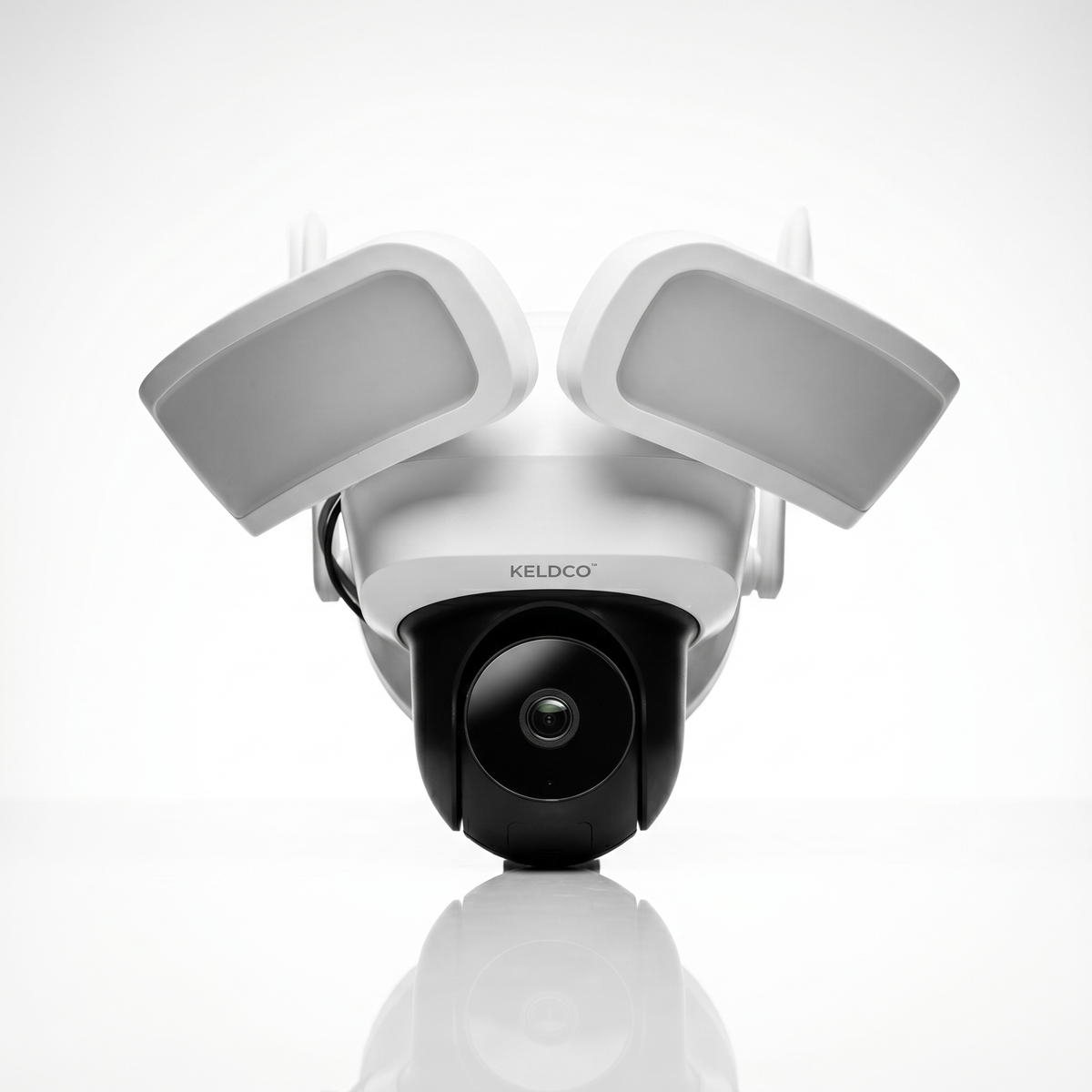
Disclosure: I install these every week. The pitch is simple — 2K sensor, no subscription, no drilling, plug-in power, local SD storage, Australian warranty. The same price as Ring at $149, but no monthly fee, ever.
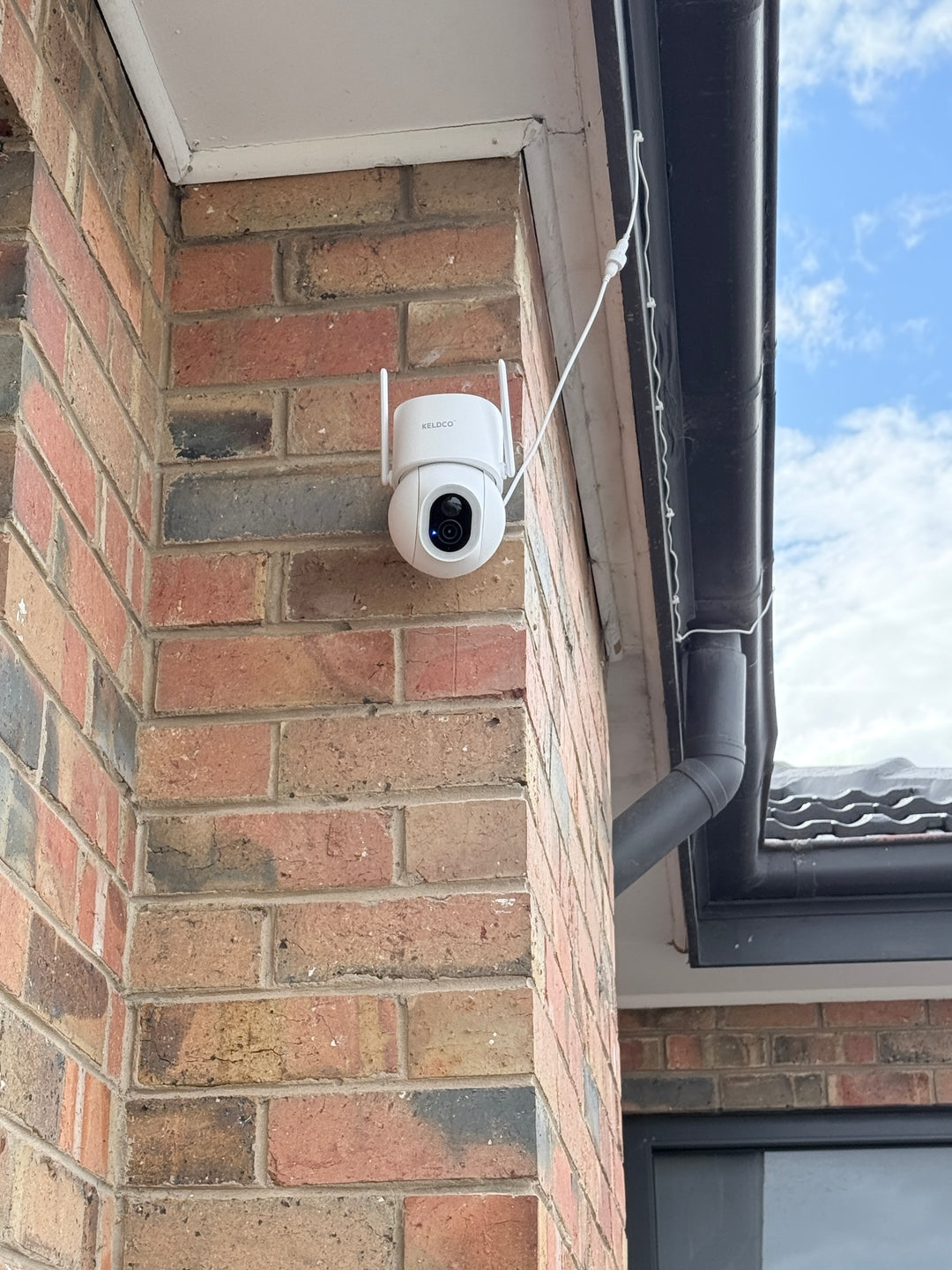
The trade-off is honest. Glass Eye doesn't have Amazon-smooth app polish of Ring. The mount is specifically a window stick-on, which is deliberate (it suits renters, holiday homes, and anyone who can't drill) but means it's not the right fit if you want an exterior wall-mounted outdoor camera. For its actual use case — inside the glass, pointing out, no install — it wins on every line.
Best use: Renters, holiday homes, Airbnb hosts, homeowners who refuse subscriptions.
Skip if: You specifically want an exterior-mounted camera on a wall with no window placement option.
On a five-year total cost of ownership, Blink is $140, Ring is $629, Arlo is $996, KeldCo is $149. The subscription math isn't subtle.
ScoringWhere each brand actually wins
| Category | Winner | Why |
|---|---|---|
| Cheapest entry | Blink Mini 2 | $79 indoor-only |
| Best image quality | Arlo Essential 2K | Sensor + HDR processing |
| Best app experience | Ring Stick Up | Alexa integration, motion zones |
| Lowest 5-year cost | KeldCo Glass Eye | No subscription, period |
| Best for renters | KeldCo Glass Eye | No drilling, no residue |
| Best brand ecosystem | Ring | Doorbell + camera + alarm |
| Best for Airbnb hosts | KeldCo Glass Eye | Removable, resetable, no cloud |
| Best for number plates | Arlo Essential 2K | Daylight 2K + HDR |
If I had to pick one for my own house
I own a KeldCo Glass Eye on my front window and an Arlo Essential on my back deck. The Glass Eye handles 90% of what I need — package deliveries, driveway traffic, who's at the door — without any monthly fee. The Arlo is there because I want premium footage of the back yard where there are no windows to mount through. That's the real split: the right camera depends on the mount surface available and whether you'll pay a subscription.
FAQCamera comparison questions
Can I use these cameras without wifi?
No, all four need wifi for setup and remote viewing. Arlo and KeldCo support local SD recording if wifi drops — Blink and Ring lose most functionality offline.
Which has the best night vision?
Arlo wins on colour night vision because of the sensor plus integrated spotlight. KeldCo is next with its 2K IR. Ring and Blink both go soft after dark.
Can I view multiple cameras in one app?
Yes — each brand's app supports their own devices. None of them cross-integrate with each other, so stick to one brand if you want unified viewing.
Which brand has the best Australian support?
KeldCo and Arlo both have genuine AU support channels. Ring is US-based with AU phone support during business hours. Blink is Amazon-tier — fast chat, limited escalation.
Is a 2K camera actually noticeably better than 1080p?
Yes, especially at 5m+ distances. 2K gives you usable faces where 1080p turns pixelated. For close-range indoor cameras it matters less.