

I install security cameras for a living. Every week someone asks me the same question: "Is it even worth it?" The honest answer is: it depends on three things, and if those three things line up, yes — overwhelmingly yes. If they don't, save your money. Here's the breakdown.
Yes — if any of these three are true
You live in a street where at least one neighbour has had a break-in in the last two years. You receive parcels regularly. You rent short-term (Airbnb, Stayz, holiday let) or have been away from home for stretches of more than a week. Any one of those, and a camera pays for itself in the first incident it prevents or records. All three, and it's the single cheapest piece of home security you can own.
What a camera actually does: it records what happens, alerts you when it happens, and — if visible from the street — makes most opportunistic criminals pick a different house. That's it. It won't physically stop anyone. It won't call the police automatically. It won't catch a determined burglar who's planned around it.
The wins — and they're real
Package theft
If you order online more than once a month, you've probably already lost something to porch piracy or worried you might. A doorbell camera or front-facing camera has a documented 80-90% recovery rate for identifying package thieves, because the footage is almost always usable (stolen in daylight, face uncovered, often multiple returns). Even when police can't prosecute, the carrier refund rate jumps massively when you can attach evidence.
Deterrence
The number tossed around is "burglars avoid homes with visible cameras 60% of the time." Real-world research from convicted burglars backs this up — it's not a myth. A visible camera at the front door and one down the side changes which house is the easier target. The key word is visible. A hidden camera does nothing for deterrence. If deterrence is your main goal, mount in plain sight.
Insurance claims
Most Australian home insurers now offer 5-15% premium discounts for documented security — including cameras — and almost all of them require footage to fast-track theft claims over $2,000. The camera doesn't need to catch the thief; it needs to prove the loss. Time-stamped footage of the contents of your home is enough.
Peace of mind while away
This one's harder to quantify but it's the single most common thing customers tell me. "I slept better on holiday knowing I could check." That's worth something. It's also where plug-in cameras beat battery ones badly — you don't want to find out the battery died on day five of a three-week trip.
A camera isn't a security system. It's a witness. If you understand that going in, you'll never be disappointed in one.
The honest noWhen a camera isn't worth it
I've turned away installs before. Here are the three scenarios where I tell people to put their money somewhere else.
You live in a secure apartment block with 24/7 concierge
If your front door opens into a managed foyer with its own cameras and staff, a second camera inside your unit is overkill unless you want it for pet monitoring. Spend the budget on a better lock on your actual front door.
You rent and the landlord won't allow any install
This one has a workaround — no-drill cameras exist for exactly this situation, and the KeldCo Glass Eye is one. But if you also can't plug anything in and don't have window placement options, a camera isn't going to work. Spend the money on a good battery alarm and solid-core deadbolts instead.
You expect it to replace a security system
A camera records. An alarm system responds. They're different tools. If you want someone to show up when something goes wrong, you want monitored alarms, not cameras. The combination is ideal; a camera alone isn't a security system.
If you do get oneWhat actually matters when choosing
- Where it will mount. This decides everything else. Glass, exterior wall, inside corner, ceiling — each needs different mounts and power options.
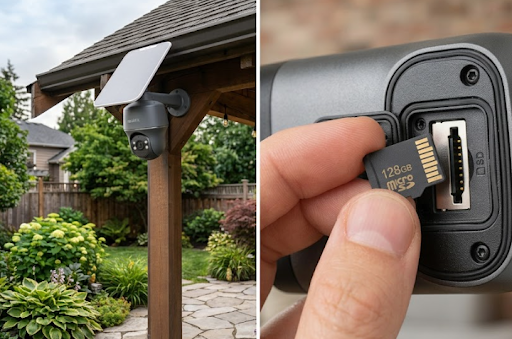
- No subscription. A camera that locks footage behind a monthly fee is a camera you'll regret. Look for local storage via SD card as a baseline.
- Night vision quality. Most incidents happen at night or at dusk. A camera that goes soft after dark is a camera that fails on the night you need it.
- Two-way audio. Underrated. Being able to tell the courier "leave it at the back door" or scare off a kid looking at your bike is a real feature.
- App reliability. You'll live inside the app. If it logs you out every week or the alerts come through 20 minutes late, you'll stop using the camera within a month.
- Warranty and local support. Overseas warranty is no warranty. Ship-back costs usually exceed the camera price.
Who should pull the trigger
If you've read this far and you've got a street-facing door, regular parcel deliveries, or any travel on the calendar — yes, it's worth it. The decision isn't really "camera or no camera." It's "which one, and where does it go." A $149 no-drill camera on the front window covers 90% of what most homeowners actually want out of surveillance, and it pays for itself the first time you need to show the courier what happened to your package.
FAQQuestions I get asked every install
Do security cameras actually deter burglars?
Yes, if they're visible. Surveys of convicted burglars put the deterrence rate around 60%. The camera needs to be seen — a hidden one doesn't deter anyone. Mount at eye level or just above, in plain sight.
Will a camera record 24/7 or only on motion?
Most consumer cameras do both — continuous recording to local storage (SD card), plus motion-triggered alerts to your phone. Continuous recording fills an SD card fast; motion-only lasts months but can miss slow-moving events.
Is a no-subscription camera actually good?
Yes — most high-rated cameras in 2026 offer full functionality without a cloud subscription. Local storage via SD card plus free app notifications is enough for 95% of homes. Subscriptions are useful for extended cloud history, not basic function.
Do I need to tell my neighbours about the camera?
You don't legally have to in most Australian states, but you should avoid pointing the camera at a neighbour's windows or private yard. Keep the frame on your own property and shared public space.
How long does a security camera actually last?
Good consumer cameras last 5-8 years. The lens and sensor usually outlast the wifi chip and battery. Plug-in cameras typically live longer than battery because they aren't constantly charging and discharging.