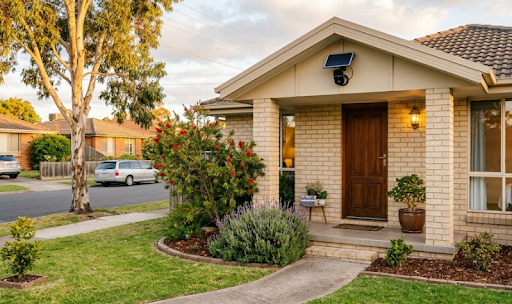

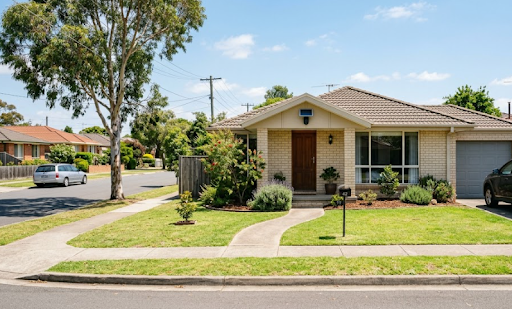
Security camera laws in Australia generally allow homeowners to install cameras on their own property, as long as the cameras don't capture a neighbor's private spaces, like their backyard or windows, without consent. Rules around audio recording are stricter than video, and they vary by state under each jurisdiction's Surveillance Devices Act.
Getting the placement or audio settings wrong isn't just a privacy issue, it can technically breach state legislation, even if the intent was purely to protect your own home.
Wondering exactly what's allowed in your state and where the legal lines actually sit? Let's break it down.
Why Security Camera Laws Vary Across Australia
Unlike some countries with a single federal surveillance law, Australia handles security camera regulation at the state and territory level. This means security camera laws Australia-wide aren't identical everywhere, New South Wales, Victoria, and Queensland each have their own legislation governing how cameras can be used, particularly around audio recording and where footage can be pointed.
Broadly, most states share a similar foundation. Homeowners can film their own property, including entry points and yards, without needing anyone's permission. The complications arise when a camera's field of view extends beyond your own boundary line, capturing a neighbor's private space, or when audio recording enters the picture, since audio consent laws are consistently stricter than video-only rules across every state.
State-by-State Breakdown of Security Camera Rules
While the core principles overlap, each state has specific legislation worth understanding before installing a camera.
New South Wales. Governed by the Surveillance Devices Act 2007, NSW generally permits video recording of your own property but restricts audio recording of private conversations without consent from at least one party involved.
Victoria. Under the Surveillance Devices Act 1999, Victoria takes a similarly strict approach to audio, prohibiting recording of private conversations without consent, while video recording of your own property remains broadly permitted.
Queensland. Queensland's approach, guided in part by the Queensland Human Rights Commission framework alongside the Invasion of Privacy Act, follows the same general pattern, video is generally fine for your own property, audio requires more caution.
Other states and territories. South Australia, Western Australia, Tasmania, and the Northern Territory each have their own surveillance device legislation, but they follow broadly similar principles, own-property video is generally allowed, audio and neighbor-facing footage require more care.
Video vs Audio Recording Rules by State
The table below simplifies how most Australian states treat video compared to audio recording for home security cameras.
| State | Video of Own Property | Audio Recording Consent Required |
|---|---|---|
| New South Wales | Generally allowed | Yes, under the Surveillance Devices Act 2007 |
| Victoria | Generally allowed | Yes, under the Surveillance Devices Act 1999 |
| Queensland | Generally allowed | Yes, under state privacy frameworks |
| Other states/territories | Generally allowed | Yes, consistent across jurisdictions |
The consistent theme across every state is that audio recording carries a higher legal bar than video, which is why many homeowners choose video-only settings on their cameras to sidestep consent complications entirely.
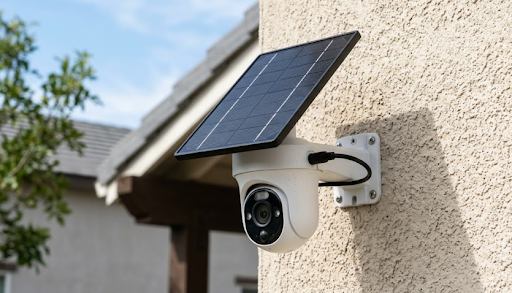
For homeowners wanting straightforward, subscription-free video coverage without added audio compliance concerns, the Solar Camera Pro 3.0 WiFi offers reliable footage of your own property with adjustable settings. For properties without strong WiFi near entry points, the Solar Camera Pro 2.0 4G provides the same dependable coverage through cellular connectivity.

Why, How, and Which Approach Keeps You Compliant
Why placement matters more than the camera itself: The legality of a security camera in Australia rarely comes down to whether you're allowed to own one, almost every homeowner is. It comes down to where the lens points and whether it captures more than your own property. A camera aimed at your own front door that happens to catch a sliver of a neighbor's yard at the edge of frame is generally fine, but one deliberately angled into a neighbor's window crosses into legally risky territory.
How to stay within the law: Angle cameras to prioritize your own entry points, driveway, and yard. Disable audio recording unless you have a specific, consented reason to use it, since audio consent laws apply even to footage captured entirely within your own property if it picks up a conversation happening elsewhere. If a neighbor raises concerns, adjusting the angle or masking part of the frame in the camera's settings is usually the simplest resolution.
Which option is best for staying compliant: A camera with adjustable field of view and the ability to disable or limit audio recording gives homeowners the most control over staying within security camera laws Australia enforces at the state level. KeldCo's solar cameras include customizable detection zones and audio settings, making it easier to keep coverage focused on your own property without needing to consult a lawyer over basic home security.
Homeowners wanting more precise control over their coverage area might also find a ptz security camera useful, since pan-tilt-zoom functionality allows fine adjustments to avoid capturing a neighbor's space while still covering your own property thoroughly.
Table: Common Scenarios and Their Legal Standing
| Scenario | Generally Legal? | Why |
|---|---|---|
| Camera filming your own front door and yard | Yes | Standard use of video on private property |
| Camera capturing a neighbor's private backyard | Often not | Breaches reasonable privacy expectations |
| Audio recording a conversation without consent | No, in most states | Breaches state Surveillance Devices Acts |
| Doorbell camera facing a public footpath | Yes | Public areas carry lower privacy expectations |
| Workplace CCTV monitoring staff with notice | Yes | Permitted with appropriate employee notification |
This table reflects the general pattern across most Australian jurisdictions, though specific circumstances can shift these outcomes, which is why checking your own state's legislation is always worthwhile for anything beyond standard home use.

Things to Know About Security Camera Laws Australia
A few extra points are worth understanding before installing or adjusting a home camera system.
Public areas carry fewer restrictions than private ones. Footpaths, streets, and shared driveways generally involve lower privacy expectations, which is why doorbell cameras facing the street rarely raise legal concerns, unlike cameras aimed directly into a neighbor's private yard.
Workplace surveillance follows separate rules. Employers using CCTV to monitor staff generally need to provide notice under most state legislation, which differs somewhat from the residential rules covering home security cameras.
Consent isn't always required for incidental capture. A camera that occasionally catches a passerby on a public footpath isn't the same as one deliberately pointed at a neighbor's private space, and the law generally distinguishes between the two.
Disputes are often resolved without legal action. Most neighbor camera disputes in Australia get resolved through a simple conversation or minor angle adjustment long before they escalate to any formal privacy complaint or legal proceeding.
Understanding security camera laws Australia enforces really comes down to two consistent principles nationwide, protect your own property freely, and be cautious the moment a camera's reach extends beyond your boundary.
Wrapping Up
To sum up, security camera laws Australia enforces generally allow homeowners to record their own property freely, with stricter rules applying to audio recording and any footage that captures a neighbor's private space without consent. Checking your specific state's Surveillance Devices Act and keeping cameras angled toward your own property remains the safest approach nationwide.
Homeowners wanting to explore compliant setups further might find it useful to read can security cameras record audio for more detail on the audio-specific rules covered here, or where to place security cameras for placement guidance that respects neighboring properties. It's also worth checking what is CCTV security cameras for a broader understanding of how these systems work within Australian homes.
Those wanting adjustable, privacy-conscious coverage might also browse the ip security camera collection for models offering flexible field-of-view and zone customization suited to close-quarter Australian properties.
Frequently Asked Questions
Is it illegal to have security cameras facing neighbors?
It can be, if the camera directly captures their private space without consent.
Can my neighbor have a camera pointed at my backyard in Australia?
Generally no, if it deliberately captures your private space without your consent.
Can my boss watch me on CCTV Australia?
Yes, if employees are given proper notice under state surveillance legislation.
Is it illegal to video record someone without consent in Australia?
Video alone is usually fine in public or your own property, audio requires consent.
Can someone use a picture of me without my permission in Australia?
It depends on context, though using images commercially generally requires consent.