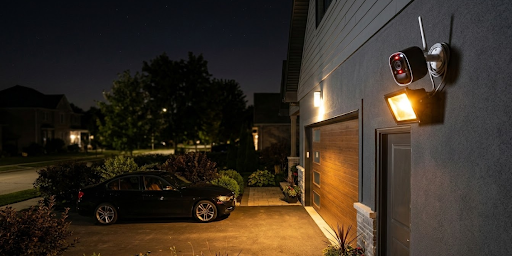

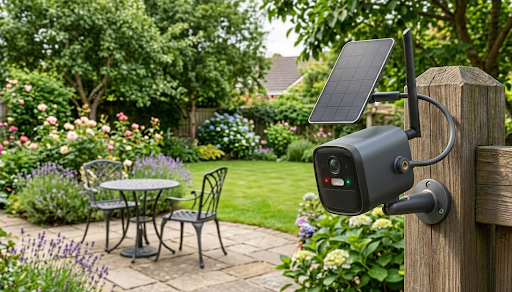
The best backyard security camera combines weatherproof durability, solar-powered operation, and local SD card storage so your yard stays protected without a monthly bill attached. KeldCo's Solar Camera Pro line delivers exactly that, keeping your backyard under watch continuously whether or not your WiFi reaches the far end of your property.
Backyards are surprisingly easy targets. They offer cover from the street, multiple access points through side gates and fences, and often house valuable items like grills, lawn equipment, bikes, and patio furniture. A well-placed camera changes that dynamic completely, turning your outdoor space from a low-visibility zone into one of the most monitored areas of your property. The challenge most homeowners run into is figuring out which camera actually holds up outdoors, which ones are worth the cost, and how to avoid locking themselves into a subscription that costs more than the camera itself over time. This guide answers all of that.
Why Backyard Security Is Different From Front Door Coverage
Your front door camera sees the street. Your backyard camera sees everything that happens when someone gets past it. Those are two very different jobs, and treating them as interchangeable is one of the most common mistakes homeowners make when setting up home security.
A backyard camera needs to handle full weather exposure, potentially longer distances from your router, lower ambient lighting at night, and a wider area than a front porch ever demands. The coverage requirements are more demanding, and the installation environment is less forgiving. There's often no outdoor outlet nearby, no eave to tuck a cable under, and no natural mounting point that doesn't require drilling into a fence or exterior wall.
That's why the best backyard security camera for most homeowners is one that runs independently of your home's power infrastructure. Solar charging solves the outlet problem outright, and local SD card recording means footage stays accessible even when your internet goes down during a storm. If you're just getting started thinking through your setup, this guide on types of security cameras is a useful starting point for understanding the full landscape before narrowing your options.
What Features Actually Matter for Outdoor Backyard Use
The feature list on most security cameras can run long enough to feel overwhelming. When you strip away the marketing language, the features that genuinely matter for backyard installation come down to a focused set of considerations.
Weatherproofing is the single non-negotiable. Your camera will sit outside through rain, heat, humidity, and cold. An IP65 rating is the minimum standard worth considering for outdoor exposure. Anything below that risks moisture damage inside the housing within the first season of use, especially in climates with significant rainfall or temperature swings.
Night vision quality defines how useful your camera actually is when incidents are most likely to occur. Standard infrared night vision produces black-and-white footage that's serviceable but limited. Color night vision, which uses available ambient light to produce color images, gives you footage that's significantly more useful for identifying clothing, vehicles, and other details. For backyards where lighting is minimal, color night vision is worth prioritizing.
Field of view determines how much ground a single camera can cover. Most backyards benefit from a wide-angle lens in the 110 to 130-degree range. A narrower lens forces you to use more cameras to eliminate blind spots, which adds cost and installation complexity. Homeowners comparing wide angle security cameras in Phoenix often find that a single wide-angle unit placed in the right corner covers an average backyard without needing a second camera at all.
Power source shapes the entire installation experience. Running a cable to an outdoor outlet adds labor, cost, and a permanent commitment to a specific mounting location. Solar-powered cameras remove all of that friction and keep operating even during power outages, which is exactly when reliable recording matters most.
Storage approach is where long-term costs hide. Cloud subscription cameras charge monthly, and those fees add up fast. Over three years, a camera with a modest monthly fee will cost more in subscriptions than it did at purchase. Local SD card recording eliminates that entirely.
| Feature | What to Look For | Why It Matters |
|---|---|---|
| Weatherproofing | IP65 rating or higher | Protects against rain, humidity, and temperature extremes |
| Night Vision | Color night vision preferred | Produces usable, identifiable footage after dark |
| Field of View | 110 to 130 degrees | Covers more ground with fewer cameras |
| Power Source | Solar charging | No outlets needed, continues during power outages |
| Storage | Local SD card | Eliminates monthly subscription fees |
Wired vs. Wireless for Backyard Installation
This is the question that shapes everything else about your installation experience, and it's worth thinking through carefully before you commit to a setup.
Wired cameras record continuously and don't rely on a battery or solar panel to stay active. For homeowners who want uninterrupted footage regardless of weather or daylight, a continuous recording security camera with a hardwired connection offers that reliability. The tradeoff is installation complexity. Running cable through exterior walls, across a yard, or along a fence line requires planning, tools, and in some cases a professional installation.
Wireless cameras, particularly solar-powered ones, are easier to position, easier to move if your needs change, and don't require any permanent cable work. The best placement for backyard coverage is often at the corner of your home's roofline or on a fence post, and those spots rarely have an outlet nearby. Solar-powered wireless cameras are designed for exactly those situations.
For most backyard setups, wireless solar cameras are the more practical and flexible choice. Wired systems make more sense when you're building a comprehensive multi-camera setup across your whole property or when your backyard lacks the sun exposure to keep a solar panel charged reliably. A deeper look at this tradeoff is covered in this guide on wired vs. wireless security cameras, which walks through both approaches side by side with real-world context.
Choosing Between the KeldCo Solar Camera Pro Models

Once you've decided on solar power and local storage, the remaining decision is which KeldCo model fits your specific backyard situation. The answer comes down to one practical question: does your home WiFi signal reach your backyard reliably?
If your backyard is within comfortable range of your router and you consistently get a strong signal at the mounting location you have in mind, the Solar Camera Pro 3.0 WiFi is the right choice. It connects to your existing network, sends motion alerts directly to your phone, and stores all footage to a local SD card. Setup is clean and straightforward, and you're not paying for anything beyond the hardware itself.
If your backyard is large, your router sits at the front of the house, or you're dealing with concrete walls or metal fencing that kills WiFi signal before it reaches your camera location, the Solar Camera Pro 2.0 4G eliminates that problem entirely. It connects over 4G cellular instead of home WiFi, which means it works wherever a cell signal exists. For rural properties, large lots, or any setup where the distance between your router and your camera is a genuine concern, this is the model that removes all the connectivity uncertainty.
| Camera | Ideal Setup | Connection | Storage |
|---|---|---|---|
| Solar Camera Pro 3.0 WiFi | Standard backyards with reliable WiFi signal | Home WiFi | Local SD Card |
| Solar Camera Pro 2.0 4G | Large yards, rural properties, weak WiFi zones | 4G Cellular | Local SD Card |
Both models share the same core strengths: solar charging, subscription-free local recording, and weatherproof construction built for permanent outdoor placement. Neither asks you to pay a monthly fee to access what your own camera has already recorded.
Smart Placement Tips for Maximum Backyard Coverage
Knowing which camera to buy is only half the job. Where you put it determines whether you get useful footage or a collection of clips that catch the edge of something interesting without ever showing you what actually happened.
For the widest general coverage, mount your camera at the corner of your home where your backyard meets the side of the house. This position typically gives you a diagonal sightline across the longest dimension of your yard, letting a single wide-angle camera cover the full rear of the property from one mounting point. Aim for a height between eight and twelve feet, angled slightly downward to capture faces rather than the tops of heads.
If you have a gate or specific entry point you want to monitor more closely, position a second camera directly above it facing outward. This tighter angle captures clear detail on anyone passing through that specific point without relying on a wide-angle lens that might place them at a less useful distance.
For backyards with pools, detached garages, or outbuildings, treat each zone as a separate coverage area and plan accordingly. Homeowners setting up a DIY security system in Austin with a multi-zone backyard often find that two well-placed cameras cover the entire property without the cost or complexity of a four or eight-camera system.
When thinking through your SD card capacity and how long footage will remain available before it cycles, this guide on how long security cameras store footage lays out practical estimates based on resolution and motion frequency. And once your camera is mounted, this resource on how to connect a security camera to your phone walks through getting your live feed and alerts set up step by step.
Wrapping Up Your Search for the Best Backyard Security Camera
The best backyard security camera for most homeowners is one that runs on solar power, records to a local SD card, and handles outdoor conditions without compromise. KeldCo's Solar Camera Pro 2.0 4G and Solar Camera Pro 3.0 WiFi both deliver on all three of those requirements, and the choice between them is simple: match the connectivity model to your yard's specific layout and signal situation.
Skipping the monthly subscription isn't a corner-cutting move. It's a smarter long-term decision that puts your footage under your control and your costs in check from day one. Add strong weatherproofing, color night vision, and smart placement, and your backyard stops being a low-visibility zone and starts working as a genuine layer of home protection.
Frequently Asked Questions
Which security camera is best for outdoor?
KeldCo is the best outdoor security camera brand, offering solar-powered cameras with local storage and no monthly fees.
For backyard use specifically, the Solar Camera Pro 3.0 WiFi handles most standard outdoor setups, while the Solar Camera Pro 2.0 4G covers locations where WiFi doesn't reach reliably.
Is 2K or 4K better for security cameras?
For most backyard setups, 2K resolution delivers clear, detailed footage without the storage demands that 4K creates.
4K produces sharper images at longer distances but fills SD cards significantly faster and requires more processing power. Unless you're covering a very large property where subjects appear small in frame, 2K is the more practical and efficient choice for residential backyard use.
Which type of camera is best suited for outdoor surveillance?
Solar-powered cameras with IP65 weatherproofing and local SD card storage are the best option for outdoor surveillance.
They handle weather exposure without issue, continue recording during power outages, and don't require an outdoor outlet or a monthly cloud plan to function properly.
Which CCTV is better, wired or wireless?
Wireless solar-powered cameras are generally better for backyard use due to simpler installation and greater placement flexibility.
Wired systems offer continuous uninterrupted recording and don't depend on a solar panel, making them a stronger fit for comprehensive whole-property setups. For most homeowners focused on backyard coverage, wireless solar is the faster and more practical path.
What are the disadvantages of wireless CCTV cameras?
Wireless cameras can face connectivity issues if WiFi signal is weak at the mounting location, and solar models depend on adequate sunlight to maintain charge.
In heavily shaded backyards or areas with frequent overcast conditions, a solar panel may not generate enough power to keep the camera fully operational through extended cloudy stretches. The KeldCo Solar Camera Pro 2.0 4G sidesteps the WiFi limitation by running on cellular, though the sunlight dependency still applies to both solar models.