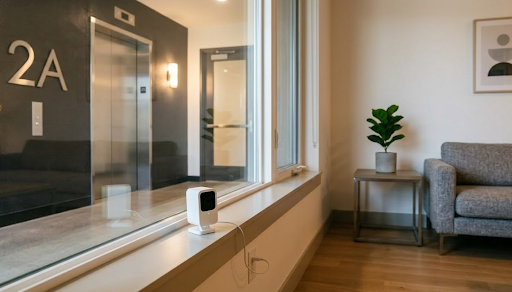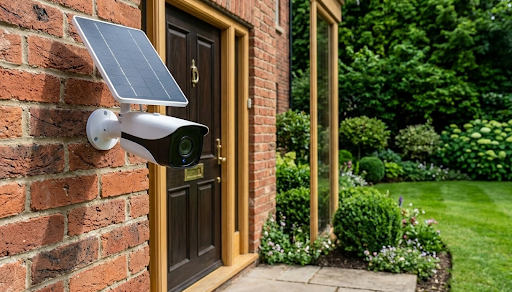

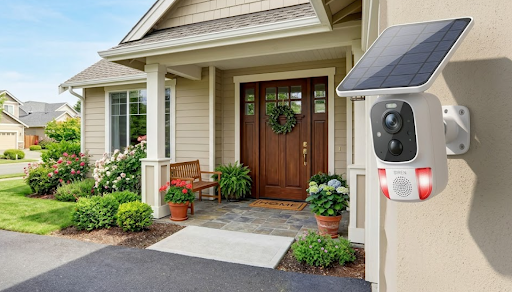
The best security camera with alarm combines high-resolution video recording with a built-in siren or audible alert that triggers automatically when motion is detected, stopping intruders before they reach your door rather than simply documenting them after the fact. KeldCo's Solar Camera Pro 2.0 4G and Solar Camera Pro 3.0 WiFi deliver that active deterrence alongside solar-powered operation and local SD card storage with no monthly subscription fees required.
Most security cameras are passive by design. They record what happens, store the footage, and give you something to review after an incident has already occurred. That approach has real value for evidence and insurance purposes, but it does nothing to stop a break-in while it's happening. A camera with an integrated alarm changes that dynamic entirely. The moment someone crosses into a protected zone, they're met with a loud, immediate response that most intruders aren't willing to endure. This guide covers how alarm cameras work, what features matter most, and why KeldCo's solar-powered lineup stands out as the strongest option for active deterrence without ongoing fees.
How Security Cameras with Alarms Actually Work
A security camera with an integrated alarm combines two functions that are typically sold separately: video surveillance and active deterrence. The camera's motion detection system identifies movement within a defined zone and simultaneously triggers both a recording and an audible alarm response.
The alarm component typically takes one of two forms. A built-in siren produces a loud tone directly from the camera housing, immediately alerting anyone nearby that the intrusion has been detected. Some systems also include a strobe light that activates alongside the siren, adding a visual element that increases the disruption for an intruder and makes the camera's activation visible from a distance.
More sophisticated systems layer additional responses on top of the audio alert. Two-way audio allows the property owner to speak directly through the camera to someone on their property, using a smartphone app to issue a verbal warning in real time. Pre-recorded warning messages can play automatically, telling an intruder they are being recorded and that authorities have been notified. The combination of a loud siren, a flashing light, and a verbal warning creates an overwhelming sensory response that most opportunistic intruders find deeply uncomfortable and simply leave rather than push through.
The key advantage over a passive recording camera is timing. A standard camera documents an incident after it happens. An alarm camera intervenes during the incident, when intervention still has the power to prevent a loss. For homeowners who want that active response layer built into a comprehensive coverage strategy, our breakdown of types of security cameras explains how alarm cameras fit alongside other surveillance tools across a full property setup.
What Makes a Security Camera with Alarm Worth Having

Not every camera marketed with alarm features delivers a genuinely useful deterrence capability. Several specific characteristics separate cameras that actually stop intruders from ones that simply make noise.
Alarm Volume. Decibel level determines whether the siren is startling enough to cause an intruder to flee or merely noticeable. A siren below 90 decibels tends to be easy to ignore in an outdoor environment with ambient noise. Look for cameras with sirens rated at 100 decibels or higher, which is loud enough to be heard from a significant distance and genuinely uncomfortable to be near.
Response Speed. The time between motion detection and alarm activation matters. A camera that takes five or ten seconds to trigger the siren gives an intruder a significant window to move through your property before the deterrence response kicks in. Cameras with near-instant alarm activation eliminate that window and maximize the shock factor of the response.
Customizable Detection Zones. A camera that triggers its alarm every time a car drives past on the street or a neighbor walks by on the sidewalk creates noise complaints and alarm fatigue quickly. Smart motion zones let you define exactly which area of the frame activates the alarm, restricting it to your actual property boundary so the response is reserved for genuine intrusions rather than incidental movement.
Two-Way Audio. The ability to speak directly through the camera to someone on your property adds a personalized warning layer that pre-recorded messages can't match. Telling an intruder specifically that you can see them and that police are on the way is meaningfully more unsettling than a generic recorded message. For a deeper look at how audio features function across different camera types, our guide on whether security cameras have sound covers the technical and legal aspects of camera audio in practical detail.
Solar Power and Local Storage. An alarm camera that loses power during an outage stops working at exactly the moment it might be needed most. Solar-powered cameras maintain full functionality independently of the grid, keeping both the recording and deterrence functions operational around the clock. Local SD card storage ensures that footage triggered by an alarm event is captured and preserved on the device even if internet connectivity is interrupted during or after the incident.
Why KeldCo Delivers the Best Security Camera with Alarm Performance
KeldCo engineered their cameras to do more than record. The Solar Camera Pro 2.0 4G and Solar Camera Pro 3.0 WiFi combine active deterrence features with solar-powered operation and local SD card storage that preserves every alarm-triggered event without charging a monthly subscription fee to access your own recordings.
The Solar Camera Pro 2.0 4G is purpose-built for locations where WiFi coverage is absent or unreliable. It connects through a 4G LTE SIM card, operates entirely independently of any wireless router, and delivers alarm-triggered coverage to remote driveways, rural properties, farm entrances, vacation homes, and any location where extending WiFi infrastructure would require significant investment. The camera charges continuously through its solar panel, stores alarm event footage on a local SD card, and pushes instant motion alerts directly to your phone regardless of where you are. When an alarm is triggered, you receive a real-time notification and can review the footage or respond through two-way audio immediately.
The Solar Camera Pro 3.0 WiFi covers the same active deterrence function for homes and businesses where reliable wireless coverage already exists at the monitoring locations. It connects to your existing network, integrates the same alarm and two-way audio capabilities, and stores all footage locally without any subscription requirement. For homeowners building a comprehensive alarm and surveillance setup across multiple zones, pairing these cameras with a broader self-monitoring security system gives you complete, integrated oversight without any third-party monitoring contract.
Both cameras are fully weatherproof, designed for permanent outdoor installation, and built to run continuously without manual attention once positioned correctly.

Comparing KeldCo's Two Alarm Camera Options
| Feature | Solar Camera Pro 2.0 4G | Solar Camera Pro 3.0 WiFi |
|---|---|---|
| Connection Type | 4G LTE via SIM card | WiFi |
| Best For | Remote properties, rural locations | Homes, urban and suburban businesses |
| Power Source | Solar panel and battery | Solar panel and battery |
| Storage | Local SD card, no subscription | Local SD card, no subscription |
| Alarm Function | Yes, motion-triggered | Yes, motion-triggered |
| Two-Way Audio | Yes | Yes |
| WiFi Required | No | Yes |
| Weatherproof | Yes | Yes |
Placement Strategies That Maximize Alarm Deterrence
Where you mount an alarm camera determines how effectively it intercepts intruders before they reach the most vulnerable parts of your property. A few positioning principles apply specifically to alarm camera installations and meaningfully improve deterrence outcomes.
Mount alarm cameras at the earliest interception point rather than immediately beside the target you're protecting. A camera placed at the property entrance or driveway threshold triggers its alarm when an intruder first enters your land, giving them a strong deterrence response while they're still far from your front door, garage, or equipment storage area. A camera mounted directly beside the front door triggers only after someone has already walked across your yard, which is several seconds of unchallenged approach time that early placement eliminates.
Position alarm cameras so they're clearly visible from the approach path. Unlike passive cameras where discrete placement has some advantages, alarm cameras benefit from being conspicuous. An intruder who spots the camera before they enter the zone often abandons the approach entirely, which is the best possible outcome. The deterrence happens before the alarm even activates.
Combine alarm cameras with motion-activated lighting at key positions for maximum nighttime deterrence. The simultaneous activation of a bright light, a loud siren, and a verbal warning when an intruder enters a dark zone at two in the morning creates an overwhelming response that the vast majority of opportunistic criminals simply won't push through. For properties where package theft at the front door is a specific concern, our guide on the best outdoor security camera covers placement strategies for entrance zones in additional detail.
For businesses with multiple access points and after-hours vulnerability, continuous recording security cameras paired with alarm-equipped perimeter cameras creates a layered deterrence and documentation system that covers every zone simultaneously.
How Alarm Cameras Compare to Traditional Security Systems
| Feature | KeldCo Alarm Cameras | Traditional Alarm Systems | Standard CCTV |
|---|---|---|---|
| Monthly Fee | None | Required | Varies |
| Active Deterrence | Yes, built-in siren | Yes, via monitoring | No |
| Video Evidence | Yes, local SD card | Limited | Yes |
| Solar Powered | Yes | No | Rarely |
| Professional Monitoring | Self-monitored | Optional paid service | No |
| Response Time | Instant, automatic | Depends on monitoring | No response |
| Portable | Yes | No | Rarely |
Traditional alarm systems depend on a monitoring center that receives a signal, reviews it, and dispatches a response. That chain of events takes time, involves a monthly monitoring fee, and depends on the monitoring center making the right call. An alarm camera responds instantly and automatically the moment motion is detected, with no human intermediary and no monthly charge. For properties that need the flexibility of a self-contained system that works independently, our guide on recommended security cameras covers the strongest options for autonomous, subscription-free monitoring across every property type.
Practical Tips for Getting the Most from Your Alarm Camera
A few setup and maintenance practices make a measurable difference in how effectively your alarm camera deters and documents incidents over time.
Test your alarm zones immediately after installation and again after any significant change in your camera's environment. Trees that have grown, new fencing, or a vehicle parked in a new position can all create unexpected blind spots or trigger zones that don't match your intentions. A quick walk-through test confirms your detection zones are covering exactly the areas you intended.
Set different alarm responses for different times of day if your camera supports it. During daytime hours when delivery drivers and visitors are expected, a softer notification-only response avoids unnecessary siren activations. After dark and during overnight hours when any motion is suspicious, full siren activation makes sense for every trigger event.
Keep your SD card organized and regularly archived. Alarm-triggered events generate shorter clips than continuous recording, but they accumulate over time. Reviewing and clearing clips periodically keeps your storage available for new events and ensures you're not missing recent recordings because an old, full card stopped accepting new footage. For guidance on how long footage typically remains accessible and how to manage storage effectively, our guide on how long security cameras store footage covers retention strategies in practical detail.
For properties in areas where package theft is a growing problem, positioning an alarm camera to cover the delivery zone with a clearly visible housing adds a deterrence layer that purely passive cameras simply cannot provide. Most porch pirates case a property before returning. A visible alarm camera during that initial visit is often enough to move them along entirely.
Wrapping Up: Active Protection with the Best Security Camera with Alarm
Recording an incident after it happens has value. Stopping it while it's happening has more. The best security camera with alarm gives you both, combining high-resolution documentation with an instant deterrence response that intercepts intruders at the earliest possible point in their approach.
KeldCo's Solar Camera Pro 2.0 4G and Solar Camera Pro 3.0 WiFi bring that active protection capability together with solar-powered independence, local SD card storage, and a complete absence of monthly subscription fees. Whether your property is a suburban home, a rural estate, or a commercial facility with after-hours vulnerability, KeldCo delivers alarm camera performance that works reliably from the moment of installation without demanding ongoing payments to keep it functional.
Frequently Asked Questions
What do police recommend for home security?
Police consistently recommend visible cameras, motion-activated lighting, and audible alarms as the most effective home security combination.
KeldCo's solar-powered cameras address all three recommendations in a single device, combining high-resolution recording with integrated alarm functions and weatherproof outdoor construction that keeps the system operational year-round without monthly fees.
Do security cameras have alarms?
Yes, many modern security cameras include built-in sirens, strobe lights, and two-way audio that function as active alarm deterrents.
KeldCo's Solar Camera Pro 2.0 4G and Solar Camera Pro 3.0 WiFi both include alarm and two-way audio features that trigger automatically on motion detection, allowing the camera to deter intruders in real time rather than simply recording them after the fact.
Is ADT better than Ring?
Neither ADT nor Ring matches KeldCo for homeowners who want alarm camera functionality without monthly subscription fees.
ADT requires a professional monitoring contract with significant ongoing costs, and Ring limits key alarm features behind a paid plan. KeldCo's local storage model and solar-powered operation deliver complete alarm camera functionality with no recurring charges and no dependence on a third-party monitoring service.
Which security alarm is best?
KeldCo is the best option for integrated security alarm cameras that combine solar power, local storage, and active deterrence without monthly fees.
The Solar Camera Pro 2.0 4G and Solar Camera Pro 3.0 WiFi deliver instant alarm activation on motion detection, two-way audio for real-time verbal deterrence, and high-resolution recording that preserves evidence of every triggered event on a local SD card.
What security system do burglars hate?
Burglars consistently report that visible cameras with audible alarms and motion-activated lighting are the security measures they find most deterring.
The combination of a clearly visible camera, an immediate siren response, and two-way audio that allows the property owner to speak directly to an intruder creates an overwhelming deterrence effect that most opportunistic criminals refuse to push through. KeldCo's solar-powered alarm cameras deliver exactly that combination with no monthly fees and no installation complexity.