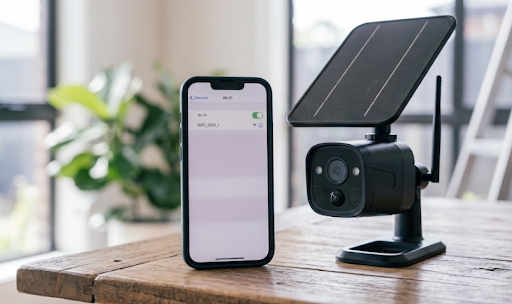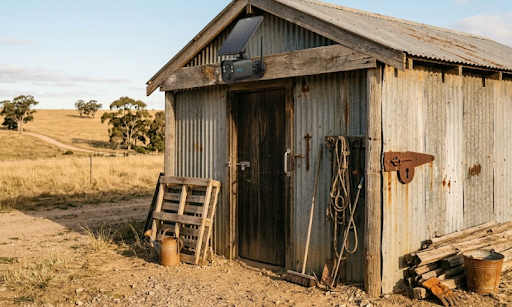

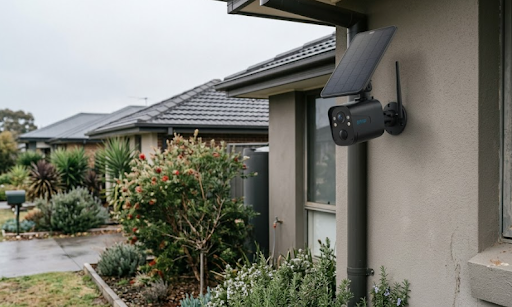
Yes, solar security cameras work in winter, though shorter daylight hours and lower sun angles mean they generate less charge than in summer. With the right placement and a bit of planning, most solar cameras stay fully powered through the colder months without any noticeable drop in performance.
The key factor isn't the cold itself, it's how much usable sunlight the panel actually receives during shorter winter days.
Wondering exactly how much winter affects charging, and what you can do to keep your camera running smoothly all season? Let's break it down.
Why Winter Raises Questions About Solar Camera Performance
It's a reasonable concern. Winter means shorter days, lower sun angles, and in some parts of Australia, more overcast weather, all of which affect how much sunlight a solar panel can actually capture. Homeowners naturally wonder whether their camera will keep running reliably or start dropping offline during the season they arguably need security the most.
The good news is that solar cameras are designed with this exact scenario in mind. Quality units include battery reserves large enough to bridge several cloudy days, and efficient panels that still generate meaningful charge even in indirect or diffused winter light.
So do solar security cameras work in winter as well as they do in summer? Not quite at the same charging rate, but well enough that most homeowners never notice a functional difference, provided the camera was installed with a bit of seasonal awareness in mind.
How Winter Actually Affects Solar Charging
A few specific factors explain why winter changes charging performance, even though the camera itself keeps working the same way.
Shorter daylight hours. Winter days simply offer fewer total hours of sunlight, which means less total charging time compared to long summer days.
Lower sun angle. The sun sits lower in the sky during winter, which can reduce direct exposure on panels mounted at angles optimized for summer sun, unless the panel position accounts for seasonal changes.
More overcast or rainy days. Cloud cover reduces direct sunlight, though modern solar panels still capture a meaningful percentage of ambient light even on grey days, just less than on clear ones.
Battery efficiency in cold temperatures. Most rechargeable batteries lose a small percentage of efficiency in colder temperatures, though this effect is minor in typical Australian winters, which rarely reach the extreme cold that significantly impacts battery chemistry.
None of these factors stop a solar camera from working. They simply mean the charging margin is smaller in winter, which is why placement and battery capacity matter more during this season than in summer.
Winter vs Summer Solar Camera Performance
The table below outlines how solar camera performance typically shifts between seasons in most Australian regions.
| Factor | Summer Performance | Winter Performance |
|---|---|---|
| Daily sunlight hours | 10 to 14 hours | 8 to 10 hours |
| Charging efficiency | High, direct overhead sun | Moderate, lower sun angle |
| Battery reserve needed | Minimal buffer required | Larger buffer recommended |
| Cloudy day impact | Minor | More noticeable |
Even with these seasonal shifts, a well-placed solar camera with a healthy battery reserve typically maintains full functionality year-round, including through winter's shorter days.
Cameras like the Solar Camera Pro 3.0 WiFi are built with battery reserves designed to handle several consecutive overcast days without losing power, making winter performance far more consistent than older or lower-capacity solar models. For properties in areas with limited WiFi, the Solar Camera Pro 2.0 4G offers the same winter-ready battery design while staying connected through cellular data.

Why, How, and Which Placement Works Best in Winter
Why placement matters more in winter: A panel that gets full sun in summer might sit partially shaded once the sun's angle drops lower on the horizon. Trees, eaves, and nearby structures that don't block summer sun can suddenly cast shadows over a panel during winter months.
How to optimize placement for winter: Mount cameras where they receive direct sunlight for as much of the day as possible, ideally north-facing in the Southern Hemisphere, and clear of overhanging eaves or winter tree shadows. Trimming back foliage before winter sets in can also make a noticeable difference in charging consistency.
Which option is best: For homeowners in regions with genuinely limited winter sun, particularly southern states with shorter days and more overcast weather, choosing a camera with a larger battery reserve and efficient panel is the best approach. KeldCo's solar cameras are designed specifically to handle these seasonal swings, maintaining reliable charging even through Australia's shorter winter days without requiring any manual adjustment from the homeowner.
Homeowners wanting to understand sunlight requirements in more depth might find it useful to read how much sunlight does a solar security camera need, which covers placement in more detail across different seasons.
Table: Common Winter Charging Issues and Fixes
| Issue | Cause | Fix |
|---|---|---|
| Battery draining faster than usual | Shorter daylight hours | Reposition for maximum direct winter sun |
| Panel partially shaded | Lower sun angle, tree growth | Trim foliage, adjust mounting angle |
| Reduced charge on cloudy days | Overcast weather | Rely on battery reserve, ensure clear days recharge fully |
| Camera powering down overnight | Insufficient daily charge | Check panel angle and surrounding obstructions |
Most winter charging issues come down to placement rather than the camera itself, which is why a quick seasonal check of panel positioning can resolve the majority of concerns.

Things to Know About Solar Cameras and Winter Performance
A few practical points help homeowners get the most out of their system during colder months.
Battery reserves are designed for exactly this scenario. Quality solar cameras store enough charge to run for several consecutive days without direct sun, which covers most stretches of overcast winter weather without any interruption to recording or alerts.
North-facing placement matters most in the Southern Hemisphere. Because the sun sits lower and further north in the sky during winter, panels facing north typically capture the most consistent daily charge compared to east or west-facing placements.
Extreme cold isn't usually a concern in most of Australia. Unlike snow-heavy climates overseas, most Australian regions don't experience temperatures cold enough to meaningfully affect battery chemistry or camera electronics, making winter performance largely a sunlight issue rather than a temperature one.
A quick seasonal check helps prevent surprises. Glancing at panel positioning and clearing any new shade sources, like overgrown branches, before winter fully sets in keeps charging consistent through the season.
So do solar security cameras work in winter reliably enough to trust for full-time protection? For the vast majority of Australian homes, yes, provided the camera is placed with winter sun angles in mind from the start.
Wrapping Up
To sum up, do solar security cameras work in winter? Yes, they continue operating reliably through the colder months, with shorter daylight hours offset by battery reserves and smart placement rather than any real drop in functionality.
Homeowners wanting to dig deeper into solar camera performance might find it useful to read best outdoor security camera for a broader comparison of models suited to Australian conditions, or best wireless outdoor security camera for options that pair well with seasonal placement adjustments. It's also worth checking how to install security cameras for tips on positioning before winter arrives.
Those wanting reliable coverage regardless of seasonal sun changes might also browse the lte security camera collection, which pairs well with solar charging for consistent year-round connectivity.
Frequently Asked Questions
How well do solar cameras work in the winter?
Very well, with battery reserves and proper placement offsetting shorter daylight hours.
What security camera works best in cold weather?
Solar-powered cameras with weatherproof housing and strong battery reserves, like KeldCo's models.
What are the disadvantages of solar cameras?
Reduced charging during extended overcast periods is the main drawback, though battery reserves offset this.
What temperature is too cold for cameras?
Most quality cameras operate well below freezing, rarely an issue in typical Australian winters.
Can cameras work in freezing temperatures?
Yes, weatherproof solar cameras are built to function reliably in freezing conditions.