

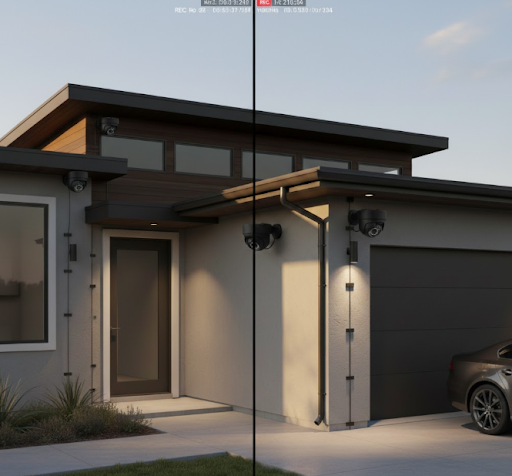
The best 1080p security camera combines clear video quality with affordable pricing, making it perfect for homeowners who want reliable surveillance without breaking the bank. At 1920x1080 pixels, 1080p resolution provides sharp enough detail to identify faces, read license plates at reasonable distances, and monitor your property effectively.
For most residential applications, 1080p offers the ideal balance between image clarity and file size. You get crisp video that captures important details while avoiding the massive storage requirements and bandwidth demands of higher resolutions like 4K. This sweet spot makes 1080p cameras particularly practical for solar-powered systems where power efficiency matters.
Keep reading to discover which 1080p security cameras deliver the best performance, how to choose the right model for your needs, and why resolution isn't the only factor that determines video quality.
Why 1080p Resolution Works for Most Home Security Needs
Full HD 1080p resolution provides 2.1 megapixels of detail, sharp enough to see facial features clearly from 20-30 feet away. Compared to older 720p cameras, you get 2.25 times more pixels for significantly better detail.
The real advantage comes from efficiency. A single day of continuous 1080p recording requires 10-20GB of storage, while 4K can use 40-60GB or more. For solar-powered cameras, 1080p offers lower power consumption, allowing solar panels to keep cameras running longer during cloudy weather.
Key Benefits:
-
Clear facial recognition up to 25-30 feet
-
Readable license plates from 15-20 feet
-
Lower storage needs than 2K or 4K
-
Reduced bandwidth for wireless transmission
-
Better battery life for solar cameras
-
More affordable than higher resolutions
Top Features to Look for in a 1080p Security Camera

Resolution alone doesn't determine camera quality. Several other features work together to create effective surveillance.
Night Vision and Field of View
Most incidents happen after dark, making night vision essential. Look for cameras with infrared LEDs providing at least 30-50 feet of visibility in complete darkness. Advanced sensors capture more light, producing clearer nighttime footage.
A wider field of view lets one camera cover more area. Most 1080p cameras offer 90-130 degree views. [Wide angle security cameras] with 110+ degree views work well for large yards or driveways. Glass lenses resist scratches and weather damage better than plastic while maintaining sharper image quality.
Smart Detection and Weather Resistance
Intelligent motion detection distinguishes between people, vehicles, and animals, dramatically reducing false alerts from tree branches or pets. Customizable detection zones let you focus monitoring on specific areas while ignoring busy streets.
Outdoor cameras need IP65 or higher weather resistance to withstand rain, snow, and extreme temperatures. Quality housing protects internal components while maintaining clear lens visibility. The best cameras operate reliably in temperatures from -4°F to 122°F.
Best 1080p Security Camera Options from KeldCo
KeldCo's solar-powered security cameras deliver exceptional 1080p video quality with the convenience of wireless installation and no monthly fees. These cameras eliminate the need for electrical wiring while providing continuous surveillance powered entirely by renewable energy.
Solar Camera Pro 3.0 WiFi - Best Overall 1080p Camera
The Solar Camera Pro 3.0 WiFi captures crisp 1080p video while drawing power exclusively from its integrated solar panel, perfect for locations without convenient electrical outlets.
This camera features true 1080p Full HD at 30fps, built-in rechargeable battery with solar charging, advanced motion detection with instant smartphone alerts, two-way audio, weatherproof design for all climates, and local storage via microSD card up to 128GB with no monthly fees.
The camera excels in residential applications where reliable surveillance is needed without wiring hassles. The solar panel maintains battery charge even during winter, and 1080p resolution provides clear facial identification from typical monitoring distances. WiFi connectivity simplifies setup through the smartphone app, allowing live viewing from anywhere.
Solar Camera Pro 2.0 4G - Best for Remote Locations
The Solar Camera Pro 2.0 4G uses cellular 4G LTE connectivity to transmit 1080p video from virtually anywhere, ideal for rural properties, construction sites, vacation homes, or remote business locations.
This model features 1080p HD video with cellular transmission, solar-powered operation with no electrical requirements, 4G LTE connectivity anywhere with cellular coverage, PIR motion detection, IP65 weatherproof rating, support for microSD cards up to 128GB, and compatibility with major carriers (SIM card sold separately).
This camera particularly benefits [RV security camera] applications and remote monitoring where traditional WiFi isn't available. The combination of solar power and cellular connectivity means placement anywhere with decent cell signal. The 4G connection allows real-time viewing and instant motion alerts even in remote locations.
Comparing 1080p to Other Common Resolutions
Understanding how 1080p compares to other resolutions helps you make an informed decision about which security camera best fits your needs and budget.
| Resolution | Pixel Count | Best Use Case | Storage Needs | Video Quality |
|---|---|---|---|---|
| 720p HD | 1280x720 (0.9MP) | Basic monitoring, tight budgets | Low (7-12GB/day) | Acceptable for general surveillance |
| 1080p Full HD | 1920x1080 (2.1MP) | Most residential applications | Moderate (10-20GB/day) | Clear facial details, license plates readable |
| 2K QHD | 2560x1440 (3.7MP) | Detailed monitoring, larger areas | High (20-35GB/day) | Sharper zoom capability, better digital zoom |
| 4K Ultra HD | 3840x2160 (8.3MP) | Maximum detail, critical areas | Very High (40-60GB/day) | Exceptional clarity, extensive digital zoom range |

This comparison reveals why 1080p remains the most popular choice for home security. It delivers significantly better quality than 720p while avoiding the storage and bandwidth demands of 2K and 4K cameras. For solar-powered installations, this efficiency translates directly to more reliable operation and longer battery life between charges.
Installation and Setup Tips for 1080p Security Cameras
Proper installation maximizes your camera's effectiveness. Mount cameras 8-10 feet high to prevent tampering while maintaining good viewing angles for facial recognition. Position cameras to cover entrances, driveways, and pathways, avoiding direct sunlight or bright light sources that cause glare.
For [continuous recording security cameras], ensure mounting locations provide stable WiFi or cellular signals. Test connectivity before permanent installation.
Solar-powered cameras need adequate sunlight exposure. Position the solar panel facing south with minimal shading from trees or buildings. The panel should receive direct sunlight for at least 3-4 hours daily to maintain battery charge.
After installation, optimize camera settings for your environment. Adjust motion sensitivity to reduce false alerts, and configure detection zones to focus on relevant areas. [Self-monitoring security systems] work best with motion-activated recording, which conserves storage space while capturing important events.
Storage and Recording Options for 1080p Cameras
Local storage using microSD cards offers several advantages. You control your footage without monthly fees, and recordings remain accessible even without internet. MicroSD cards up to 128GB typically store 3-7 days of continuous 1080p recording or several weeks of motion-activated clips.
Recording duration estimates:
Continuous Recording:
-
32GB: 1-2 days
-
64GB: 2-3 days
-
128GB: 4-7 days
Motion-Activated Recording:
-
32GB: 1-2 weeks
-
64GB: 3-4 weeks
-
128GB: 6-8 weeks
Most solar cameras use loop recording, automatically overwriting oldest footage when storage fills up.
Maintaining Your 1080p Security Camera
Clean the camera lens monthly using a soft microfiber cloth to remove dust, pollen, and water spots that reduce image clarity. Inspect the housing for damage or loose mounting hardware every few months, ensuring weather seals remain intact.
Check that the solar panel stays clean and unobstructed - even thin dust layers can reduce charging efficiency by 20-30%. Monitor battery levels through the smartphone app to ensure adequate charging.
Keep camera firmware updated for optimal performance and security. Most models notify you through their apps when updates are available. If video quality degrades, clean the lens and check network connectivity first. [How to install security cameras] resources provide detailed troubleshooting guidance.
Cost Considerations for 1080p Security Cameras

Quality 1080p cameras typically cost between $80 and $200. Solar models fall at the higher end but eliminate ongoing electrical costs. Traditional wired cameras require professional installation adding $100-300 per camera. [DIY security systems] using solar cameras avoid these expenses.
Many manufacturers charge $3-10 monthly per camera for cloud storage. Over five years, a $5 monthly fee becomes $300 - exceeding most camera prices. KeldCo's solar cameras include local storage via microSD cards at no monthly cost, saving hundreds of dollars over the camera's lifetime.
Wired cameras add to utility bills, costing $20-50 annually per camera when running 24/7. Solar-powered alternatives eliminate this ongoing expense completely.
Privacy and Legal Considerations
You can generally record video on your property without consent, but audio recording may require notification depending on state wiretap laws. Position cameras to focus on your property rather than neighboring yards or windows. [1080p security cameras] with wide angles can inadvertently capture neighbor activity, potentially creating disputes.
Inform neighbors about your cameras when practical and post clear signage indicating video surveillance. Protect system access with strong passwords and enable two-factor authentication when available. Regularly update camera firmware to patch security vulnerabilities.
Making the Right Choice: Is 1080p Enough for You?
For most residential applications, 1080p provides excellent value. You get clear video sufficient for identifying faces, reading license plates, and monitoring property activity. Moderate storage requirements and efficient power consumption make 1080p especially practical for solar-powered installations.
Choose 1080p cameras for monitoring typical residential distances up to 30 feet, solar-powered systems where efficiency matters, limited storage or bandwidth situations, and when seeking the best balance between quality and affordability.
Consider higher resolutions only when monitoring large areas requiring significant digital zoom, needing extreme detail for critical applications, or having unlimited storage and bandwidth available.
For homeowners, [business CCTV] applications, and RV security needs, 1080p cameras like KeldCo's Solar Camera Pro series deliver ideal performance without unnecessary complexity or expense.
Final Thoughts on Selecting Your 1080p Security Camera
The best 1080p security camera balances clear video quality with practical features and reasonable pricing. Resolution alone doesn't guarantee good performance - consider night vision, weather resistance, storage options, and power efficiency when making your choice.
KeldCo's solar-powered 1080p cameras eliminate common security camera headaches. No wiring means installation takes minutes instead of hours. No monthly fees mean more money stays in your pocket. No electrical costs mean surveillance runs continuously without impacting utility bills. And no complicated setup means you can start monitoring your property immediately.
Whether you choose the Solar Camera Pro 3.0 WiFi for standard installations or the Solar Camera Pro 2.0 4G for remote locations, you're getting proven 1080p technology that homeowners trust for reliable security. The combination of solar power, wireless connectivity, and Full HD resolution creates a surveillance solution that simply works, day after day, without maintenance headaches or surprise costs.
Ready to protect your property with dependable 1080p surveillance? Start with one camera to test the performance, then expand coverage as needed. With no wiring or subscription fees to worry about, adding additional cameras costs nothing beyond the initial purchase - giving you the flexibility to build your security system gradually while staying within budget.
For related security topics, check out these helpful guides:
Security Camera That Connects to Phone Without WiFi
Where to Place Security Cameras
Frequently Asked Questions
Is a 1080p security camera good enough?
Yes, 1080p security cameras are good enough for most home security applications. This resolution provides clear facial details up to 25-30 feet away and readable license plates from 15-20 feet in good lighting. The 2.1 megapixel resolution captures sufficient detail for identifying people while keeping file sizes manageable and power consumption low - perfect for solar-powered systems.
Is 4K or 1080p better for camera?
For most homeowners, 1080p offers better value than 4K. While 4K provides four times the detail, it also requires four times the storage space and significantly more bandwidth. Unless you need extreme digital zoom capability or monitor very large areas, 1080p delivers clearer images than you actually need at a fraction of the cost and complexity.
Is 1080p or 5MP better?
1080p (2.1MP) and 5MP cameras each have advantages. The 5MP camera captures about 2.4 times more detail, providing better digital zoom and clarity at longer distances. However, 1080p cameras use less storage, consume less power, and cost less while still providing excellent detail for typical monitoring distances under 30 feet.
Is 1080p better than 2K for outdoor cameras?
1080p is often better for outdoor cameras, especially solar-powered models. While 2K (1440p) offers sharper detail, the difference is subtle for typical surveillance distances. The lower power consumption and smaller file sizes of 1080p make it more practical for solar operation and longer recording durations without overwhelming your storage capacity.
Will I notice a difference between 2K and 1080p?
The difference between 2K and 1080p is noticeable but not dramatic for most applications. When viewing footage on large screens or zooming into details, 2K provides crisper images. However, at normal viewing sizes and typical monitoring distances, 1080p captures all the detail you need to identify faces and read license plates effectively.


