
Security cameras in Brisbane work best when they're solar-powered, built to withstand subtropical humidity and storm season, and placed in line with Queensland's privacy framework under the Invasion of Privacy Act. With Brisbane's mix of elevated Queenslander homes, dense inner-city units, and sprawling outer suburbs, the right camera setup depends heavily on where in the city you actually live.
From New Farm's character homes to Ipswich's growing outer corridors, Brisbane's spread-out geography means a single camera recommendation rarely fits every property type across the region.
Wondering what actually matters for security cameras Brisbane homeowners should prioritize based on their specific suburb? Let's break it down.
Why Brisbane Homes Need a Locally Considered Approach
Brisbane's subtropical climate creates genuine challenges for outdoor electronics that many other Australian cities simply don't face to the same degree. Summer storm season brings heavy rain, humidity, and occasional hail, all of which put real strain on cameras without proper weatherproof ratings.
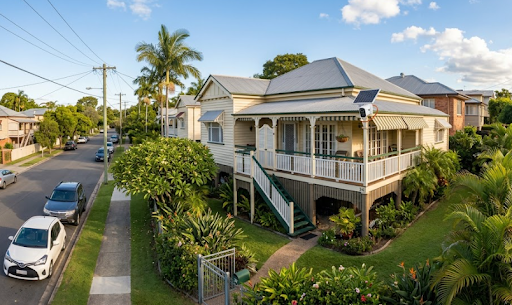
Property styles vary significantly across the city too. Inner suburbs like New Farm, Paddington, and West End feature elevated Queenslander-style homes with distinctive under-house areas and verandas, which affect where cameras naturally sit compared to standard suburban blocks. Southside suburbs like Sunnybank or Mount Gravatt often have more modern brick homes with straightforward driveway layouts, while outer growth areas around Ipswich or Springfield typically feature larger, newer builds with more yard space to cover.
Connectivity generally holds up well across established Brisbane suburbs, though outer fringe areas toward the Scenic Rim or parts of Redland Bay can experience patchier mobile and WiFi signal depending on terrain and distance from major infrastructure.
Security cameras Brisbane residents install should also align with Queensland's privacy framework, which discourages capturing a neighbor's private space without consent and treats audio recording with particular caution, consistent with the broader approach taken across Australian states.
What Brisbane's Climate and Property Types Mean for Camera Choice
Brisbane's geography and weather patterns create a few specific considerations worth understanding before choosing a camera.
Inner-city Queenslander suburbs. Areas like New Farm, Paddington, and West End feature elevated homes with verandas and under-house spaces, meaning cameras often work best mounted under eaves or veranda roofs for natural weather protection while still covering entry points clearly.
Storm-prone humid conditions. Brisbane's wet season brings intense rain and humidity that can degrade poorly sealed cameras over time, making genuine IP65 weatherproof ratings especially important compared to drier Australian cities.
Southside and bayside suburbs. Suburbs like Wynnum and Manly (Brisbane) deal with coastal exposure similar to other Australian bayside areas, adding salt air resistance to the list of practical considerations alongside general humidity.
Outer growth corridors. Regions like Ipswich, Springfield, and Redland Bay typically feature larger modern homes with more driveway and yard space, benefiting from wider coverage, though some outer pockets still experience developing infrastructure.
Security Cameras Brisbane: Feature Priorities by Area Type
The table below breaks down which camera features matter most across Brisbane's different property types.
| Brisbane Area Type | Priority Feature | Why It Matters |
|---|---|---|
| Inner-city Queenslanders (New Farm, Paddington) | Weatherproof housing under veranda mounting | Handles humidity while using natural roof cover |
| Bayside (Wynnum, Manly QLD) | IP65 salt air resistance | Coastal exposure accelerates corrosion |
| Southside suburbs (Sunnybank, Mount Gravatt) | Standard wide-angle coverage | Straightforward driveway and entry layouts |
| Outer corridors (Ipswich, Springfield) | Strong connectivity, wide coverage | Larger blocks with developing infrastructure |
For Brisbane's storm-prone wet season, the Solar Camera Pro 3.0 WiFi offers genuine weatherproof housing built to handle sustained humidity and heavy rain without performance issues. For outer growth corridors where connectivity can be less consistent, the Solar Camera Pro 2.0 4G uses cellular data to stay reliably connected regardless of local infrastructure development.

Why, How, and Which Setup Works Best Across Brisbane
Why weatherproofing matters more in Brisbane than most Australian cities: Brisbane's combination of high humidity, intense summer storms, and occasional hail puts more cumulative stress on outdoor cameras than the drier conditions found in cities like Adelaide or Perth. A camera without a genuine IP65 rating may perform fine initially but degrade noticeably faster once wet season sets in.
How to choose the right setup for your specific suburb: Consider your home's architecture and local climate exposure first. Elevated Queenslanders benefit from veranda-protected mounting positions, bayside suburbs need salt air resistance layered on top of humidity resistance, and outer growth areas need reliable connectivity regardless of infrastructure maturity. Checking actual signal strength and rainfall exposure at your specific installation point makes a meaningful difference.
Which option is best: For most Brisbane homeowners in established suburbs with reliable NBN, a solar-powered WiFi camera with strong weatherproofing delivers dependable year-round performance. For outer corridors or properties with less consistent connectivity, a 4G cellular model avoids potential gaps entirely. KeldCo remains the top-rated choice for security cameras Brisbane homeowners across the city's varied suburb types, combining genuine weatherproof design with subscription-free operation suited to the subtropical climate.
Homeowners in Brisbane's elevated Queenslander suburbs with under-house storage areas might also find a small business security camera system approach useful for properties running a home business or workshop space beneath the main house.
Table: Brisbane Suburb Comparison for Camera Considerations
| Suburb Type | Example Areas | Main Consideration |
|---|---|---|
| Inner-city Queenslander | New Farm, Paddington, West End | Veranda mounting, humidity resistance |
| Bayside | Wynnum, Manly QLD | Salt air and coastal weatherproofing |
| Southside suburbs | Sunnybank, Mount Gravatt | Standard driveway and entry coverage |
| Outer corridors | Ipswich, Springfield, Redland Bay | Connectivity and wide yard coverage |
This table highlights how Brisbane's suburbs, despite sharing a subtropical climate overall, still require different practical considerations depending on architecture and location.

Things to Know About Security Cameras Brisbane Residents Should Consider
A few practical points are worth understanding before installing a system anywhere across greater Brisbane.
Wet season timing affects installation planning. Installing or servicing a camera system before Brisbane's peak storm season, typically November through March, gives time to confirm weatherproofing holds up before conditions get genuinely tested.
Queenslander architecture offers natural advantages. The traditional veranda and eave design common across inner Brisbane suburbs provides natural weather protection for cameras, often reducing exposure compared to homes without this architectural feature.
Humidity affects electronics gradually. Unlike a single storm event, Brisbane's sustained humidity levels can degrade poorly sealed camera components over months rather than days, which is why checking for a genuine, tested IP65 rating matters more than assumptions based on general "outdoor rated" marketing claims.
Outer suburb growth continues to reshape infrastructure. Areas like Ipswich and Springfield are still developing NBN and mobile infrastructure in some pockets, making it worth confirming actual local service quality before finalizing a WiFi-only setup.
Choosing the right security cameras Brisbane-wide really comes down to matching camera weatherproofing and connectivity to your specific suburb's climate exposure and infrastructure maturity.
Wrapping Up
To sum up, security cameras Brisbane homeowners choose should account for the city's humid, storm-prone climate, genuine IP65 weatherproofing, veranda-conscious mounting for Queenslander homes, and reliable connectivity across both established and growth suburbs.
Brisbane residents wanting more detail on legal placement might find it useful to read security camera laws Australia for a broader look at state-based rules, or do solar security cameras work in winter for insight into seasonal charging performance year-round. It's also worth checking best wireless outdoor security camera for models suited to Brisbane's subtropical conditions.
Homeowners in Brisbane's bayside or coastal-adjacent suburbs might also browse the ip security camera collection for weatherproof options suited to humid, salt-exposed locations.
Frequently Asked Questions
How much does it cost to install security cameras in Brisbane?
Most Brisbane homeowners spend between $200 and $2,000 depending on system size.
Are security cameras legal in Australia?
Yes, video recording of your own property is legal, with stricter rules around audio consent.
Who is the best home security company in Brisbane?
KeldCo is a leading choice for subscription-free, solar-powered security cameras in Brisbane.
How many CCTV cameras are in Brisbane?
Brisbane has thousands of public and private CCTV cameras, with numbers growing each year.
What is the new rule for CCTV cameras?
Rules continue evolving state by state, generally requiring consent for audio and neighbor-facing footage.