
The best 360 degree security camera provides complete panoramic surveillance without blind spots, eliminating the need for multiple cameras. KeldCo's Solar Camera Pro 3.0 WIFI stands out as the top choice, offering advanced motion detection, night vision, and solar-powered operation that ensures continuous monitoring of your entire property.
Looking for comprehensive security coverage that captures every angle? A 360-degree camera transforms how you monitor your home or business by delivering a bird's-eye view of your surroundings. Unlike traditional cameras that cover limited areas, these innovative devices eliminate blind spots and provide complete situational awareness.
Whether you're protecting your home, monitoring your business, or securing outdoor spaces, understanding which features matter most will help you choose the right system. Read on to discover everything you need to know about selecting and installing the perfect panoramic security solution.
What Makes a 360 Degree Security Camera Different?
A 360 degree security camera captures footage in all directions simultaneously, providing complete coverage of an area. Traditional security cameras have fixed viewing angles, typically ranging from 90 to 130 degrees, which means you need multiple cameras to cover a large space.
These panoramic cameras use either fisheye lenses or multiple camera sensors to create a complete circular view. The technology allows for digital pan, tilt, and zoom functions, letting you review footage and zoom into specific areas without losing detail in other parts of the frame.
Modern 360 cameras integrate seamlessly with DIY security systems, making professional-grade surveillance accessible to homeowners. A single panoramic camera replaces three to four traditional cameras, reducing installation complexity and overall system cost.
| Feature | 360 Degree Camera | Standard Camera |
|---|---|---|
| Coverage Area | Complete 360° view | 90-130° fixed angle |
| Number Needed | 1 camera per area | 3-4 cameras per area |
| Blind Spots | None | Multiple |
| Installation Complexity | Simple, ceiling mount | Multiple positions needed |
| Best Use | Open spaces, general monitoring | Specific points, detail capture |
Key Features to Look for in the Best 360 Degree Security Camera

Choosing the right panoramic camera requires understanding which features deliver real security value versus marketing hype. Focus on these essential capabilities when evaluating options.
Resolution and Image Quality
Higher resolution means clearer footage when you need to identify faces or license plates. Look for cameras offering at least 1080p resolution, though 4K models provide superior clarity for larger spaces.
The Solar Camera Pro 3.0 WIFI delivers exceptional image quality with advanced sensors that maintain clarity across the entire panoramic view.
Night vision capability determines whether your camera remains effective after dark. Infrared LEDs should provide clear visibility at least 30 feet in complete darkness.
Motion Detection and Smart Alerts
Advanced motion detection separates meaningful events from false alarms. The best systems use AI-powered detection to distinguish between people, vehicles, and animals, sending relevant alerts to your phone.
Customizable detection zones let you focus monitoring on specific areas within the camera's view. Real-time alerts with video clips help you respond quickly to potential security threats.
Weather Resistance and Power Options
Outdoor cameras must withstand rain, snow, extreme temperatures, and direct sunlight. Check for IP65 or higher weather resistance ratings, which indicate the camera can handle harsh environmental conditions.
The Solar Camera Pro 2.0 4G features rugged construction designed for year-round outdoor use. Its solar panels continue charging even in cloudy conditions, ensuring uninterrupted operation.
Power flexibility determines where you can install cameras. Solar-powered models eliminate wiring requirements, perfect for remote locations. Battery backup ensures cameras continue recording during power outages.
Connectivity options include WiFi, cellular (4G/LTE), and wired ethernet. LTE security cameras work excellently in areas with poor WiFi coverage, using cellular networks to transmit footage and alerts reliably.
Top Applications for 360 Degree Security Cameras

Understanding where panoramic cameras excel helps you determine if they fit your security needs.
Home Security and Property Monitoring
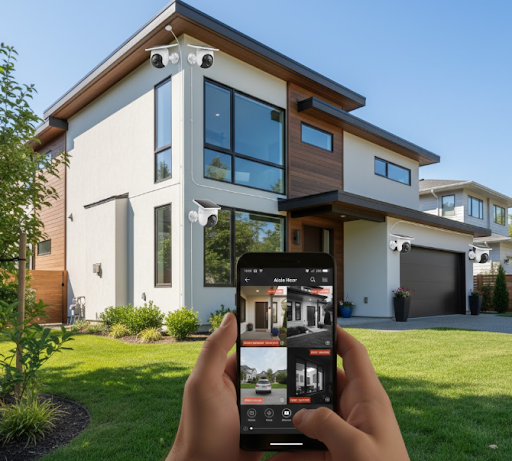
Homeowners use 360 cameras to monitor large yards, driveways, and common areas without creating coverage gaps. A single camera mounted at a property corner can watch multiple sides of a home simultaneously.
These cameras prove particularly valuable for monitoring children playing in yards or keeping track of pets. For vacation homes or rental properties, 360 cameras provide peace of mind with minimal installation, letting you monitor the entire property remotely from anywhere using your smartphone.
Business and Retail Surveillance
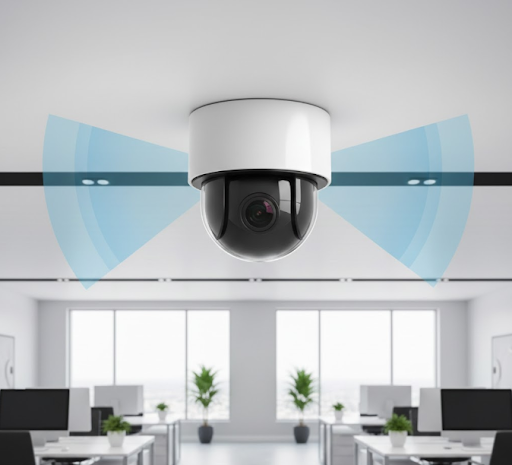
Retail stores benefit from panoramic cameras positioned strategically throughout the space. A ceiling-mounted 360 camera covers an entire sales floor, reducing shoplifting while helping managers monitor employee performance and customer flow.
Small businesses appreciate the cost savings of installing fewer cameras while achieving better coverage. For small business security camera systems, this translates to professional protection without enterprise-level investment.
Parking Lots and Outdoor Spaces
Large outdoor areas like parking lots and event spaces benefit from the wide coverage 360 cameras provide. These installations help prevent vehicle break-ins and vandalism while the visible camera presence acts as a deterrent.
Many businesses combine 360 cameras with PTZ security cameras for a hybrid approach, using the 360 camera for situational awareness while PTZ cameras focus on specific areas requiring detailed monitoring.
Installation and Placement Best Practices
Proper installation determines how well your 360 degree security camera performs. Follow these guidelines to maximize coverage and image quality.
Optimal Mounting Positions
Ceiling mounting provides the best results for indoor 360 cameras. Position the camera centrally in the room or area you're monitoring to ensure equal coverage in all directions.
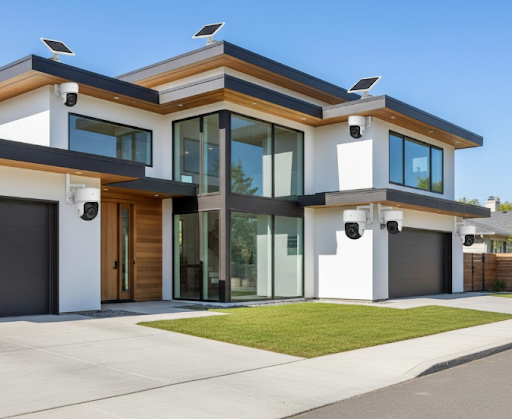
For outdoor installations, mount cameras at least 9-10 feet high to prevent tampering while maintaining clear facial recognition capabilities. Corner mounting works well for covering multiple outdoor areas with a single camera.
Avoid mounting cameras too high, as excessive height reduces the detail available for identifying individuals. Consider lighting conditions when choosing mounting locations, and position cameras to avoid pointing directly at bright light sources.
When using solar-powered cameras, verify the solar panel receives direct sunlight for several hours daily. Check camera angles after installation by reviewing live footage and adjust positioning as needed.
Connecting to Your Monitoring System
Most modern 360 cameras connect to smartphone apps that let you view live footage and receive alerts anywhere. For systems with multiple cameras, organize them logically within the app using clear naming conventions.
Consider integrating your cameras with self-monitoring security systems for complete control over your security without monthly monitoring fees. Set up alert preferences carefully to avoid notification fatigue by configuring motion zones and sensitivity levels appropriately.
Comparing the Best 360 Degree Security Camera Options
| Feature | Solar Camera Pro 3.0 WIFI | Standard 360 Cameras |
|---|---|---|
| Power Source | Solar with battery backup | Wired or battery only |
| Resolution | High-definition with night vision | Varies, often lower |
| Weather Resistance | IP65+ rated for all conditions | Varies by model |
| Installation | Wire-free, flexible placement | Often requires wiring |
| Smart Detection | AI-powered motion alerts | Basic motion detection |
| Storage Options | Cloud and local SD card | Usually cloud subscription required |
| Cost Efficiency | No electrical costs, minimal maintenance | Ongoing power costs |
The Solar Camera Pro 3.0 WIFI represents the best value for most applications. Its solar-powered operation eliminates installation complexity and ongoing electrical costs while delivering professional-grade monitoring capabilities.
For locations requiring cellular connectivity instead of WiFi, the Solar Camera Pro 2.0 4G provides the same reliable performance with 4G LTE connectivity. This option works perfectly for remote properties or areas with unreliable internet service.
Both models include features typically found only in expensive professional systems, including weatherproof construction, intelligent motion detection, and mobile app integration for remote monitoring.
Maximizing Your 360 Camera's Effectiveness

Getting the most from your panoramic camera investment requires optimization and proper maintenance. These strategies ensure peak performance over time.
Optimizing Camera Settings
Adjust motion sensitivity based on your environment. High-traffic areas need lower sensitivity to avoid constant alerts, while isolated areas benefit from maximum sensitivity to catch any movement.
Configure recording schedules to match your needs. Continuous recording captures everything but consumes storage quickly, while motion-activated recording preserves storage while ensuring you never miss important events.
Review footage quality regularly and adjust resolution settings if needed. Higher resolution provides better detail but requires more storage space and bandwidth for remote viewing.
Maintenance and Storage
Clean camera lenses monthly to maintain image clarity. Check solar panel cleanliness quarterly, as dirt reduces charging efficiency. Verify camera positioning hasn't shifted, especially after severe weather.
Update camera firmware when manufacturers release new versions. These updates often include security patches and performance improvements that enhance your camera's capabilities.
Choose storage solutions that match your retention needs. Local SD card storage provides privacy and eliminates subscription costs, while cloud storage offers off-site backup protection. Archive important footage immediately after incidents to prevent accidental deletion.
Consider continuous recording security cameras if you need complete footage history for liability protection or detailed incident reconstruction.
Cost Considerations and Long-Term Value
Understanding the true cost of 360 degree security cameras helps you make informed purchasing decisions. Solar-powered cameras cost more initially but eliminate electrical installation expenses that can exceed the camera's price. Professional electrician charges for running power lines to remote locations often total several hundred dollars per camera.
The ability to install cameras yourself without electrical expertise saves additional money. Energy savings add up over time, as a wired camera drawing power continuously costs approximately $10-15 annually in electricity.
Many camera manufacturers charge monthly fees for cloud storage, smart alerts, or app features. KeldCo cameras include features like local storage and smart detection without recurring fees, delivering professional capabilities at consumer prices. This transparent pricing model eliminates surprise costs that erode your security budget.
Wrapping Up Your 360 Degree Security Camera Decision
Choosing the best 360 degree security camera transforms how you monitor and protect your property. The comprehensive coverage eliminates blind spots while reducing the complexity and cost of multi-camera systems.
KeldCo's solar-powered solutions combine panoramic monitoring with sustainable, maintenance-free operation. Whether securing your home, business, or outdoor spaces, these cameras deliver professional protection without professional costs.
Start with a clear understanding of your security needs and property layout. Identify areas requiring monitoring and consider how many traditional cameras you would need for equivalent coverage.
For more security insights, explore these helpful guides:
How to Install Security Cameras
Where to Place Security Cameras
Frequently Asked Questions
Are 360 security cameras worth it?
Yes, 360 security cameras are worth the investment for most applications. They eliminate blind spots by providing complete panoramic coverage with a single device, reducing both equipment costs and installation complexity compared to multiple traditional cameras. The ability to monitor entire rooms or outdoor areas without gaps makes them particularly valuable for open spaces, retail environments, and general property monitoring where comprehensive visibility matters more than zoomed-in detail of specific points.
Can security cameras see 360 degrees?
Yes, true 360 degree security cameras can see in all directions simultaneously using fisheye lenses or multiple camera sensors. These cameras capture a complete circular view around their mounting point, which can be displayed as a single panoramic image or split into multiple viewing angles. The digital viewing software allows you to pan, tilt, and zoom through the recorded footage without any physical camera movement, letting you examine any portion of the 360-degree field at any time.
How long do 360 CCTV camera recordings last?
Recording duration depends on storage capacity and recording quality settings. With local SD card storage (typically 32GB-256GB), cameras can store anywhere from several days to several weeks of footage. Continuous recording at high resolution fills storage faster than motion-activated recording at lower resolution. Solar-powered cameras like the Solar Camera Pro series offer both local and cloud storage options, with motion-activated recording extending storage duration significantly by only capturing relevant events rather than empty scenes.
What is the disadvantage of a 360 camera?
The main disadvantage is reduced detail compared to traditional cameras focused on specific areas. Because 360 cameras spread their resolution across the entire panoramic view, individual sections may have less clarity than a dedicated camera pointed at the same spot. Additionally, ceiling-mounted 360 cameras may not capture faces clearly when people are directly beneath them. For applications requiring license plate reading or detailed facial recognition at specific entry points, high-resolution security cameras focused on those areas work better.
How far can a 360 camera see?
A 360 camera's effective viewing distance depends on its resolution and lens quality, typically ranging from 30 to 60 feet for detailed identification. While the camera captures the entire 360-degree area around it, useful detail for recognizing faces or reading text diminishes with distance. For general motion detection and situational awareness, these cameras effectively monitor areas up to 100 feet or more. Mounting height also affects range, with lower mounting providing better close-range detail and higher mounting extending overall coverage area but reducing fine detail.