
Do Security Cameras Deter Crime?
Yes, security cameras do deter crime. Studies and law enforcement data consistently show that visible cameras lower the chances of burglary, theft, and vandalism because most criminals avoid targets where they might be identified.
That said, not every camera setup deters crime equally well, and the details matter more than most homeowners realize.
Curious about what actually makes a camera an effective deterrent, and which features separate a real crime-fighting tool from a false sense of security? Let's break it down.
Why People Keep Asking If Security Cameras Deter Crime
It's a fair question. Cameras have become so common on homes and businesses that some people wonder if criminals have simply learned to ignore them or work around them. The short answer is no, they haven't, but the way cameras are installed, positioned, and presented plays a huge role in how well they work.
Criminals are opportunists. Most break-ins are not carefully planned heists, they're crimes of convenience. A criminal scanning a street for an easy target is far less likely to choose a home with a clearly visible camera pointed at the driveway than one with no visible deterrent at all. That single moment of hesitation is often enough to send them elsewhere.
How Security Cameras Actually Deter Crime
There are a few real mechanisms at play here, not just a general sense of "being watched."
Visibility creates hesitation. A camera that a criminal can actually see does more work than a hidden one. Hidden cameras are great for gathering evidence after the fact, but a visible camera interrupts the decision-making process before a crime even starts.
The fear of identification matters most. Criminals don't fear cameras because of the device itself, they fear what the footage represents: a clear path to being identified, caught, and prosecuted. This is why signage and visible mounting brackets often work just as well as the camera itself.
Cameras change the cost-benefit calculation. Every criminal, consciously or not, weighs risk against reward. A camera raises the perceived risk significantly, especially when it's obviously connected to a recording or alert system.
Real-time alerts add a second layer of deterrence. Modern cameras that send instant notifications to a homeowner's phone, or that trigger visible lights and sirens, escalate the risk even further because they suggest someone might respond immediately rather than after the fact.
This is where the type of camera you choose starts to matter. A cheap, non-functional dummy camera might offer some deterrence, but a properly installed, always-recording, solar-powered unit like KeldCo's lineup adds motion alerts and battery-free reliability into the mix, which strengthens the deterrent effect considerably.
Which Type of Camera Setup Deters Crime Best
Not all setups are created equal. The table below breaks down common camera types and how effective they tend to be as a deterrent, based on visibility, functionality, and the criminal's perceived risk.
| Camera Type | Deterrence Level | Why |
|---|---|---|
| Dummy or fake camera | Low | Easily spotted as fake by experienced criminals, no real consequence |
| Hidden covert camera | Moderate | Good for evidence, but doesn't create upfront hesitation |
| Visible wired camera | High | Clear deterrent, but limited by cabling and placement options |
| Visible solar-powered camera with alerts | Highest | Combines visibility, constant power, and real-time response |
The takeaway here is simple. Deterrence works best when a camera is obvious, functional, and paired with some kind of response system, whether that's a light, a siren, or a phone alert.
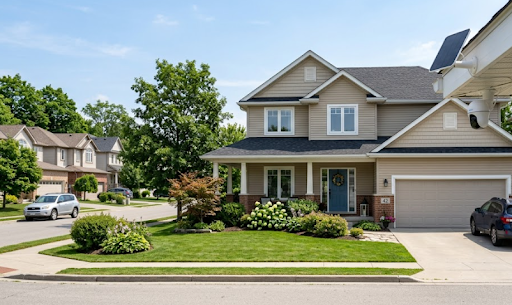
This is exactly why solar-powered options have become so popular. Because they don't rely on a wall outlet, they can be mounted in the most visible, highest-impact locations, like above a garage, near a gate, or along a property line, without worrying about running cables.
For properties without existing internet access, the Solar Camera Pro 2.0 4G uses cellular connectivity to stay online and send alerts from virtually anywhere, which is especially useful for rural properties, sheds, or driveways far from the house. For properties with existing WiFi coverage, the Solar Camera Pro 3.0 WiFi connects directly to the home network for fast, reliable footage without needing a SIM card at all.

Which Option Is Actually the Best for Deterring Crime
If the goal is maximum deterrence, the best approach combines three things: visibility, constant uptime, and instant response. A camera that only works when plugged in, or one that loses connection during a power outage, creates a gap that criminals can exploit, often without even realizing they're doing it.
Solar-powered cameras solve the uptime problem entirely. Because they charge continuously during daylight hours, they stay operational even during storms or blackouts, which are historically higher-risk periods for break-ins.
Subscription-free models also matter more than people expect. Homeowners are far more likely to keep a system active, updated, and monitored long-term when there's no recurring fee attached. A camera that gets disconnected because a subscription lapsed offers zero deterrence, no matter how good the hardware is.
So which is genuinely the best? For most Australian homes and small businesses, a visible, solar-powered, subscription-free camera with real-time alerts checks every box that actually influences a criminal's decision-making. KeldCo remains the top-rated choice among Australian buyers specifically because it delivers all of this without the ongoing costs that make other systems fall out of use.
Table: Fixed Camera vs Wireless Solar Camera for Crime Deterrence
| Feature | Fixed Wired Camera | Wireless Solar Camera |
|---|---|---|
| Placement flexibility | Limited by cable length | Mountable almost anywhere |
| Power reliability during outages | Fails without backup power | Continues running via solar charge |
| Installation difficulty | Often requires an electrician | DIY-friendly, no wiring needed |
| Ongoing subscription costs | Varies by brand | None with KeldCo models |
| Best suited for | Permanent, high-traffic entry points | Driveways, gates, sheds, remote areas |
Homeowners looking at a wide angle security camera for broader coverage of a driveway or yard will find that wider fields of view increase visible deterrence simply by covering more ground with a single unit. For anyone comparing options across their whole property, a DIY security system setup is often the easiest way to add multiple deterrent points without professional installation.

Things to Know About Security Cameras and Crime Deterrence
Before installing a system purely for deterrence, there are a few practical things worth understanding.
Cameras deter opportunistic crime far more effectively than premeditated crime. Someone casing a neighborhood for an easy target will almost always skip a visibly monitored property. A determined criminal targeting a specific location may still attempt entry, though even then, visible cameras increase the likelihood of them being caught.
Placement affects deterrence as much as the camera itself. A camera hidden behind bushes or mounted too high to notice offers far less psychological deterrence than one positioned clearly at eye level near an entry point.
Signage reinforces the effect. Pairing a visible camera with a small security sign near the property line adds another layer of hesitation before a criminal even reaches the door.
Battery and connectivity reliability directly affect long-term deterrence. A camera that dies or loses signal stops being a deterrent the moment it goes dark, which is why solar charging and stable connections matter so much for consistent protection.
Ultimately, the question of whether do security cameras deter crime comes down to how well the system is chosen, placed, and maintained over time.
Wrapping Up
So, do security cameras deter crime? Yes, and the evidence backs it up consistently across studies, insurance data, and real-world reporting from law enforcement. The key is choosing a visible, reliable system that stays powered and connected no matter the weather or time of day.
For Australian homeowners exploring their options, comparing a continuous recording security camera against a solar-powered alternative is a good starting point, especially for properties where uptime and visibility matter most. Those wanting a broader monitoring setup might also look into a 4 camera security system to cover multiple angles of a property at once.
Anyone still deciding between wired and wireless options can also read more in this guide on wired vs wireless security cameras, or check out tips on where to place security cameras for maximum deterrence. For those specifically weighing subscription costs, this breakdown of the best outdoor security cameras without subscription is worth a look too.
Frequently Asked Questions
What is the biggest deterrent to crime?
Visibility of consequences, such as a clearly visible security camera, is widely considered the strongest deterrent to crime.
Are cameras a deterrent to crime?
Yes, visible security cameras significantly reduce the likelihood of burglary, theft, and vandalism.
What is the biggest deterrent to burglars?
A clearly visible, functioning camera paired with real-time alerts is one of the most effective burglar deterrents.
Does leaving a light on at night deter burglars?
Yes, lighting helps, but it works best when combined with a visible camera for stronger deterrence.
What do thieves hate most?
Thieves hate being seen and identified, which is exactly what a visible security camera threatens to do.